
Chinatown
"The Buddha Tooth Relic Temple appeared between the shophouses like a vision from another century."
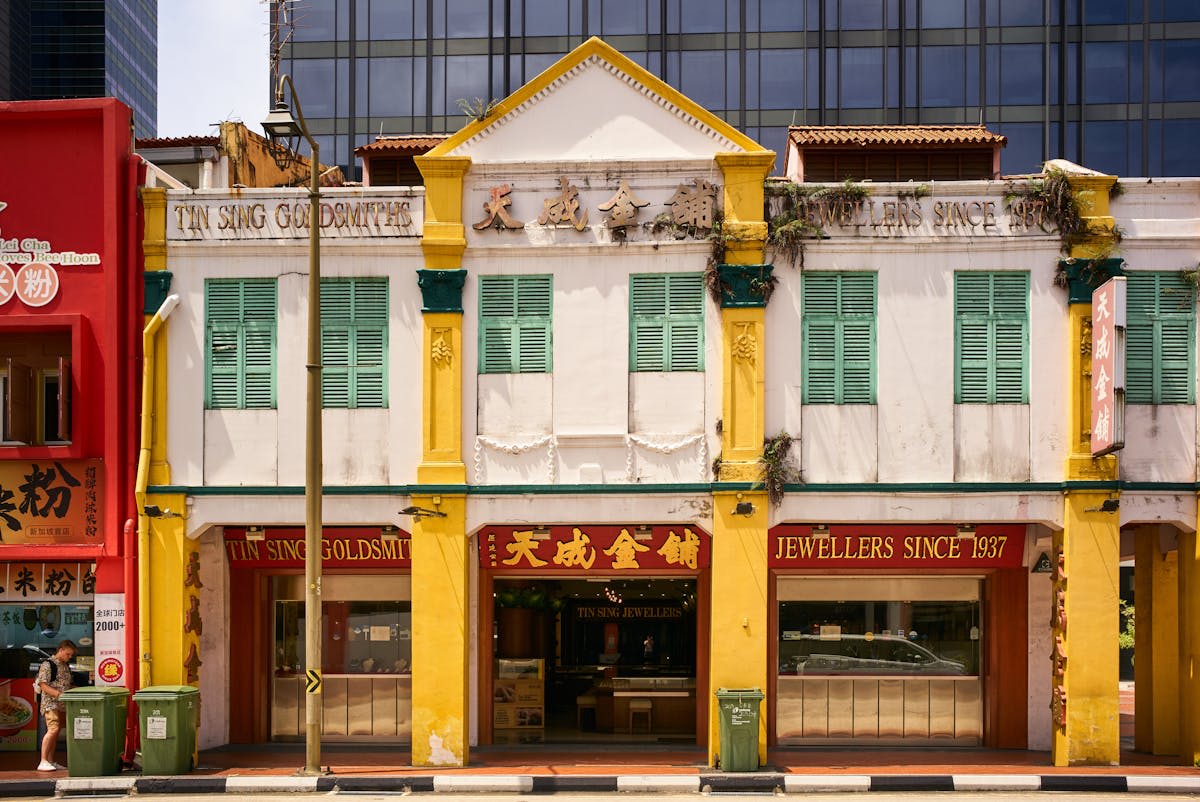
Singapore’s Chinatown is a masterclass in what happens when a city decides that preservation and reinvention are the same act. The shophouses along Pagoda Street and Temple Street have been restored in ice-cream colours — mint, coral, butter yellow — their ground floors now housing everything from traditional Chinese medicine shops to craft cocktail bars where a drink costs more than the entire meal at the hawker centre across the street. The tension between the two is not a contradiction. It is the neighbourhood’s engine.
The Buddha Tooth Relic Temple and Museum, built in 2007 in Tang Dynasty style, is a glittering five-storey complex that feels ancient despite its youth — a deliberate act of cultural continuity that I found genuinely moving. The interior is ornate beyond anything I expected: hundreds of golden Buddhas, the scent of sandalwood incense, a rooftop garden where orchids grow around a prayer wheel. We visited on a Tuesday morning and had the upper floors nearly to ourselves. The relic itself — a tooth of the Buddha, housed in a solid gold stupa — is displayed on the fourth floor with a reverence that transcends the question of authenticity.
We ate our way through the Chinatown Complex Food Centre, the largest hawker centre in the district, with over two hundred stalls spread across two floors. This is where Liao Fan Hong Kong Soya Sauce Chicken earned a Michelin star while charging two dollars a plate — a fact that still sounds like a punchline but is not. The chicken was extraordinary: glistening skin, tender meat, a soya sauce glaze that was sweet and savoury in proportions that must have taken years to calibrate. I ate it at a plastic table next to a grandmother who was eating the same thing and who nodded at me with the satisfied expression of someone who knew exactly how good it was.
The Sri Mariamman Temple stands on South Bridge Road as a reminder that Chinatown has always been more diverse than its name suggests. Built in 1827, it is Singapore’s oldest Hindu temple, its gopuram a riot of painted deities that I spent twenty minutes photographing from the street because every angle revealed another detail I had missed. The Dravidian architecture coexists with the Chinese shophouses and the mosque down the road in a way that would feel forced anywhere else but here feels like an accurate representation of how Singapore actually works.
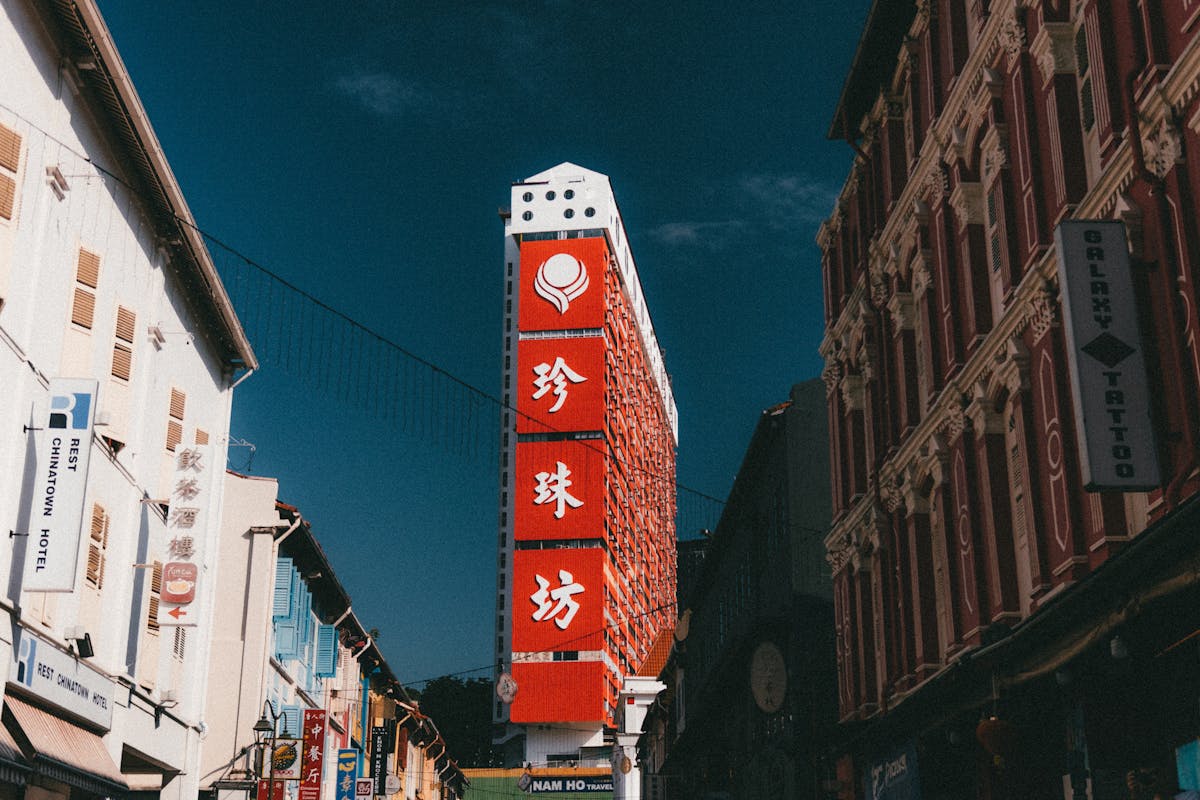
The evening Chinatown Street Market along Pagoda Street is tourist-facing — souvenirs, trinkets, the usual — but the lanes behind it are where the neighbourhood reveals its contemporary character. Keong Saik Road has become one of Singapore’s best bar streets, the pre-war shophouses converted into cocktail dens and wine bars that open their doors to the pavement at dusk. Bukit Pasoh is quieter, more residential, and lined with some of the most beautiful conservation shophouses on the island. We wandered both until the heat gave way to evening and the lanterns came on, and I thought: this is what a living neighbourhood looks like when a city is smart enough to protect it.
When to go: Year-round. Chinese New Year (January or February) transforms the district with decorations, performances, and a night market that takes over the main streets. The Mid-Autumn Festival brings lanterns. Weekday lunchtimes at the hawker centres are the most authentic experience — fewer tourists, shorter queues, the regulars in their usual seats.