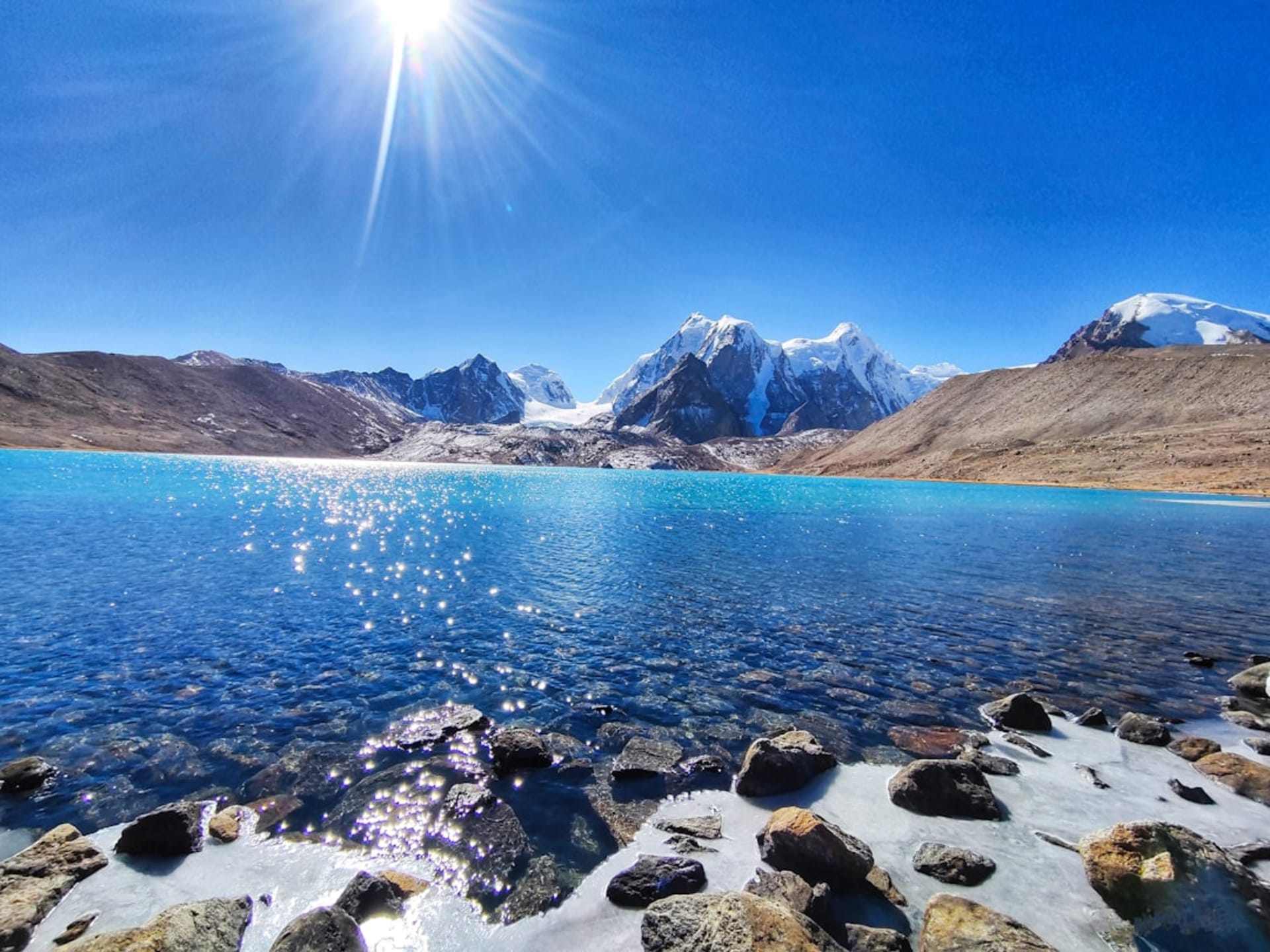
Gurudongmar Lake
"5,183 meters. My body noticed before my brain did — slower thoughts, deeper breaths, and a lake that looked like it was on the moon."
Gurudongmar Lake is the kind of place that stops being theoretical once you’re standing at its edge at 5,183 meters above sea level and your body is explaining altitude sickness to you in slow, insistent terms. The drive from the nearest town — Lachen, itself already at 2,750 meters — takes four to five hours on a road that climbs through zones of vegetation with the efficiency of a biology textbook. Forest, then shrub, then grass, then nothing. Rock. Sky. The lake.
I’d been warned about the altitude and taken it seriously, spending two days in Lachen to acclimatize before attempting the lake. This was correct behavior. I arrived feeling functional if not entirely normal, breathing with the conscious rhythm you develop above 4,000 meters, and spent two hours at the shore without headache or worse.
The Sacred Geometry of the Lake
Gurudongmar is revered across three religious traditions: Buddhist legend says Guru Padmasambhava blessed the lake in the eighth century; Sikh tradition holds that Guru Nanak visited and consecrated part of the shore; Hindu pilgrims consider it sacred to Shiva. All three traditions point to the same piece of water, which says something either about the lake or about mountains and what they do to the human need for the sacred.
A small chorten and a plaque mark the spot on the northern shore that is said to remain unfrozen year-round, even in the depths of winter — a local belief I had no way to test in October but no reason to doubt either, given that the rest of the lake was fringed with ice while that section was clear. What causes it remains unexplained to my satisfaction.
What the Landscape Is Actually Like
The Tibetan plateau influence is total at Gurudongmar. The mountains surrounding the lake are not the dramatic upthrust ridges of the middle Himalayas but wide, rounded, ochre-colored formations that look old in a different way — worn down rather than built up. The sky at 5,183 meters is a particular shade of deep blue that you don’t encounter lower down, and the light is harsh and clear without atmosphere to soften it.
The lake surface itself — partly ice, partly open water, reflecting the sky in sections — has a stillness that felt out of proportion even to the silence around it. No wind at all when I was there. The ice at the margins was transparent, the frozen grass below it visible through two inches of crystal. I crouched down to look and lost my balance briefly in a way that reminded me exactly where I was.
The Physical Realities
The road to Gurudongmar involves some of the most demanding terrain I’ve driven through in a vehicle I wasn’t controlling. The last section above 4,800 meters is unpaved, the ruts deep from seasonal freeze-thaw cycles, and the driver navigated them with a focused calm that either came from long experience or from knowing something about the road that I didn’t.
At the lake itself: walk slowly, drink water, and eat something before you go — altitude reduces appetite but your body still needs fuel. Most organized tours include a packed lunch. Toilet facilities are nonexistent. The wind, when it arrives, can be brutal even in warm seasons — bring more layers than you think you need.
Getting There
Gurudongmar requires a Protected Area Permit and must be visited as part of an organized itinerary through a registered Sikkim tour operator. The standard circuit combines Lachen base with day trips to Gurudongmar and the nearby Chopta Valley. Foreign nationals should book well in advance — permits have been subject to periodic restrictions depending on the political situation at the Tibet border.
When to go: May and June, and October through early December, offer the best road conditions and clearest skies. The lake is partly or fully frozen from December through March, which adds drama but makes road access genuinely uncertain. Avoid July and August — monsoon makes the mountain roads to North Sikkim genuinely hazardous, and Gurudongmar is frequently closed during these months.