Jarlshof
"Four thousand years of people trying to make this particular piece of ground work for them — and mostly succeeding."
What a Storm Revealed
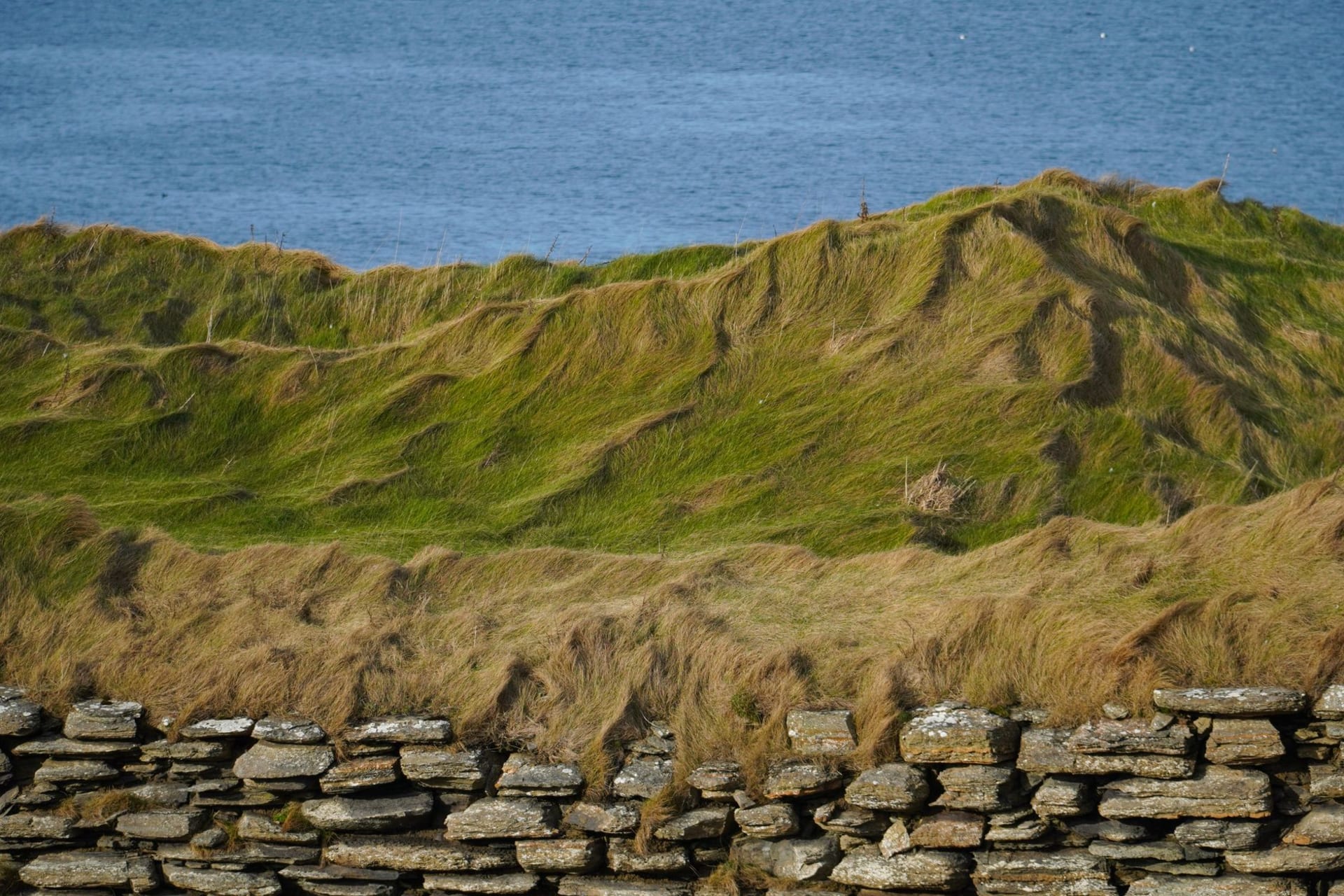
Jarlshof was unknown to modern visitors until a violent storm in the 1890s stripped away the topsoil and exposed stone walls that nobody knew were there. Before that, the site was known mainly for the ruin of a 16th-century laird’s house — the structure that Sir Walter Scott, who visited in 1814, christened “Jarlshof” in a novel. The Norse name is Scott’s invention. The actual Norse who lived here called it something nobody recorded.
I find this accidental archaeology clarifying in a useful way: places don’t announce themselves. You walk across a field for centuries and then a storm shows you what was underfoot. The visitor center explains the sequence of excavation, which started in earnest in the 1930s, and the audio guide that comes with your ticket is better than most. It was written by someone who clearly couldn’t contain their enthusiasm for Bronze Age metalworking, which is infectious.
Reading the Layers
The site is organized roughly by era moving inward — you walk from the latest structures toward the oldest, which means you end up inside a Bronze Age oval house from around 2500 BCE, which is a genuinely strange feeling. The Iron Age wheelhouses are the most dramatic: circular stone structures with internal walls radiating like spokes, built to last and stubbornly present two thousand years later.
The Norse longhouses are what I found most legible. The proportions are domestic — you can imagine sleeping quarters, cooking areas, the smell of peat smoke. The Norse settlers arrived around 800 CE and stayed for centuries, layering house onto house as older structures fell. There’s a farmstead from that era where you can still trace the outline of a hearth. Someone laid that hearthstone with the same intention I have when I find a good kitchen: warmth and a place to gather.
The Context of the Airport
Sumburgh Airport is immediately adjacent to Jarlshof. This is not romantic. Helicopters servicing North Sea oil platforms come and go throughout the day, and the runway fence is literally visible from the site. The first time a helicopter banked low over the Norse longhouses I flinched at the incongruity. By the third time it had stopped bothering me, partly because the archaeological layers already contain so much incongruity — Bronze Age beside Iron Age beside Viking beside medieval — that one more era felt structurally appropriate.
The airport also means you can arrive in Shetland by air and be at Jarlshof within twenty minutes, which is its own kind of time compression.
What Stays With You
I spent two and a half hours here, which felt right. The site is compact — maybe three hundred meters across — but the density of it rewards slow walking. There’s a Bronze Age workshop where the smith’s molds for casting bronze tools were found; standing in it, you can almost see the sequence of work. The guide mentions that the same site was continuously occupied from around 2500 BCE to the 16th century CE, which is roughly four thousand years. The laird who built the house that Scott visited was the most recent tenant of a very long lease.
When to go: Open April through September officially, though the ruins are visible year-round from the outside. Come in the shoulder seasons (April–May, September) when the site is quieter and the low-angle light makes the stone textures sharp and readable. Bring the audio guide — it’s worth the extra few pounds.