Getting to Lobo takes half a day from the central Serengeti, and the distance is exactly the point. The track runs north through increasingly broken country — the flat plains give way to low hills, the hills acquire granite outcrops, and the outcrops grow until they become the massive kopje formations that define the Lobo landscape: great domed boulders heaped and fractured by 500 million years of geological stress, stained orange and gray by lichen, colonized at their bases by wild fig trees whose roots crack the rock with patient, vegetable persistence. By the time you arrive at Lobo, the Serengeti you know from photographs has been replaced by something wilder and less visited, and the sense of space has changed character from horizontal to vertical.
I came in the dry season, late August, and the guide assigned to me at the lodge — a slight, meticulous man named Msafiri who favored a flat cap and spoke in careful, precise sentences — understood immediately what I was after. I told him I was less interested in the crossings, which I’d already seen near Kogatende, and more interested in what the northern Serengeti looked like when it was quiet. He drove me away from the main tracks on the first morning and we spent four hours in the kopje country northeast of the lodge without seeing another vehicle.

The elephants in Lobo are a different proposition from the elephants you encounter in the central Serengeti. These are larger breeding herds — families of fifteen, twenty animals — and they move through the acacia woodland in the early mornings with a purposefulness that suggests intimate knowledge of every water source and shade tree within a wide radius. Msafiri tracked one herd through the woodland by following broken branches and fresh dung, explaining the age of each pile with the confidence of someone reading text. We caught up with them at a dry seasonal stream where they were digging in the sand for subsurface water — a behavior that takes decades to learn and is passed down through matriarchal lines. The matriarch was enormous, her tusks asymmetrical, one longer than the other, and she watched us from twenty meters with an evaluation that lasted exactly as long as she needed. Then she returned to digging.
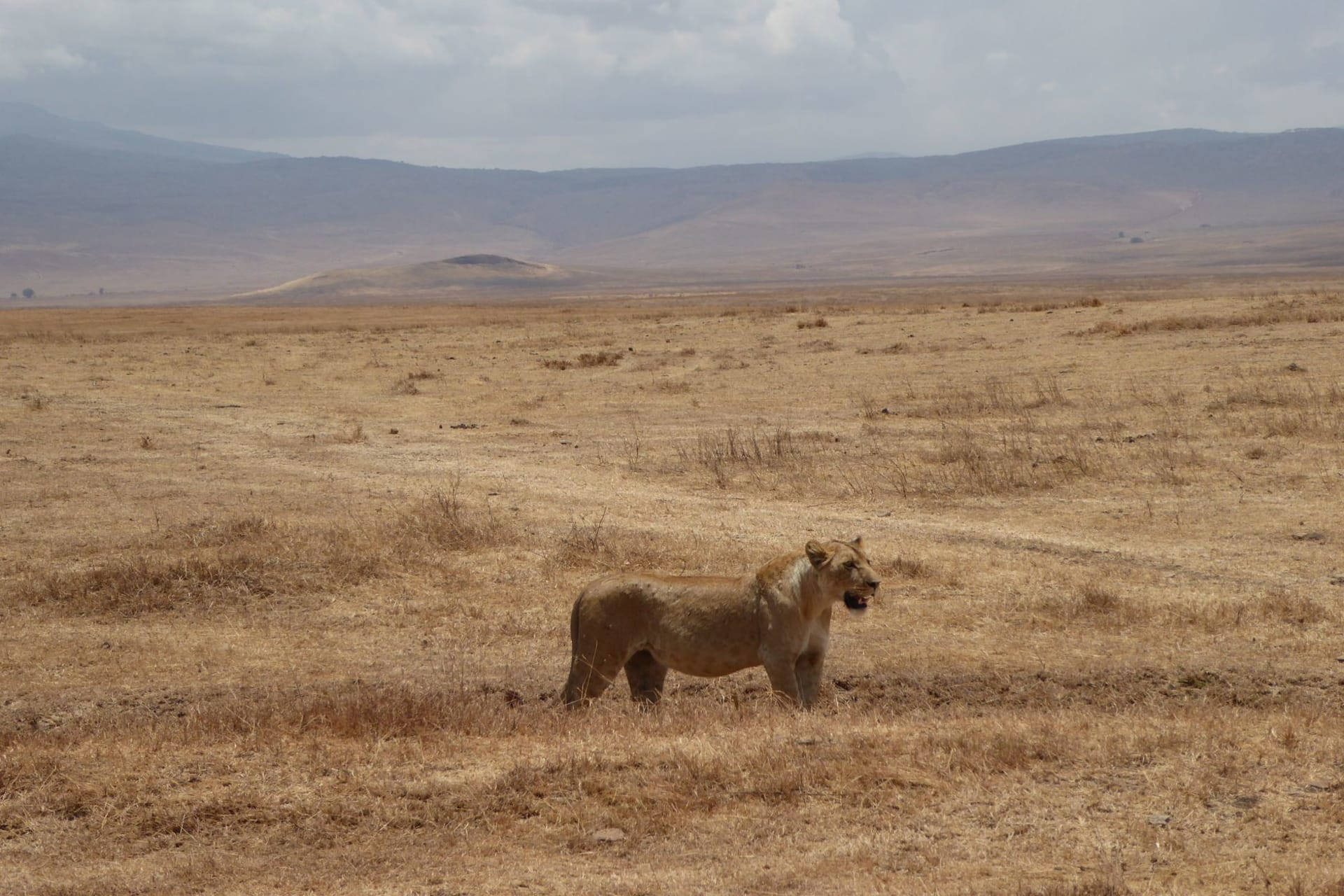
The Lobo kopjes themselves are worth hours. They host a specialized fauna: rock hyraxes sun on warm ledges in the morning, agama lizards flash their orange-headed threat displays from every prominent surface, and Verreaux’s eagles — massive black-and-white raptors I’d never seen before Lobo — hunt from the updrafts above the highest rocks. Lion prides in Lobo are kopje lions, which means they have a vertical relationship with their territory that plains lions don’t. They descend to hunt in the woodlands and return to the rocks to rest, and finding them at altitude — silhouetted against a pale sky, three hundred meters up a boulder field that seems impassable — is one of the more startling things the Serengeti can show you.
The lodge near Lobo serves food in the open-sided dining area while baboons watch from a respectful distance and the cook explains, unprompted, the best way to cook tilapia from Lake Victoria, which involves a specific sequence with lemon and ground dried chili that he says his mother invented. I believed him. I ate the fish and watched the sun collapse behind the kopjes and the sky go through three colors in four minutes, and Msafiri came to ask if I wanted to go out again after dark to look for leopards. I said yes immediately.
When to go: August through October is the optimal window — dry season, elephants concentrated near permanent water, the tail of the migration passing through. This is also when lion activity is highest in the kopjes. The area receives far fewer visitors than the central Serengeti year-round, which makes shoulder seasons (November–December, February–March) appealing for those who want great wildlife with almost no other vehicles.