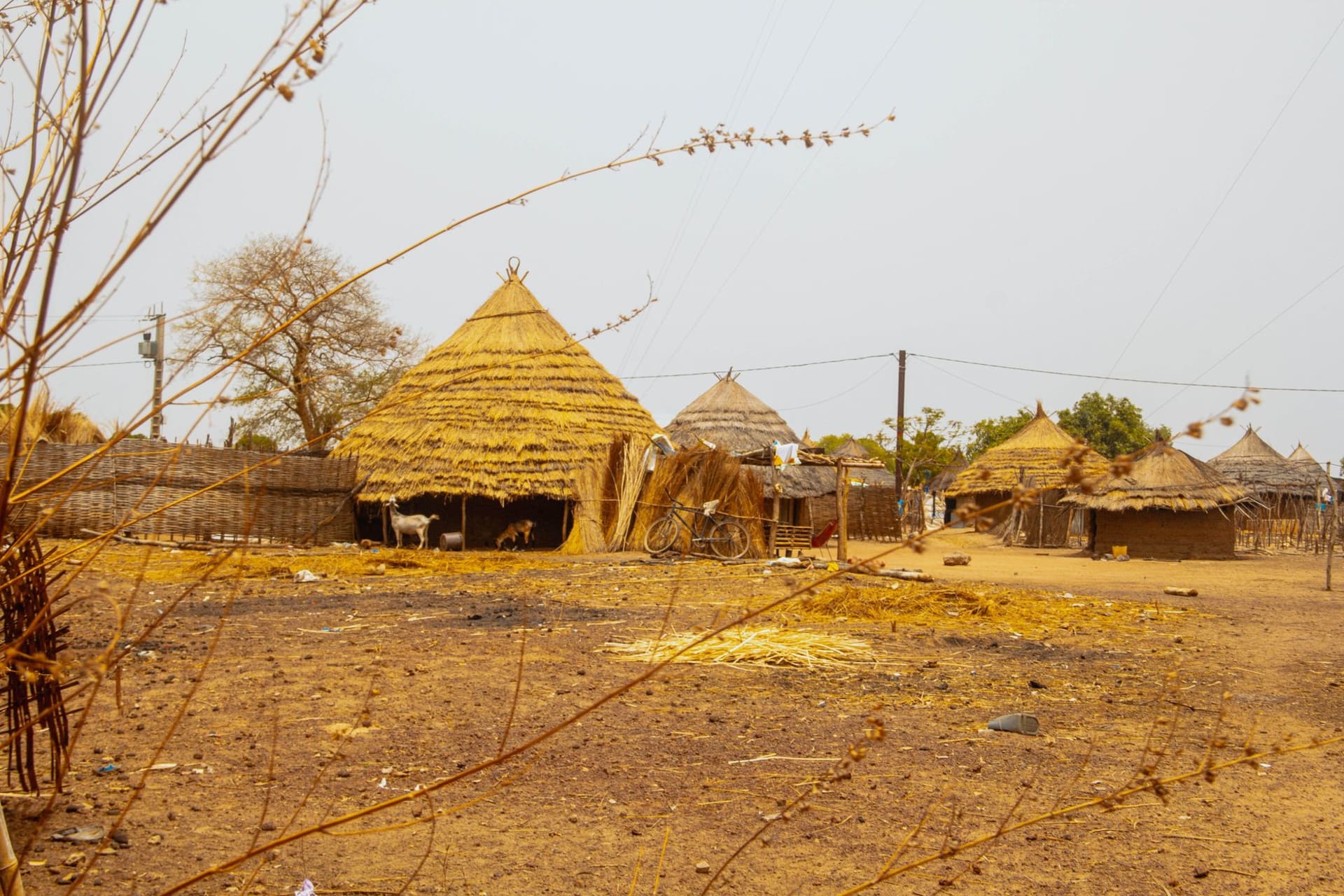
South of Dakar the coastal road straightens out and the city noise drops away in stages. The toll gates, the traffic, the vendors threading between cars at red lights — all of it thins, then stops. By the time you reach Mbour an hour later, the Atlantic is visible from the road and the air smells properly of salt. The Petite Côte runs roughly a hundred kilometers from Mbour south to Joal-Fadiout, and it contains a version of Senegal that the north doesn’t prepare you for: beach culture, resort infrastructure, and genuine fishing villages pressed up against each other with varying degrees of grace.
The Fish Market at Dawn
Mbour’s morning market is reason enough to come to the Petite Côte and reason enough to accept that you will not sleep past five. The painted pirogues — blue, yellow, red, their waterlines blackened by years of diesel and sea — come in from overnight fishing runs and beach themselves on the sand in a long, chaotic line. What follows is organized noise: polyfoam ice boxes carried on heads, women in wax-print boubous working the auction in voices that carry over everything, men sorting fish by species and size into rough piles on the wet sand. The smell is intense and specific — fish blood and salt and diesel and something marine that doesn’t have a name I know.
By seven in the morning the transaction is mostly done. The fish goes to Dakar, to Gambia, to markets across West Africa. Mbour is a supply chain node that also happens to look extraordinary in the early light.
Saly: The Resort Strip, Honestly Assessed
Saly is what it is: all-inclusive hotels, European sunburns, beach bars, jet skis. I spent an afternoon there without apology. The beach is genuinely excellent — wide, white, manageable surf. The Senegalese staff running every operation, from kitchen to water sports to bar, are doing so with considerable skill that the resort architecture does not deserve. There’s a kind of honesty to Saly that I appreciated: it doesn’t pretend to be Senegalese cultural immersion. It pretends to be a beach holiday, and it delivers one competently. The tourists who come here for two weeks and go home is not my tribe, but I ate a good lunch and swam in good water and didn’t feel superior about any of it.
Joal-Fadiout: The Island of Shells
The Petite Côte ends at Joal, a fishing town that happens to be the birthplace of Léopold Sédar Senghor. Connected to it by a long bamboo footbridge is Fadiout — an island built entirely on a platform of ancient clamshells. The streets are shells. The granaries are raised on stilts above shells. The cemetery, where Christians and Muslims are buried side by side, is shells. The locals will point out that interreligious burial arrangement with a specific quiet pride, as if they know it’s unusual and have spent a long time being comfortable with it.
Walking across the bamboo bridge at dusk, the shells pink in the low light, the water around the island going gold, I felt that sensation of having arrived somewhere that has its own logic, complete and self-sufficient. It doesn’t need explaining.
When to go: November through March for beach conditions. Mbour’s fish market runs daily but the catches peak in the dry season months. Joal-Fadiout works year-round. Avoid August when the resort strip prices inflate and French summer crowds descend. The Petite Côte is the kind of place that rewards driving it slowly over two or three days rather than day-tripping.