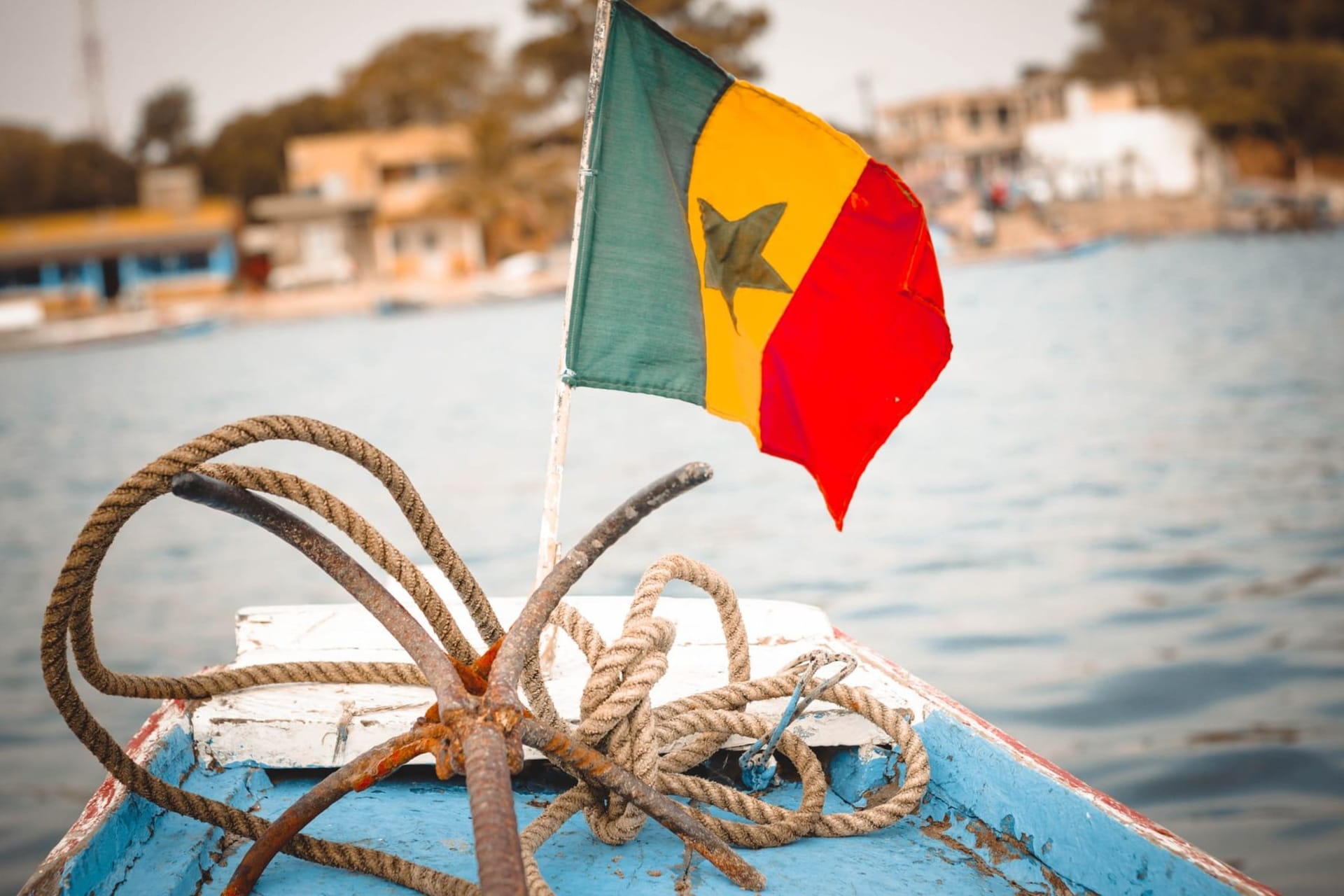
The green south of Senegal — rice paddies, forest villages, animist traditions, and a river to paddle at dawn.
The road south from Ziguinchor changes texture before it changes scenery. The asphalt softens, the red laterite bleeds through at the edges, and somewhere around the village of Kabrousse the air thickens — heavier, greener, carrying something fermented and alive. That smell, palm wine and wet earth and woodsmoke folded together, was the first thing Casamance gave me. It stays.
On the River at First Light
We rented a pirogue from a man named Ibou who spoke no French and didn’t need to. At five in the morning the Casamance River is the color of tin, flat and barely breathing. Lia sat in the bow with her hands trailing the water, watching the mangrove roots rise out of the dark like the ribs of something enormous and patient. By the time the sun cleared the tree line, fishing canoes were already moving in the distance, the men standing to pole them forward in long, unhurried strokes. Nothing about it felt like tourism. It felt like we had slipped into someone else’s ordinary morning and been quietly accepted.
The Sacred Forests of the Diola
Around Oussouye, the villages hold sacred forests — bois sacrés — that mark the boundary between the everyday world and the domain of the spirits. A local guide named Aliou walked us to the edge of one, a wall of old-growth kapok and fromager trees with roots so massive they had swallowed whole stretches of fence. He would not go further. He explained, calmly and without drama, that the fetish priests conducted initiations in there, that the trees themselves were inhabited. I had expected something performed for visitors. What I found instead was a genuine limit — a place where my curiosity was simply irrelevant. I stood at the threshold for a long time, looking at the light disappearing into the canopy, and felt something I hadn’t felt in years: the specific weight of not being permitted to know.
What to Eat in Ziguinchor
Back in the capital of the region, the market near the port sells caldo in clay pots — a Casamançais broth of smoked fish, palm oil, and wild herbs that has almost nothing to do with the thiéboudienne of the north. Eaten with broken bread at a plank table while the river traffic moves behind you, it is one of those meals that stays attached to its place. Nowhere else would it taste like that.
When to go: November through February is ideal — the dry harmattan keeps the humidity manageable and the rice paddies are still green from the October rains. Avoid July and August when the roads south of Ziguinchor become difficult after heavy rainfall.