Oban
"I ate oysters at the harbour and decided the rest of the trip was already worth it."
Oban announced itself to me through smell before I could see it properly: diesel from the ferry terminal, salt from the loch, and something faintly briny that turned out to be the seafood stalls near the harbour. I arrived on a damp October afternoon when the cloud was sitting on the hills across Loch Linnhe and the town lights were already reflecting in the puddles on the pier, and I thought: yes, this is what a Scottish coastal town actually looks like. Not a postcard version — the real thing.
Oban is called the Gateway to the Isles, which is a tourism slogan, but it is also just true. Ferries leave from here to Mull, Lismore, Kerrera, Colonsay, Islay, Coll, Tiree, and onward through the Hebrides. The CalMac terminal is the town’s actual centre of gravity — the timetables structure the day, and the smell of the car deck is part of the local atmosphere.
The Harbour
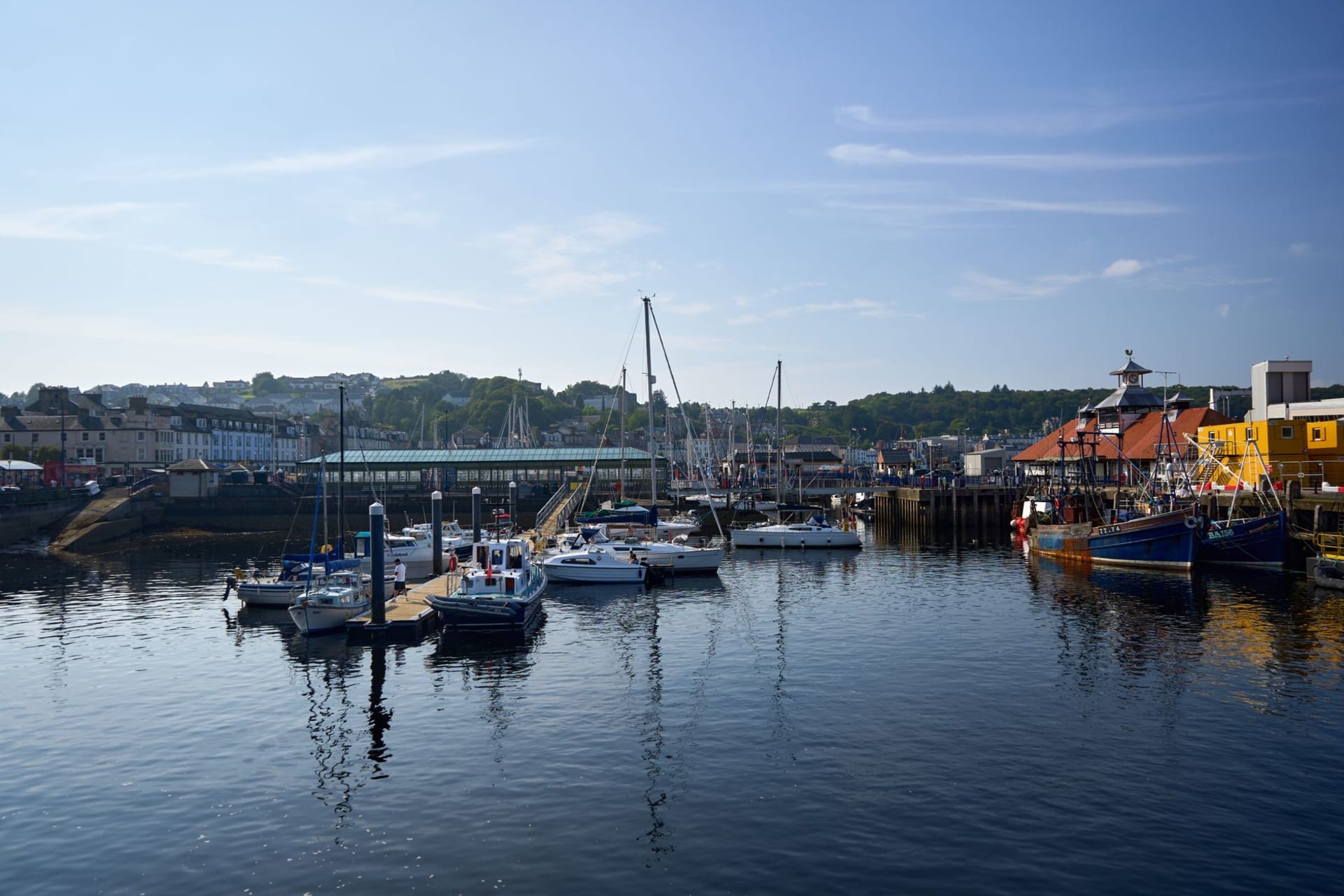
The seafood here is a reason to come in itself. There’s a bar near the ferry terminal that sells oysters, langoustines, crab claws, and smoked salmon out of what is basically a converted shed, and the operation is better for not trying harder than that. I ate standing up, looking at the fishing boats, while a trawler unloaded directly across the quay. The langoustines were the best I’d had in Scotland — properly sweet and fresh in the way that only cold, clean water produces, with a salinity that tasted specifically Atlantic.
The bay is sheltered by the island of Kerrera, which creates a natural harbour calm enough that seals occasionally haul out near the slipways. I watched one sunning itself on a pontoon for ten minutes while it weighed whether to go back in the water. It decided not to. I respected that.
McCaig’s Tower
Above the town, on Battery Hill, there is a strange Colosseum-like structure that a Victorian banker named John Stuart McCaig began building in 1897 to provide winter employment for local stonemasons and to create a monument to his family. He died before it was finished. What remains is an open circular wall of arched granite — roofless, purposeless, entirely photogenic — with public gardens inside and a view across the harbour that explains exactly why McCaig chose this hill. I went up at dusk and watched the ferry lights moving across the dark loch below, and a group of gulls arguing on the wall below me.
The Distillery and the Drive North
Oban Distillery operates in the middle of town, tucked behind the main street in a building that looks too small to be serious about whisky. They have been distilling here since 1794, which means the town grew around the distillery rather than the other way around. The 14-year expression is a west-coast malt — sea salt, light peat, dried fruit — and there is something pleasing about drinking it in sight of the water that shaped its character.
The drive north from Oban on the A828, up through Appin and toward Ballachulish, is one of the better coastal drives in Scotland. The sea is almost always visible to the left, mountains drop steeply to the shore on the right, and the road is just demanding enough to keep you paying attention rather than spacing out. Castle Stalker appears in a sea loch like an illustration from a book about Scotland you read as a child.
When to go: May through September for ferry connections and manageable weather. October is my preference — quieter, the hills starting to turn, the seafood stalls still operating, and the ferry crossings to the islands more dramatic in autumn light. Winter ferries run but on reduced schedules; check CalMac timetables carefully before planning island day-trips.