
Tabuk is not a destination in the conventional sense — it is a launching point, a base camp for some of the most visually dramatic landscapes on the Arabian Peninsula. The city itself is functional rather than beautiful, holding the Tabuk Castle, a fortress on the route of the Hejaz Railway where the Prophet Muhammad reportedly camped during the Tabuk expedition, and a modest regional museum. But the surrounding desert is where the reason for coming reveals itself, and it reveals itself spectacularly.
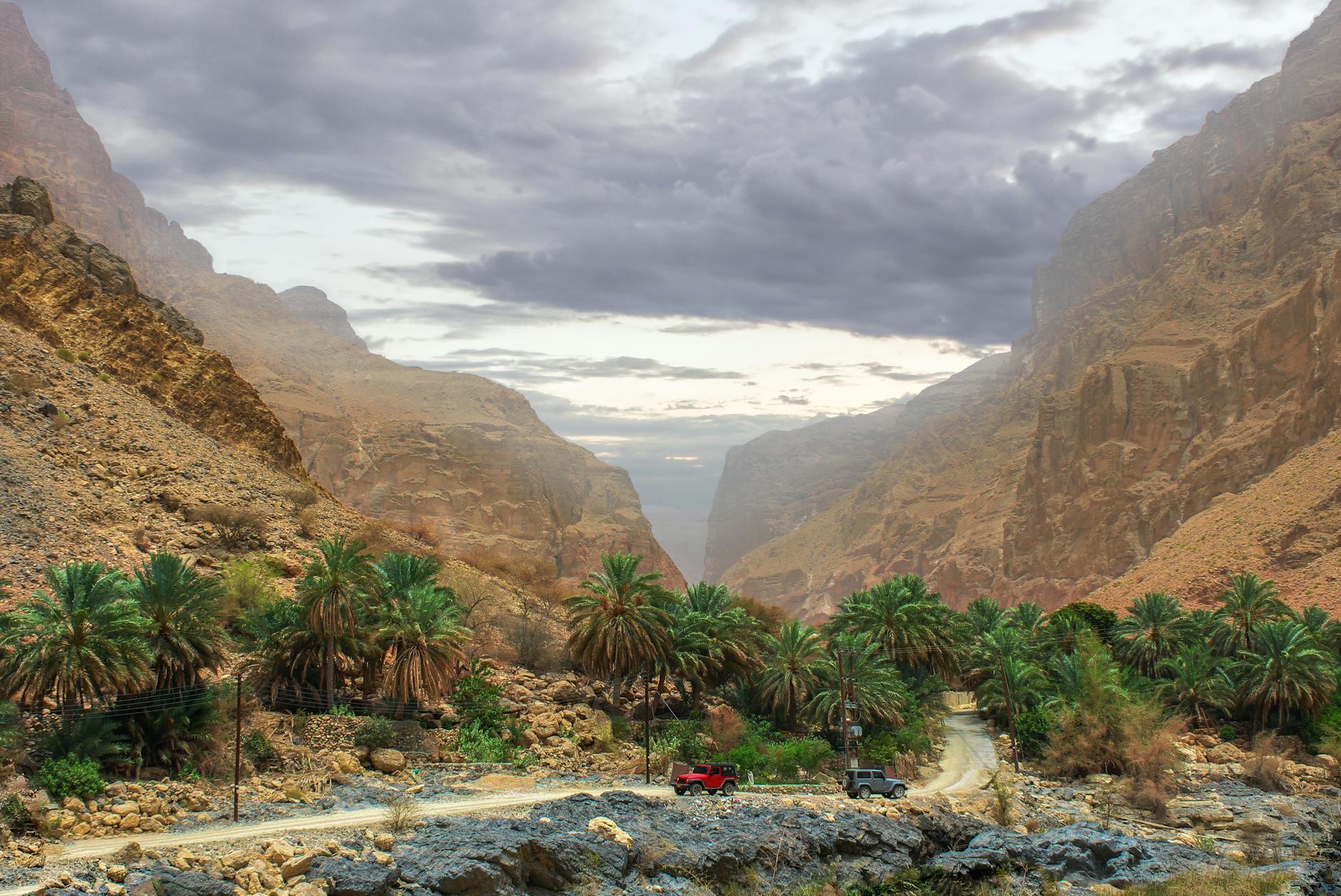
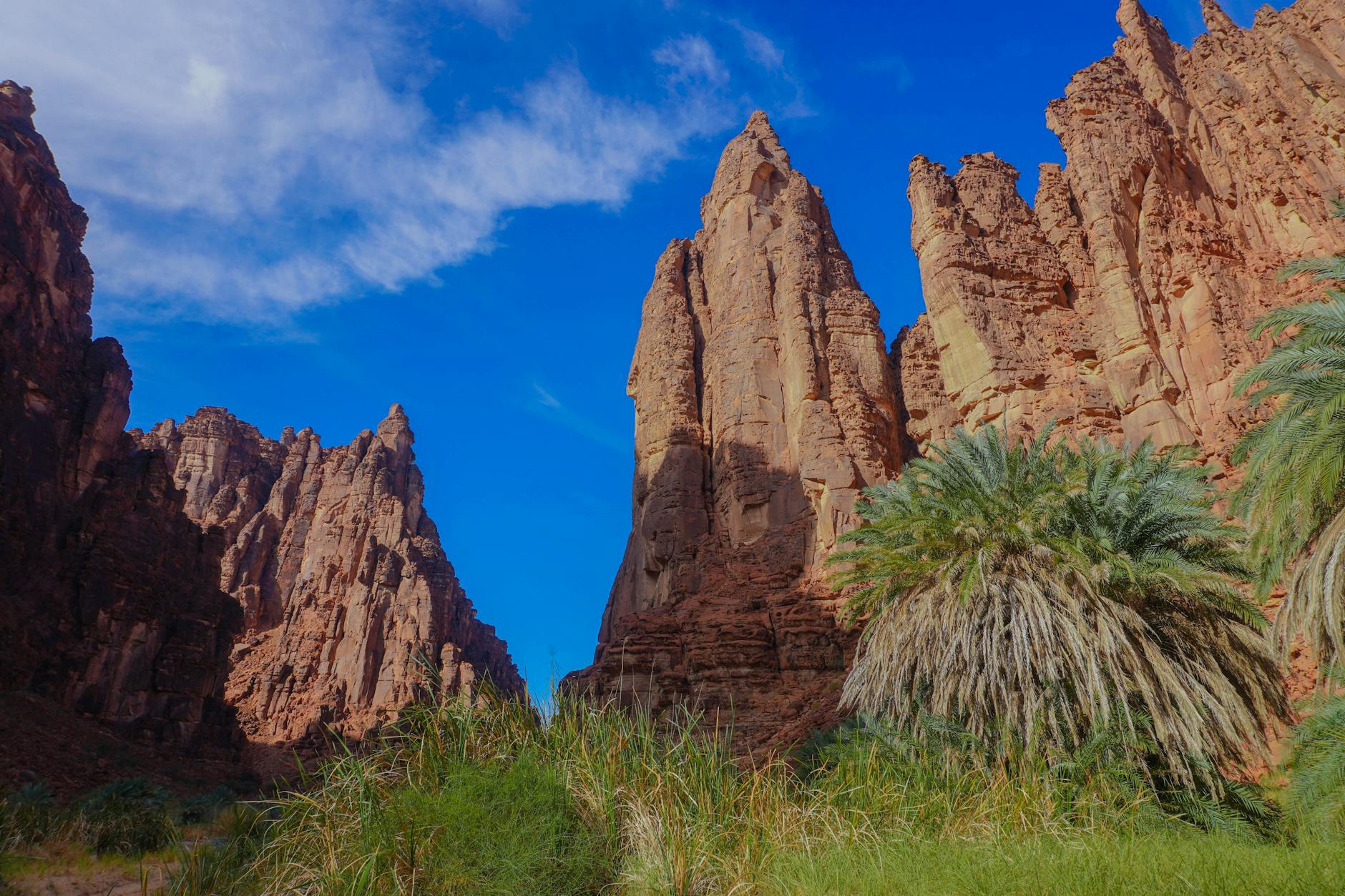
Wadi Al Disah — the Valley of Palms — is the landscape that made me stop the car and sit on the hood and stare. A deep canyon with sheer red sandstone walls rising hundreds of meters on either side, spring-fed pools collecting in the canyon floor, and palm groves creating oasis pockets so unexpected they feel like hallucinations. The red of the sandstone against the green of the palms against the blue of the sky is a colour combination that should feel garish and instead feels holy. I walked the canyon floor for two hours, the walls narrowing and widening, the light shifting as the sun moved overhead, and every turn offered a composition that a landscape photographer would sell a kidney for.
The Hejaz Railway ruins stretch south from Tabuk, and they are among the most evocative relics of Ottoman ambition in the Middle East. Stations built of black basalt sit in the desert, their platforms intact, their waiting rooms filled with sand, the narrow-gauge tracks still visible where they have not been buried. Lawrence of Arabia — or rather, the real T.E. Lawrence — raided these stations during the Arab Revolt, and walking among them you feel the weight of a history that connects Ottoman engineering, Bedouin warfare, and the political reshaping of the modern Middle East.
The ancient site of Tayma — one of the oldest oasis settlements in Arabia — holds rock inscriptions in multiple ancient scripts, a massive stone wall that once enclosed the city, and the famous Qasr al-Radhm well, which has been supplying water for thousands of years. Tayma appears in Babylonian inscriptions, in the records of Nabonidus, the last king of Babylon who lived here for a decade in self-imposed exile. Standing at the well, drawing water from the same source that sustained a Babylonian king, I felt the particular vertigo that comes from touching deep time in an ordinary gesture.
The landscapes between these sites are the journey’s reward: red canyons, black volcanic fields, sandstone formations weathered into shapes that suggest the desert has been sculpting longer than any civilization has been carving. Rent a 4x4, pack supplies, and drive.
When to go: October to March for comfortable exploring temperatures. Tabuk is one of the few Saudi cities that occasionally sees snow in winter, which adds an improbable charm.