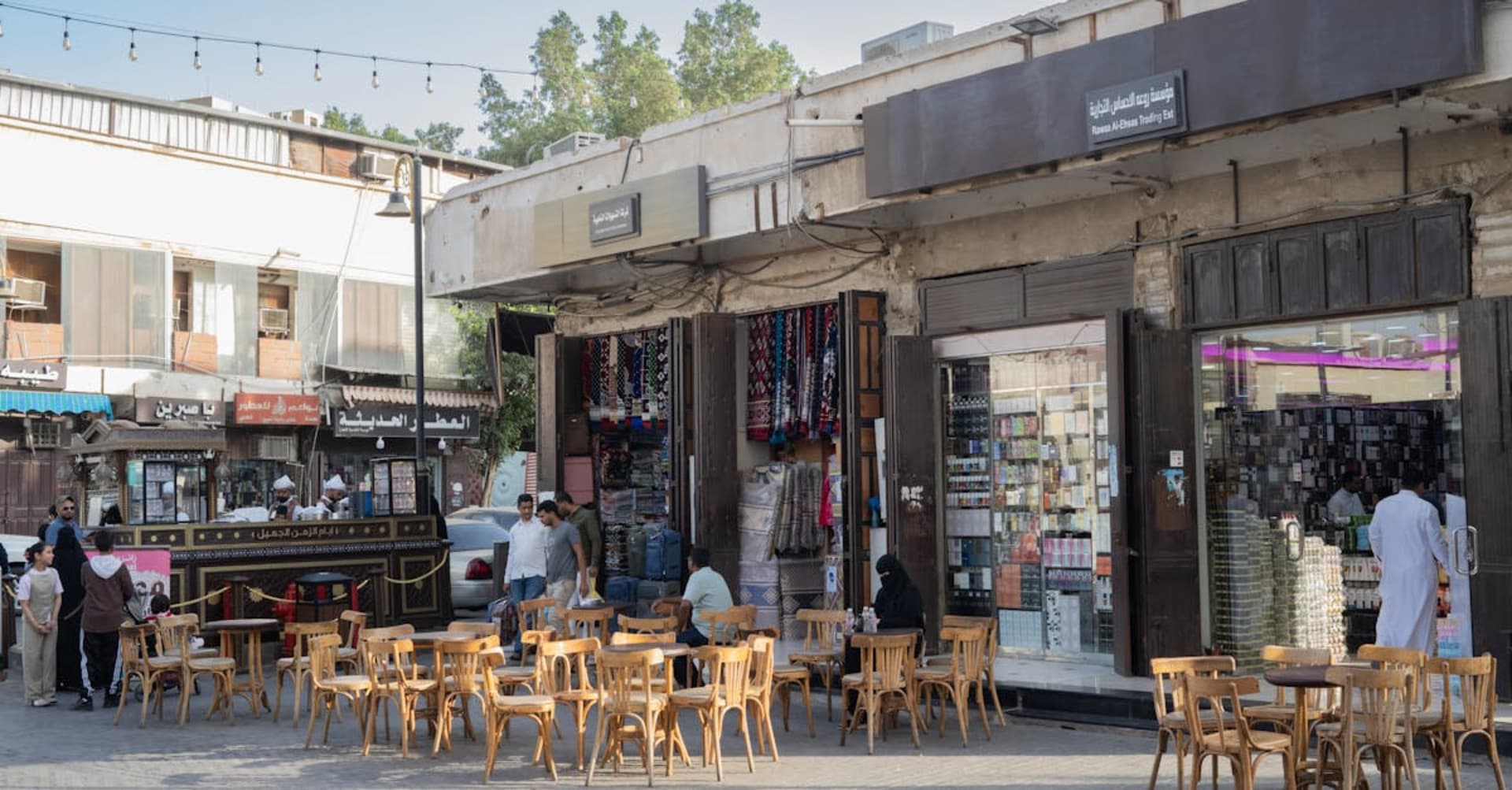
Jeddah is the Saudi city that makes sense to a European. It has a waterfront. It has old quarters with character. It has restaurants where you eat well and late. It has the particular energy of a port city that has been receiving strangers for centuries and has learned to absorb them without losing itself. If Riyadh is the capital, Jeddah is the soul — the place where Saudi Arabia’s cosmopolitan instincts have always been strongest, tempered by generations of pilgrims, merchants, and sailors who passed through and left something behind.
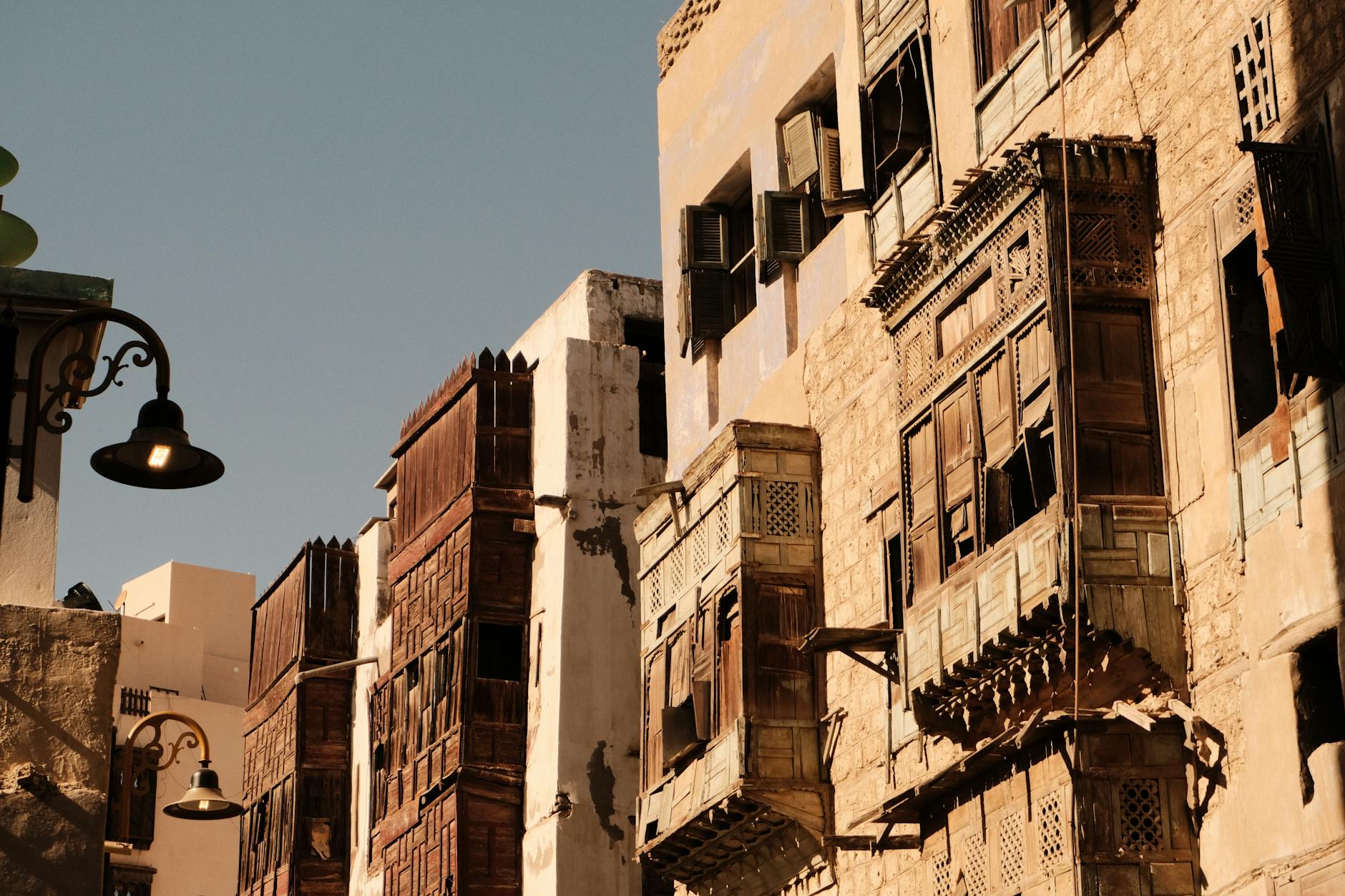
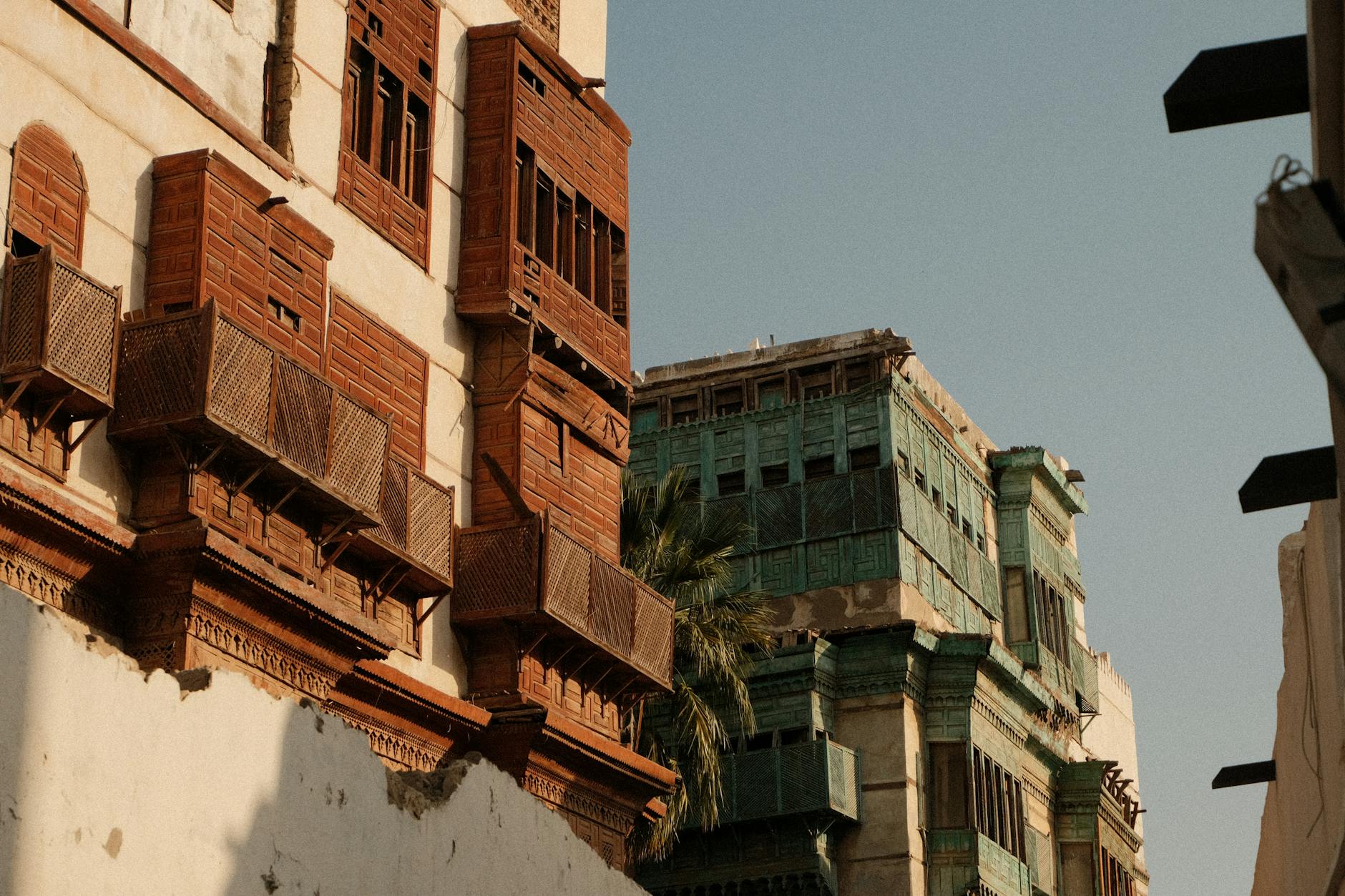
Al Balad, the historic center, is a UNESCO World Heritage Site that deserves the designation. The coral-stone tower houses rise four and five stories above narrow alleys, their facades decorated with elaborate mashrabiya — carved wooden screens that filter light, channel breeze, and allow the women of the household to observe the street without being seen. Some of these houses date to the sixteenth century. The coral was quarried from the Red Sea reef, and the buildings have a texture that is entirely unlike anything I have seen elsewhere — rough, organic, the walls almost alive with the fossilized remnants of the marine life that composed them.
The modern city sprawls along the Corniche, a waterfront promenade stretching thirty kilometers. The King Fahd Fountain shoots 312 meters into the sky — the tallest in the world — and at night, lit from below, it looks like a white column connecting the city to the stars. The art scene surprised me more than anything. The Jeddah Sculpture Museum is an open-air collection along the Corniche featuring works by Miro, Henry Moore, and other international artists placed among the palms and roundabouts, a gallery without walls that most cities would envy.
The Red Sea offshore is the other revelation. Decades of restricted access have preserved coral reef systems that elsewhere in the Red Sea have been degraded by tourism and development. The diving is exceptional — visibility that can reach forty meters, hard and soft coral in conditions that rival the best sites in Egypt, and a quietness underwater that comes from being among the first to explore reefs that have been growing undisturbed for decades. Several dive operators now run day trips from Jeddah’s coast.
The food scene is the most diverse in the kingdom. Jeddah’s position as the gateway to Mecca brought cuisines from across the Islamic world — Yemeni, Indian, Indonesian, Turkish, Egyptian — and the result is a city where you eat Yemeni mandi rice for lunch, Turkish kebabs for dinner, and Indonesian martabak for a midnight snack. The Al Nakheel neighborhood and the restaurants along Tahlia Street are the best starting points, but some of the finest meals I had were in unmarked restaurants in residential neighborhoods, places you find only by asking locals and following their directions into alleys that do not appear on any map.
When to go: November to February for cooler, more comfortable weather. Jeddah’s humidity peaks in summer and can be oppressive. Ramadan transforms the city — vibrant nights, quiet days.