
The name is not hyperbole. I have visited cliffs and escarpments on four continents, and none of them prepared me for the moment the ground simply ends at Jebel Fihrayn. You drive an hour northwest of Riyadh on good highway, then turn onto a desert track that requires a 4x4 and a certain tolerance for ambiguity in navigation. There are no signs. There is no visitor center. There is only the track, the scrub, and eventually the edge — a limestone cliff that drops hundreds of meters to a flat plain stretching to the horizon without a single feature to arrest the eye.
The geological story amplifies the visual drama. These cliffs are the eroded edge of an ancient seabed — the Tuwaiq Escarpment, a wall of Jurassic limestone that once lay beneath an ocean. The fossils embedded in the rock confirm what seems impossible when you are standing in one of the driest places on earth: that this desert was once an ocean floor, that the marine creatures whose shells compose the cliff lived and died here when the Arabian Peninsula was submerged, and that the forces that lifted this seabed into a desert cliff operated on a timescale that makes human history feel like a footnote.
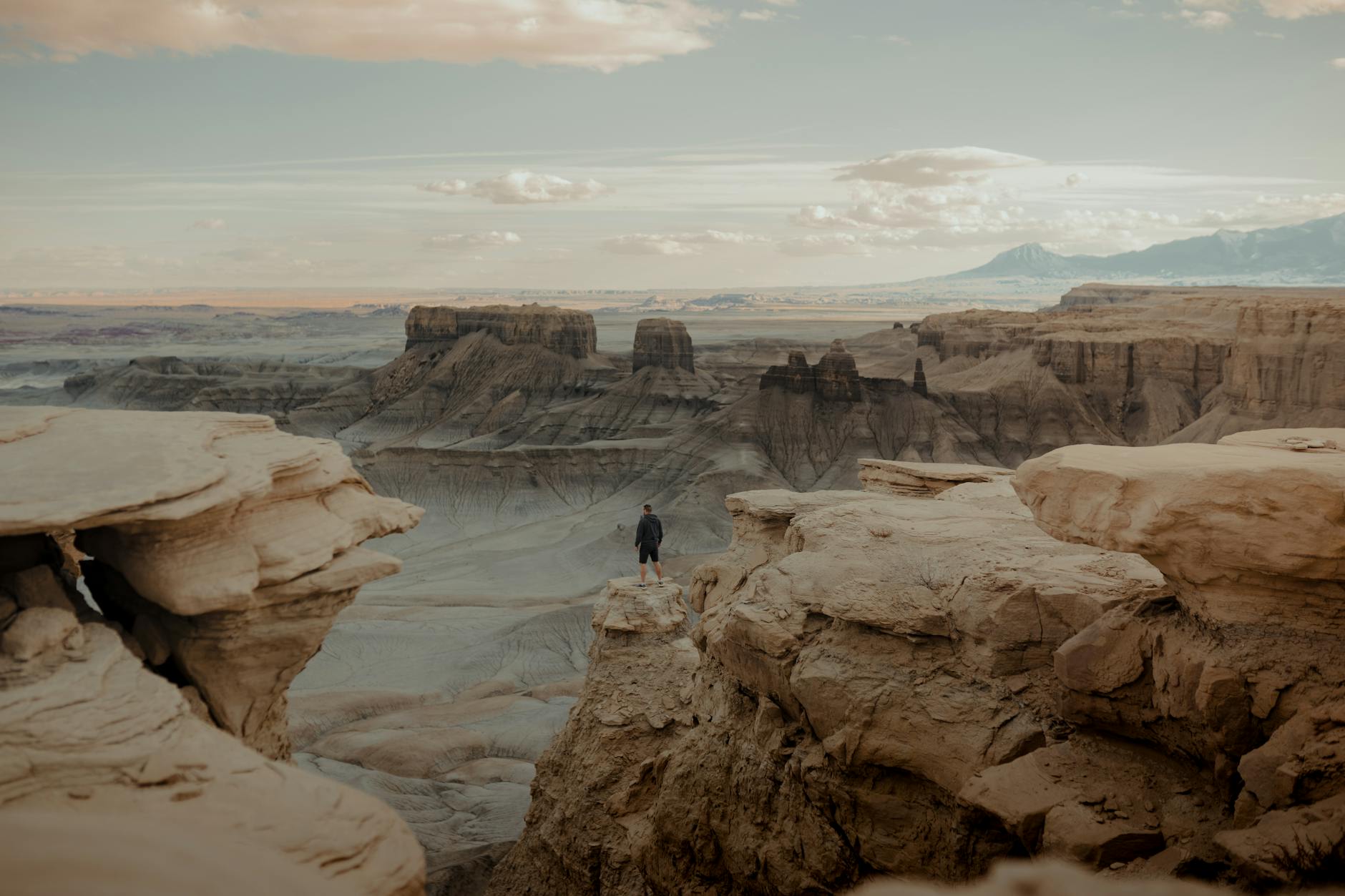
There are no fences, no guardrails, no ticket booths. You walk to the edge and look down into a canyon system carved by millennia of flash floods, the walls layered in cream, rust, and grey. The wind comes from below — warm, carrying dust, smelling of the nothing that stretches before you. I sat on the rim with my feet hanging over several hundred meters of air and ate a sandwich I had brought from Riyadh, and the scale of the view made conversation feel beside the point. The friends I was with sat at their own spots along the edge, each staring into the same void, each privately reckoning with a landscape that has no interest in human presence.
The sunset from the rim is the essential experience. The entire western sky turns through a spectrum from gold to crimson while the cliff face catches the last light, and the shadows in the canyon below deepen until the plain becomes an ocean of darkness. Camping overnight is popular with Riyadh residents on weekends — bring a tent, bring firewood, bring everything, because there is nothing here but the geology and the silence and the stars, which, without light pollution, are overwhelming.
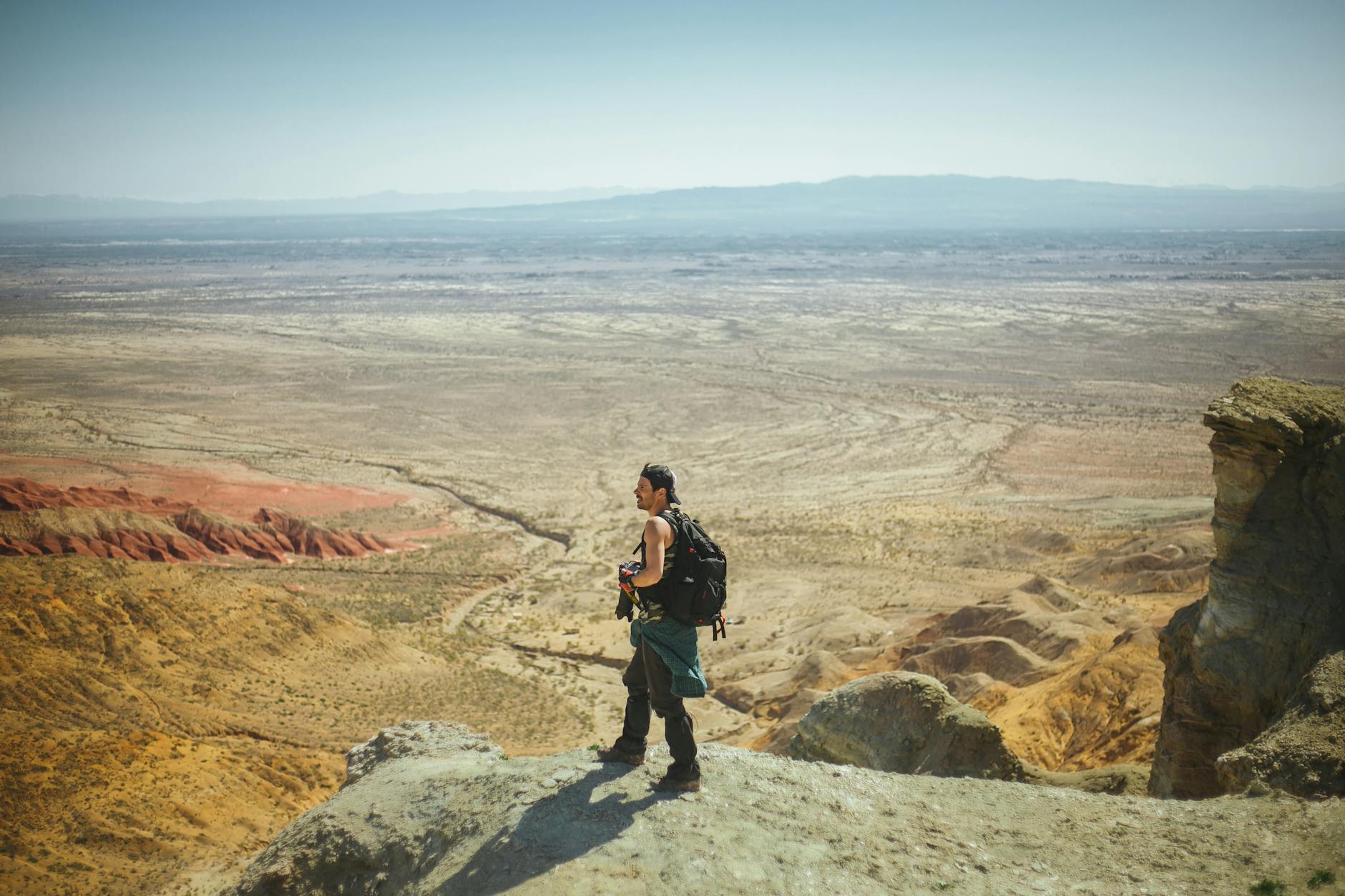
When to go: October to March for comfortable hiking temperatures. Avoid summer entirely — there is no shade and temperatures can exceed 50 degrees. Friday mornings are popular with Riyadh residents; visit midweek for solitude. A 4x4 vehicle is essential for the final approach.