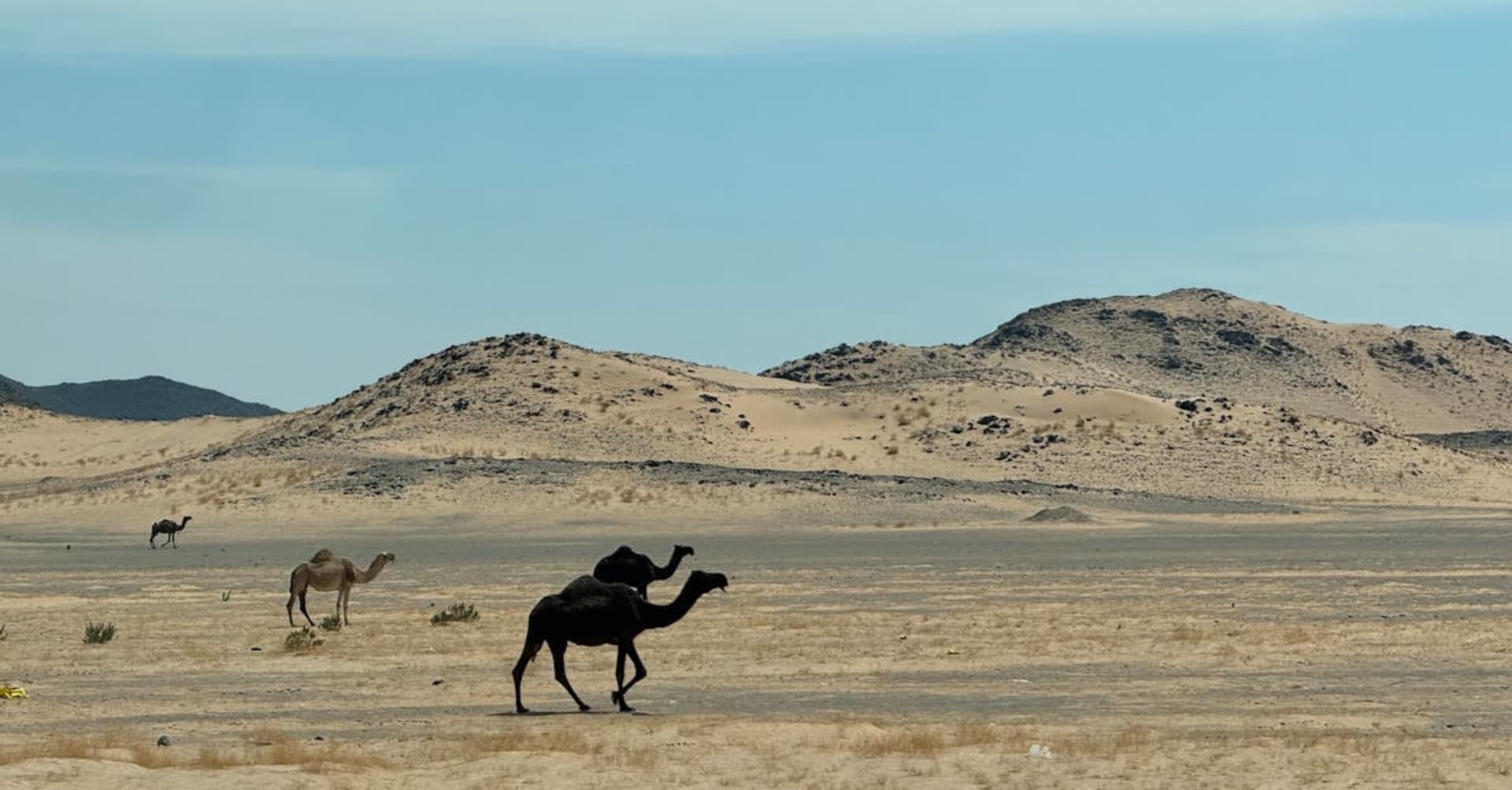
AlUla is the place that made me rethink everything I assumed about Saudi Arabia. I arrived expecting a desert with some old tombs. What I found was an entire civilizational corridor — a valley that has been continuously inhabited for over seven thousand years, its sandstone walls functioning as a kind of geological memory, recording trade routes, religious rituals, and the ambitions of empires that rose, carved their names into rock, and vanished while the rock remained.
Hegra — Mada’in Saleh — is the centerpiece, and it earns that status completely. Saudi Arabia’s first UNESCO World Heritage Site is a Nabataean necropolis of over one hundred monumental tombs, carved into sandstone monoliths with a precision that the desert air has preserved almost perfectly. The facades are extraordinary — Corinthian columns, stepped merlons, carved eagles — each tomb commissioned by a named individual whose inscription still reads clearly after two thousand years. Unlike Petra, its more famous northern sibling, Hegra receives barely any visitors. I stood before the Qasr al-Farid — the iconic lonely tomb carved from a single pinnacle of rock — in complete silence. No one else was there. That will not last.
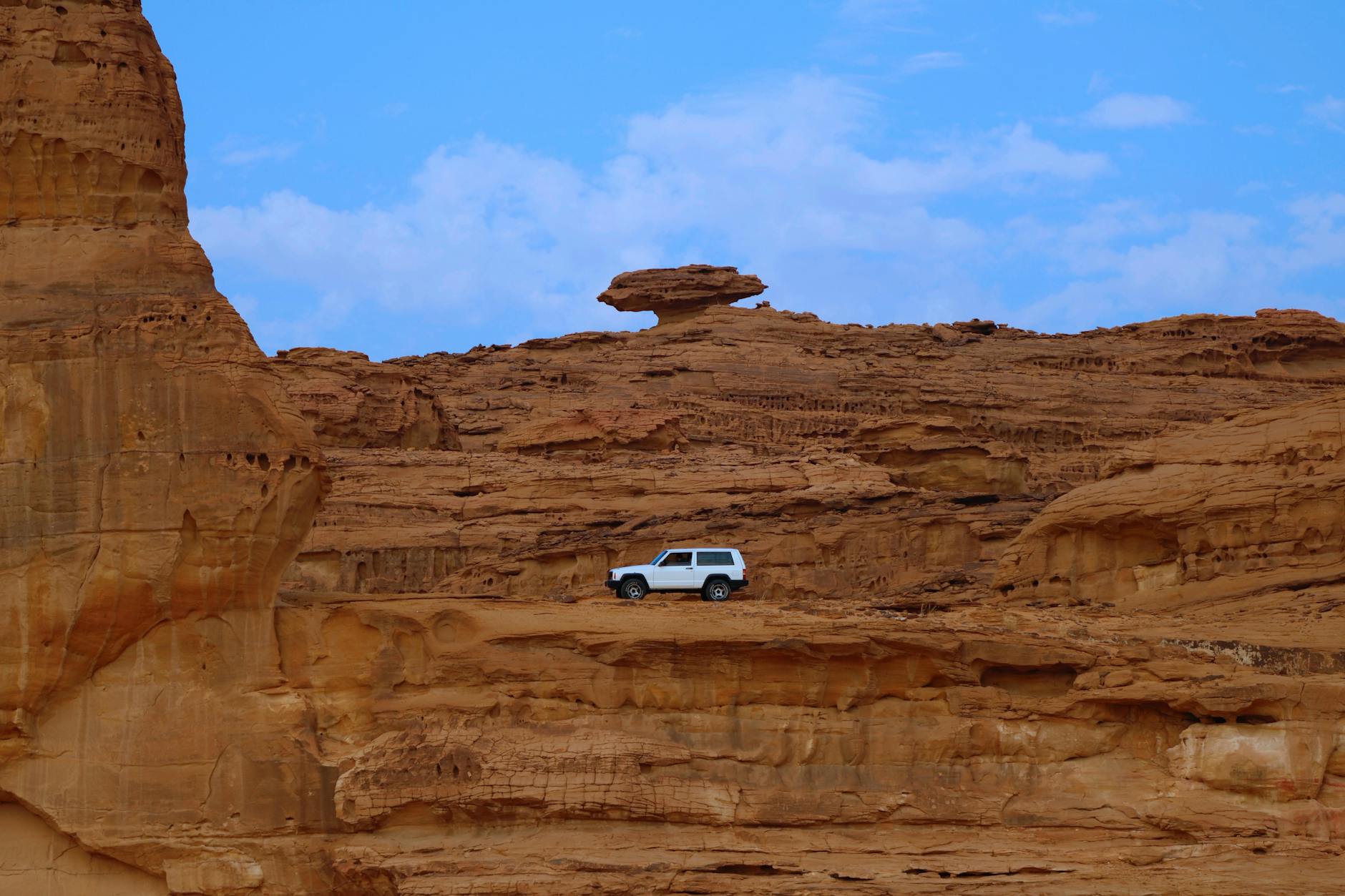
Beyond Hegra, the valley unfolds layer by layer. Dadan predates the Nabataeans — it was the capital of the Lihyanite kingdom, and its rock-cut tombs sit high on a cliff face overlooking the valley floor like sentinels watching over a civilization that disappeared two and a half millennia ago. Jabal Ikmah, nearby, is one of the largest open-air libraries of ancient inscriptions in Arabia — thousands of texts carved into rock in Dadanite, Lihyanite, Nabataean, and early Arabic scripts. Standing there, reading translations of messages that range from trade receipts to love poetry to religious dedications, you realize that the impulse to write on walls is not vandalism. It is the oldest form of publishing.
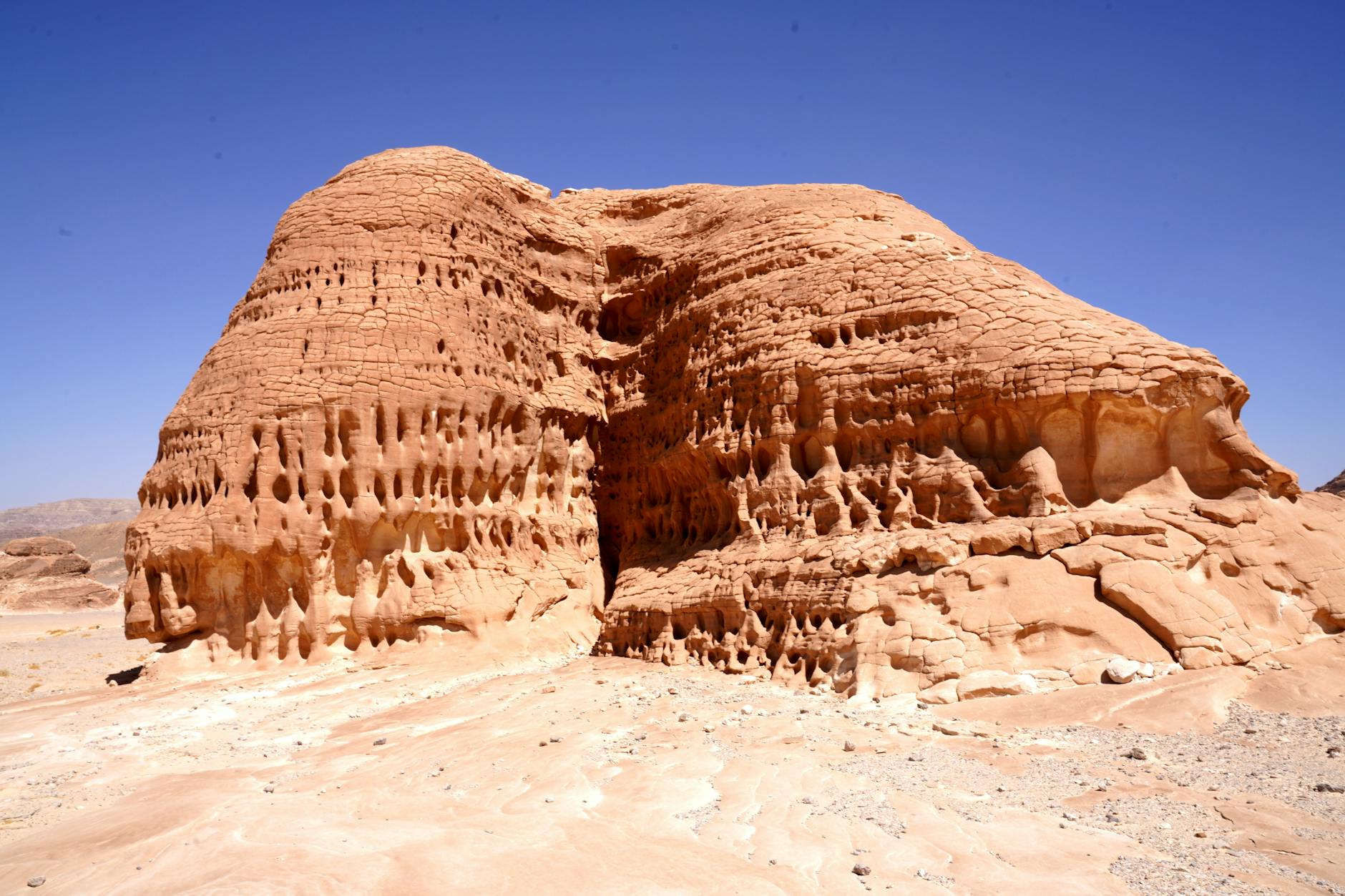
The landscape itself is the other gallery. Elephant Rock — a sandstone formation eroded into the shape of an elephant reaching its trunk to the ground — is the most photographed, but the entire valley is a sculpture garden shaped by wind and time. At sunset, the sandstone turns from gold to copper to deep purple, and the shadows between the formations lengthen until the valley floor becomes a chessboard of light and dark.
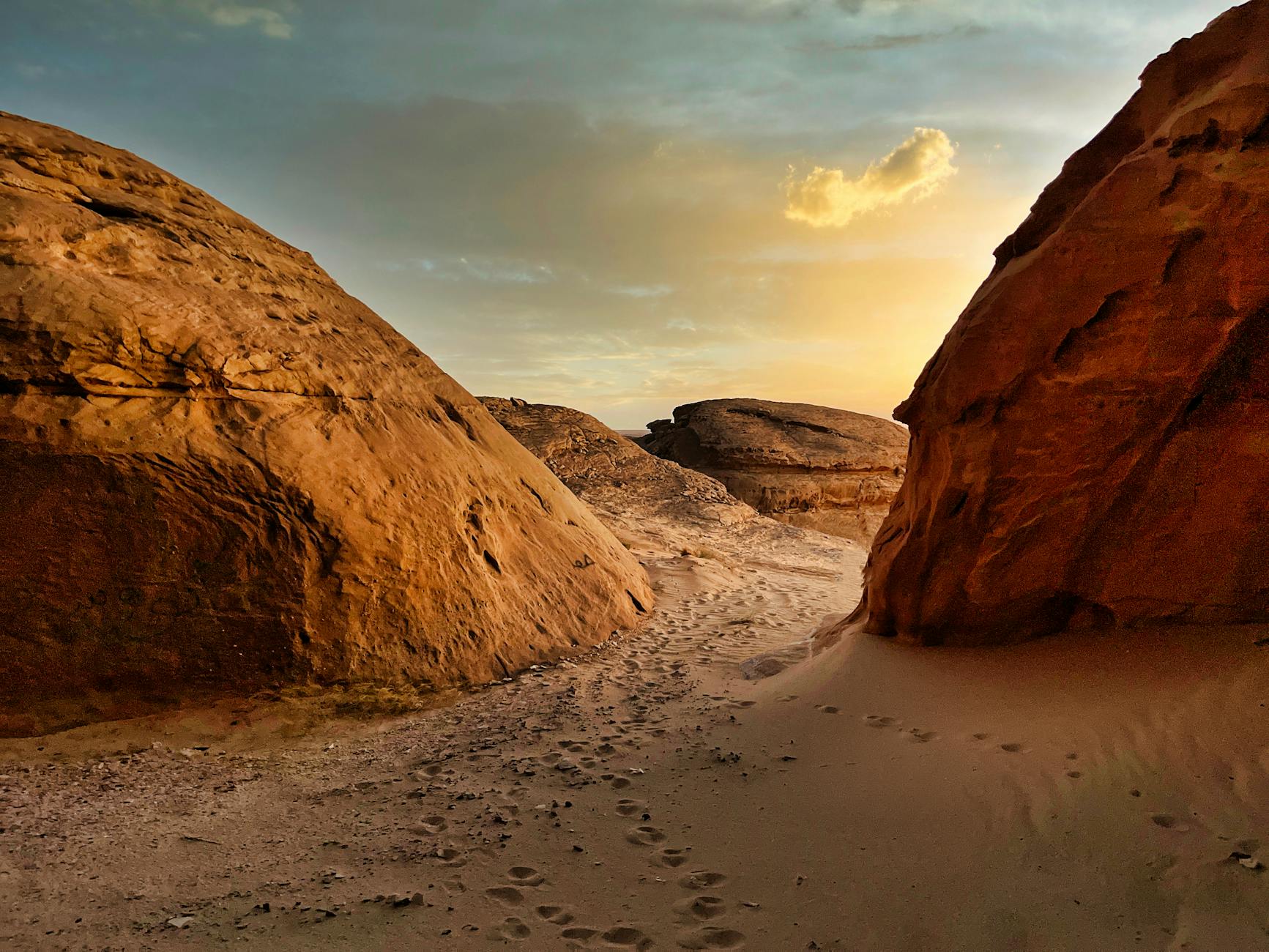
The old town of AlUla is being carefully restored — a labyrinth of abandoned mud-brick houses that once formed a living settlement, its narrow lanes designed to channel shade and breeze through the desert heat. The Saudi government has invested heavily in the valley’s cultural infrastructure, bringing in international architects and artists for the annual Winter at Tantora festival, which stages concerts and installations among the ancient formations. The ambition is enormous, and for now, the balance between preservation and spectacle is holding.
The accommodation has improved dramatically. Habitas AlUla offers desert-luxury tents in the valley, and several boutique properties have opened in the surrounding area. But the best experience remains the simplest: driving into the valley at dawn, when the formations emerge from the mist and the light catches the tomb facades at an angle that makes the Nabataean craftsmen seem like collaborators with the sun.
When to go: October to March for comfortable desert temperatures. The AlUla Arts Festival in winter brings international installations to the desert landscape. Avoid summer — the heat is genuinely dangerous.