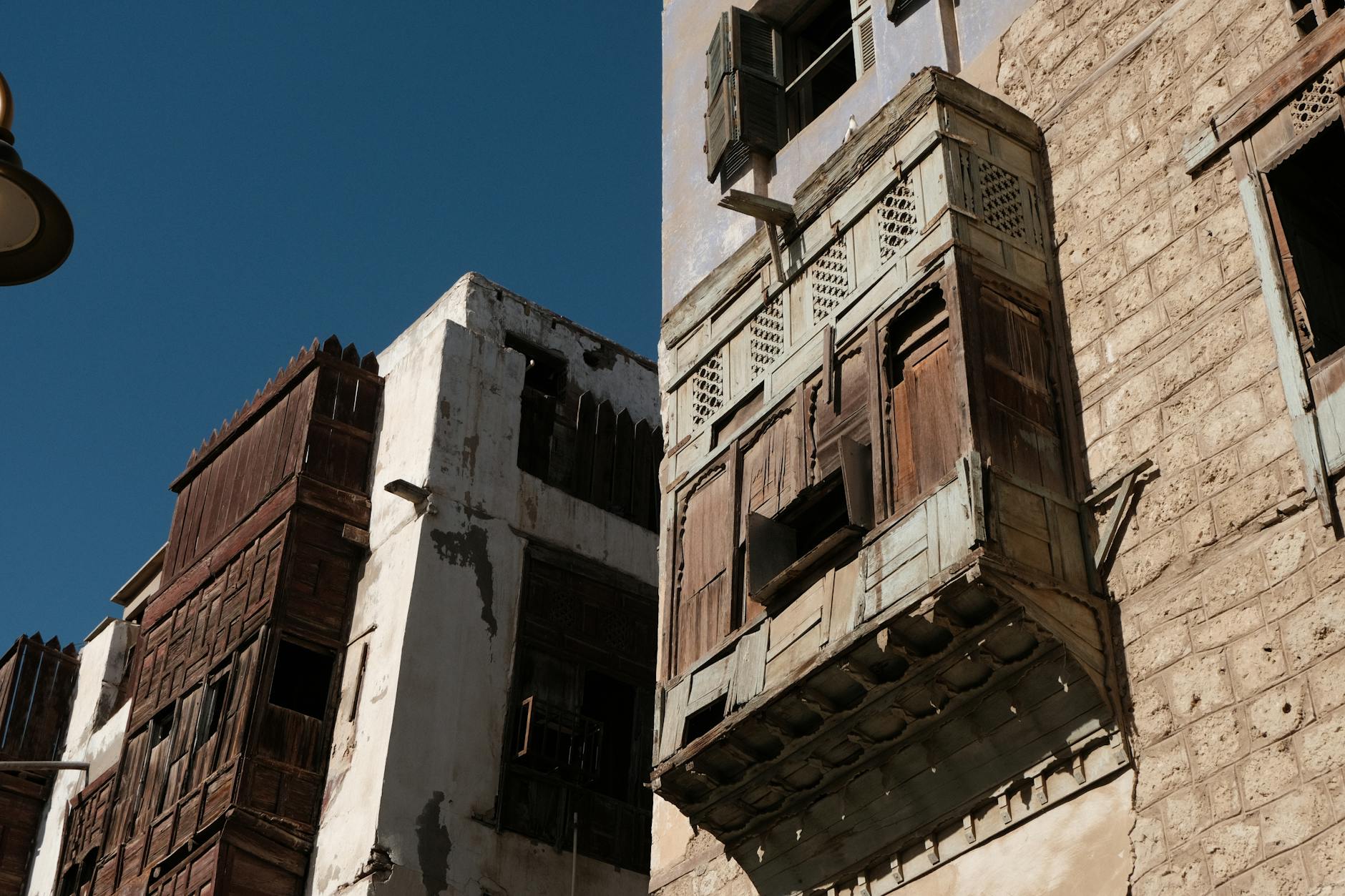
Al Balad is the old soul of Jeddah, and walking its narrow alleys is the closest I have come to the sensation of time travel in Saudi Arabia. This dense quarter of coral-stone tower houses rises four and five stories above lanes so narrow that the mashrabiya screens on opposite buildings nearly touch overhead, creating tunnels of filtered light and shadow that channel the Red Sea breeze through the district like a natural ventilation system designed by someone who understood that architecture, in a climate this hostile, is not about beauty — it is about survival. That it happens to also be beautiful is a bonus.
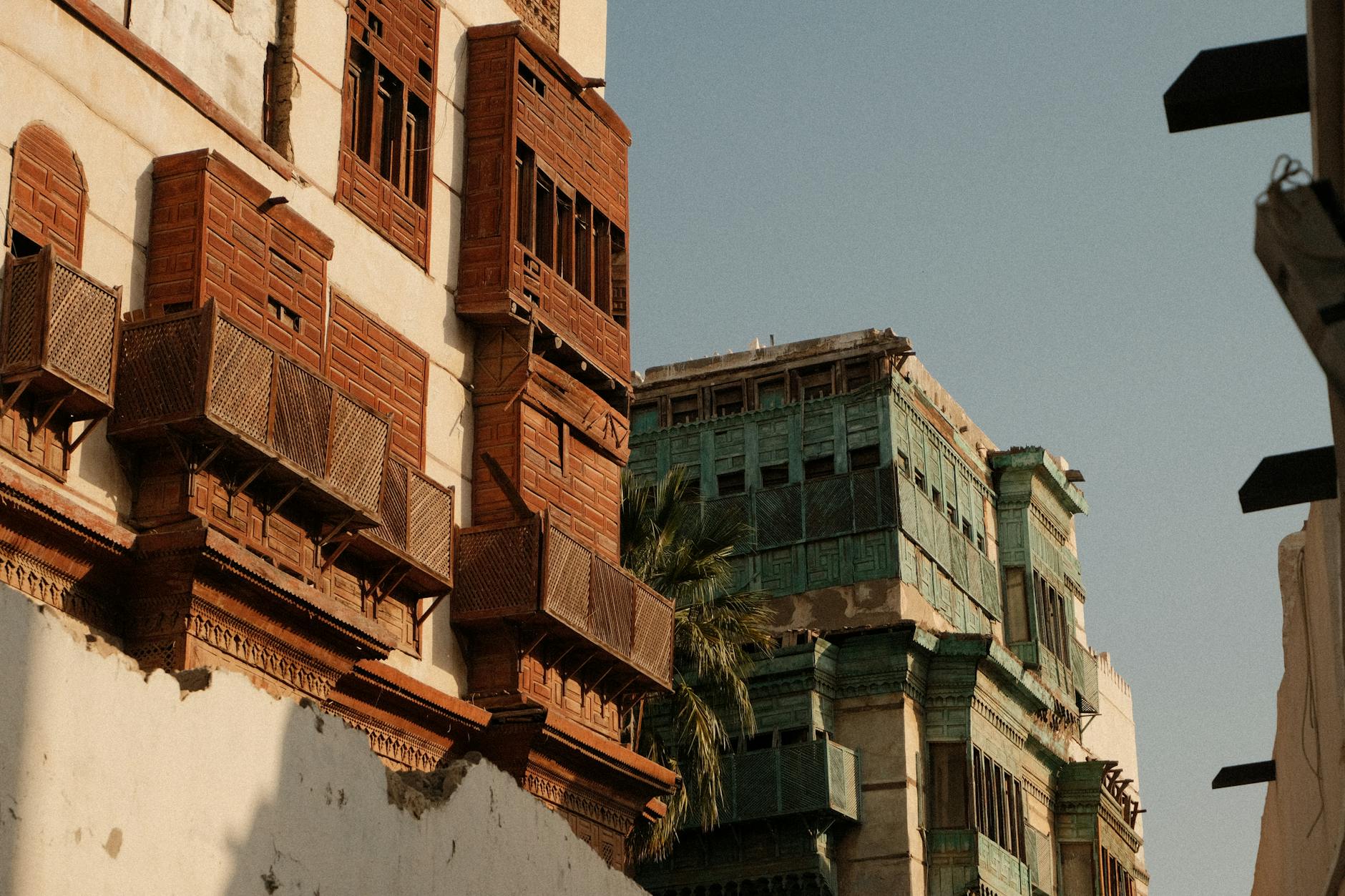
The buildings are constructed from coral blocks quarried from the Red Sea reef — yes, the buildings are made of reef — and the material gives Al Balad its particular texture: rough, porous, organic, the walls embedded with the fossilized shapes of the marine life that composed them. Run your hand along a wall and you feel shells. The mashrabiya screens are the other defining feature — carved wooden lattices of extraordinary intricacy, each panel unique, designed to admit light and air while shielding the interior from the direct sun and the gaze of the street. Some of these screens are masterpieces of woodworking that would be displayed in museums if they were not still attached to houses.
The district is undergoing careful restoration as part of the Jeddah Historic District Program, and the quality of the work is impressive. Houses are being stabilized using traditional materials, alleys repaved, and traditional crafts revived in workshops that line the narrower lanes. The Naseef House, once the grandest merchant residence in the city — five stories of coral and teak, with a tree growing in the courtyard that was once the only tree in Jeddah, a landmark so significant that directions were given in relation to it — is now a museum and cultural center that traces the merchant history of the Hejaz.
The Souq Al Alawi still functions as a working market, its stalls selling perfumes, textiles, incense, and spices. The perfume sellers are the highlight — Saudi Arabia’s relationship with fragrance is deep and ancient, and the oud sellers in Al Balad display their wares with the seriousness and expertise of sommeliers. I spent an hour learning the difference between Cambodian and Indian oud, between Taifi rose and Bulgarian, between bakhoor blends designed for different occasions. I left with more perfume than I needed and the conviction that the Western approach to fragrance — a single bottle sprayed carelessly — misses the point entirely.
Walking Al Balad at night is the essential experience. The heat relents after dark, the mashrabiya screens glow from within, and the district takes on the atmosphere of a Mediterranean old quarter — families strolling, children playing in the lanes, the smell of grilling meat drifting from a restaurant that has occupied the same coral-walled room for decades.
When to go: November to February for the most comfortable walking weather. Evening visits are best year-round — the alleys cool and the atmosphere intensifies after sunset.