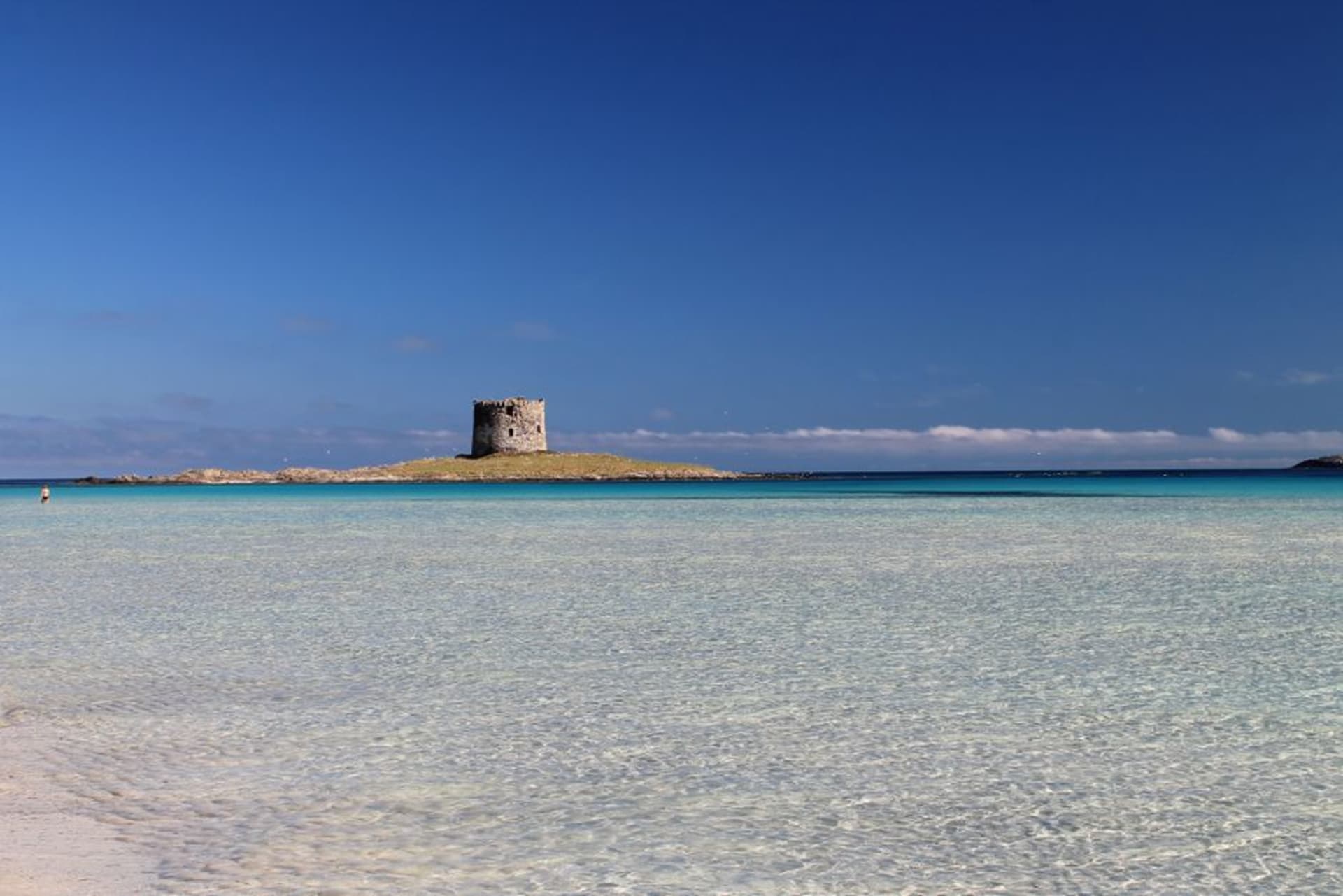
Stintino
"A woman in the harbor told me her great-great-grandparents were forced off Asinara to build this town. She said it without bitterness, which surprised me more than the story itself."
A fishing village founded in 1885 by families evicted from Asinara island, now famous for the pink-white sand and Caribbean-blue water of the Spiaggia della Pelosa just up the coast.
Stintino exists because of an eviction. In 1885, the Italian government decided to turn the island of Asinara, just offshore, into a quarantine station and later a prison, and forcibly relocated the roughly 500 people then living there to this narrow peninsula on the mainland, where they founded a new fishing village from scratch. A woman running a shop near the harbor told me the story matter-of-factly, tracing her family back to that original displaced community, and the town she described — proud, close-knit, still fundamentally organized around two small harbors and the tuna trade — matched what I saw walking its low, unpretentious streets.
Two Harbors, One Village
Stintino’s original layout, unusual for Sardinia, centers on two small ports facing each other across the narrow peninsula — a design apparently intended to give boats shelter regardless of which direction the wind was blowing that day. Fishing boats, considerably outnumbered now by pleasure craft, still work out of the older of the two harbors, and I watched a couple of them unload a modest catch of octopus and small fish early one morning, a scene that felt only lightly touched by the tourism explosion happening a few kilometers up the coast.
Pelosa’s Improbable Color
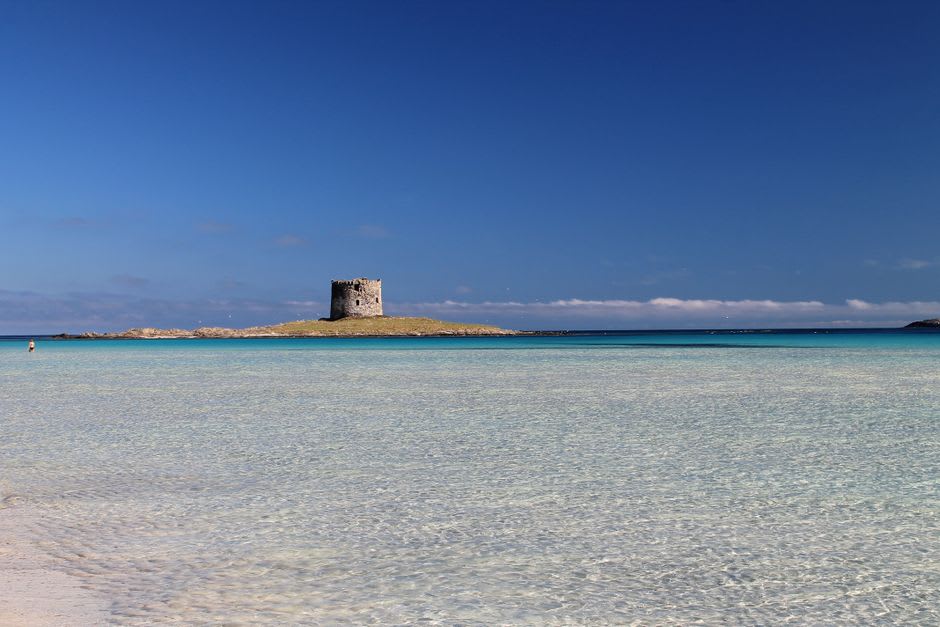
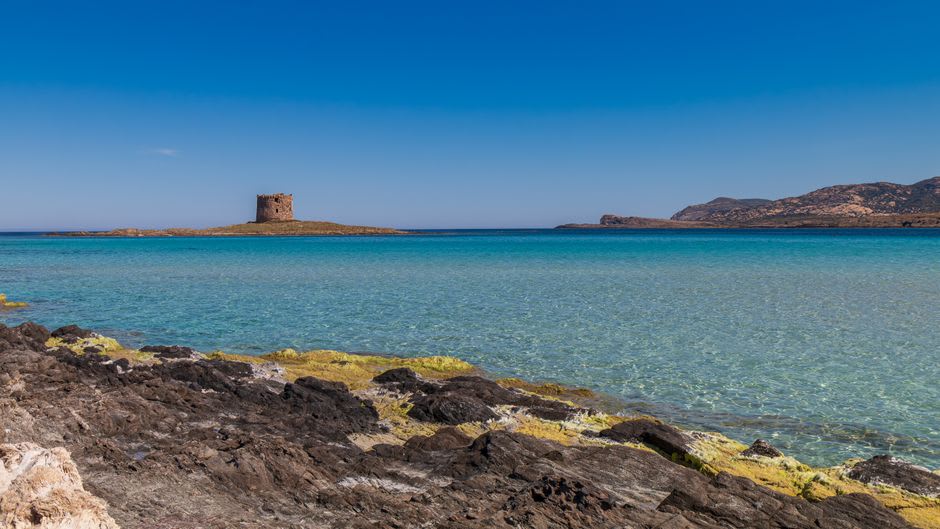
The reason most people actually come to Stintino sits a few kilometers north: Spiaggia della Pelosa, a beach so consistently photographed for its shallow, pale turquoise water and pure white sand that it’s become something of a shorthand for Sardinia itself. A small 16th-century Aragonese watchtower stands just offshore in the surf, close enough to wade toward on a calm day, and the water stays shallow and warm for a genuinely long stretch out from the sand. I went in early October and still found it busy, though nothing like the reported August scenes of towel-to-towel crowding that locals describe with visible exhaustion.
La Pelosetta and the View to Asinara
A smaller, quieter companion beach, La Pelosetta, sits just around the point, and from its sand — or from the headland above it — Asinara island is clearly visible across the strait, the very island Stintino’s founders were forced to leave. I sat there for a while turning that fact over, watching the ferry that now runs tourists out to the former prison, in more or less the reverse direction of the one that had once carried this town’s ancestors away from it.
When to go: Late September and early October give warm water without August’s reported overcrowding at Pelosa. Arrive at Pelosa before nine in the morning regardless of season — the beach fills fast and parking is genuinely limited.