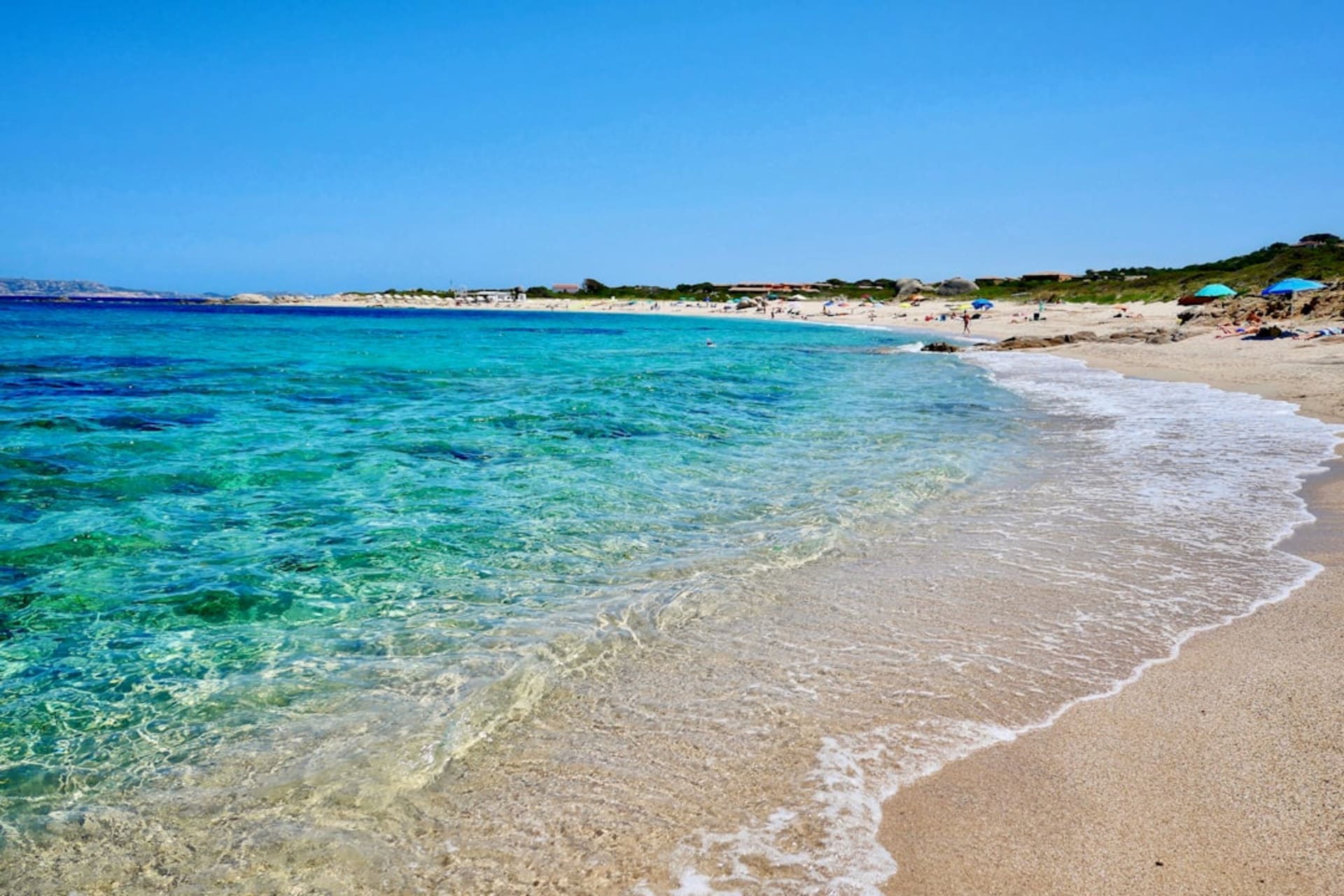
Santa Teresa Gallura
"Corsica looked close enough to swim to. A local told me people occasionally try. I did not."
Sardinia's northernmost town, where granite cliffs shaped like folded dough drop into water so clear you can see Corsica on the horizon and the seafloor at the same glance.
Santa Teresa Gallura sits at Sardinia’s northernmost point, close enough to Corsica that on a clear afternoon the French island’s cliffs are plainly visible across the Strait of Bonifacio, and the ferry that shuttles between the two takes barely an hour. The town itself is a tidy 19th-century grid built by the Savoy kings around a main square, Piazza Vittorio Emanuele, that fills every evening with the specific unhurried energy of a place that has figured out its own scale and has no ambition to outgrow it.
Rena Bianca, in Town
The town beach, Rena Bianca, sits a five-minute walk from the main square and still manages to be genuinely excellent — pale, fine sand and clear shallow water framed by granite headlands, with the old Spanish watchtower, Torre di Longosardo, standing guard at one end. I swam there most evenings after dinner, when the day-trippers had cleared out and the water held the last warmth of the sun. It’s rare that a town’s most convenient beach is also its best one, and Santa Teresa seems mildly aware of its own luck about this.
Capo Testa’s Granite Sculpture Garden
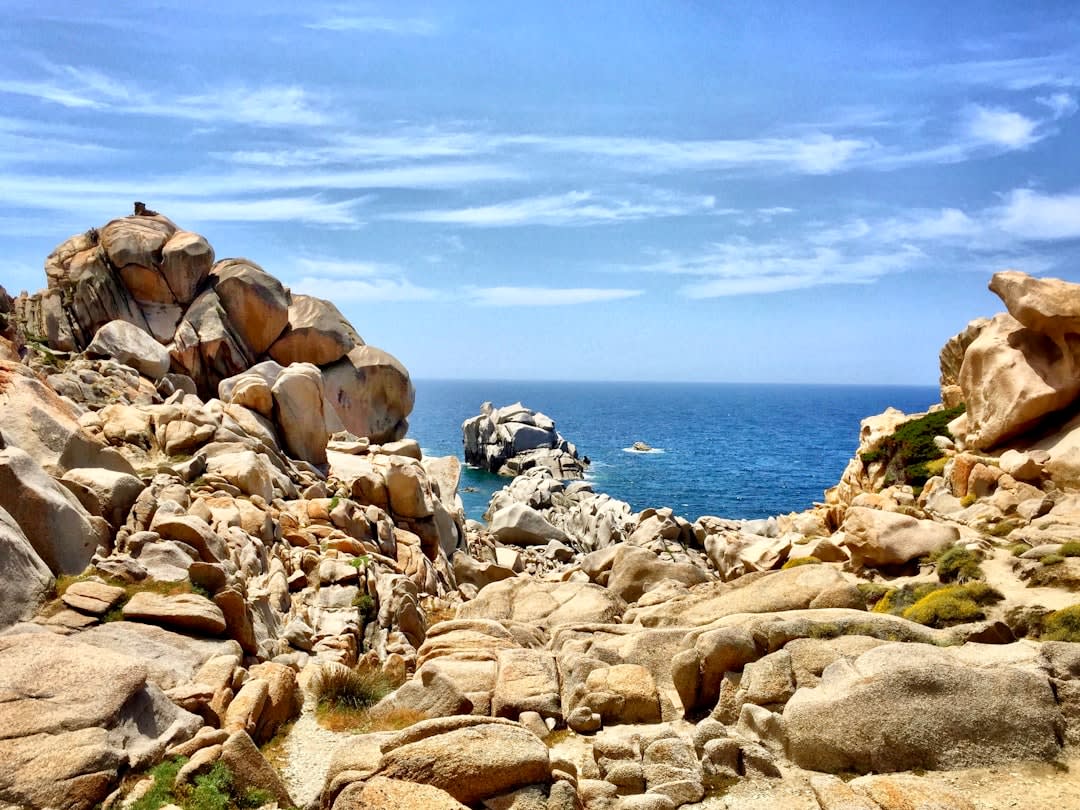
A few kilometers west, the Capo Testa peninsula is a granite landscape that looks deliberately sculpted, though wind and salt spray did all the work over millions of years — smooth pink boulders stacked and balanced in shapes that seem to defy their own weight, with narrow coves of astonishingly clear water wedged between them. I scrambled across the rocks for a couple of hours, finding one cove after another that looked more like a Caribbean postcard than anything I associated with Italy, and eventually just sat with my feet in the water at Cala Grande as the wind — this stretch of coast produces some of Sardinia’s best sailing conditions — pushed small whitecaps across the strait toward the French coast.
The Lighthouse and the Long Light
At Capo Testa’s tip, a lighthouse marks the point where the Tyrrhenian and the strait properly meet, and I stayed until well past sunset watching the light shift from gold to a deep violet-blue over the water, Corsica’s silhouette gradually dissolving into the darkening horizon. A couple nearby had brought a bottle of vermentino and two glasses and toasted the sunset with the casual ceremony of people who clearly did this often. I didn’t have a bottle, but I understood the impulse completely.
When to go: June and September offer strong, reliable wind for sailing and kitesurfing without August’s ferry queues to Corsica. The Capo Testa granite is worth visiting at any hour, but late afternoon light is unbeatable.