Iglesias
"The guide's father had worked this exact shaft. He said it like it explained everything about how he talked about the place."
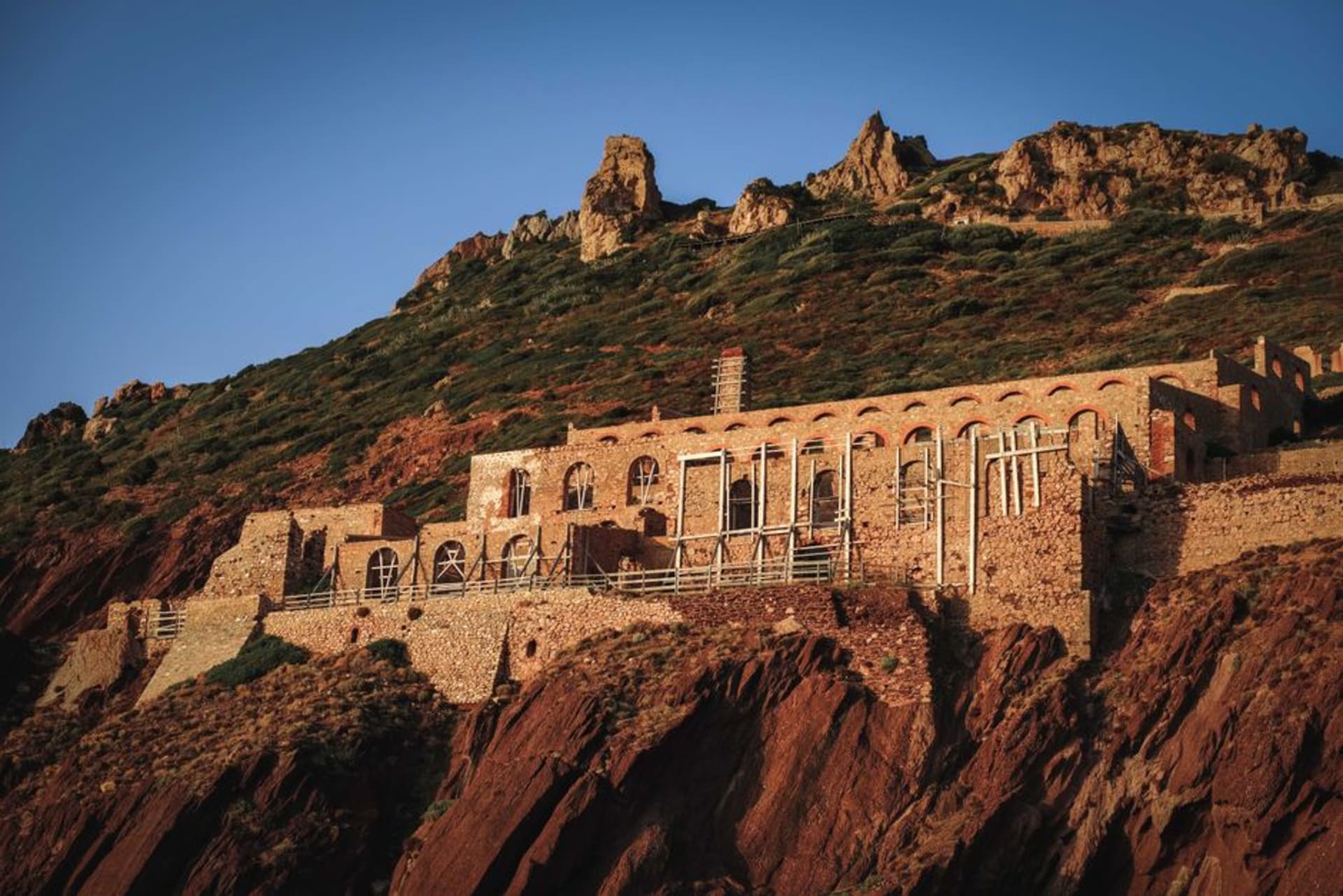
A former mining capital in Sardinia's southwest, where abandoned pit head towers stand over a landscape of lead, zinc, and silver seams that built the town and then quietly left it behind.
Iglesias built its entire identity on what was under its feet — lead, zinc, and silver ore extracted from this corner of southwest Sardinia since at least Roman times, though it was the Pisans in the medieval period and then, decisively, Italian and foreign mining companies in the 19th and 20th centuries who turned the district into one of Europe’s most productive. The mines closed for good only in the 1990s, recently enough that the transition from working town to post-industrial heritage site still feels raw, half-finished, genuinely lived rather than curated.
Porto Flavia’s Engineering Audacity
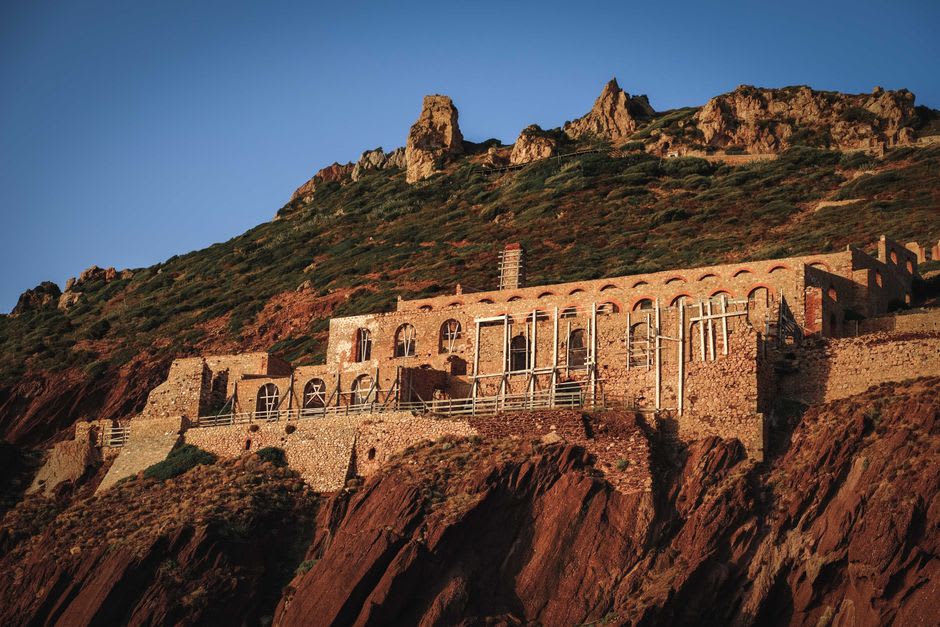
The single most striking site in the district isn’t in Iglesias itself but on the coast nearby: Porto Flavia, an extraordinary loading facility carved directly into a cliff face in the 1920s, where ore was funneled down through tunnels blasted into solid rock to be loaded onto ships waiting below — a feat of engineering that let cargo ships dock and load in a fraction of the time older methods required. Walking the tunnel out to the cliff opening, with the sea suddenly framed dramatically below through what is essentially an industrial window cut into rock, was one of the more unexpected “views” I found anywhere on Sardinia.
Descending Into Santa Barbara
At the Grotta di Santa Barbara, a natural limestone cave discovered accidentally by miners digging deeper into the Monteponi seam, visitors can now descend by lift into chambers that mining had partially flooded and then, once abandoned, left to nature — the result is a genuinely eerie half-natural, half-industrial cavern of stalactites growing alongside rusted mining rails, lit for tours in a way that makes clear how thin the line was between extraction and discovery. My guide, whose father had worked the Monteponi mine itself for over twenty years, narrated the descent with a matter-of-fact pride that made the whole visit feel considerably more personal than a typical museum tour.
The Town Above It All
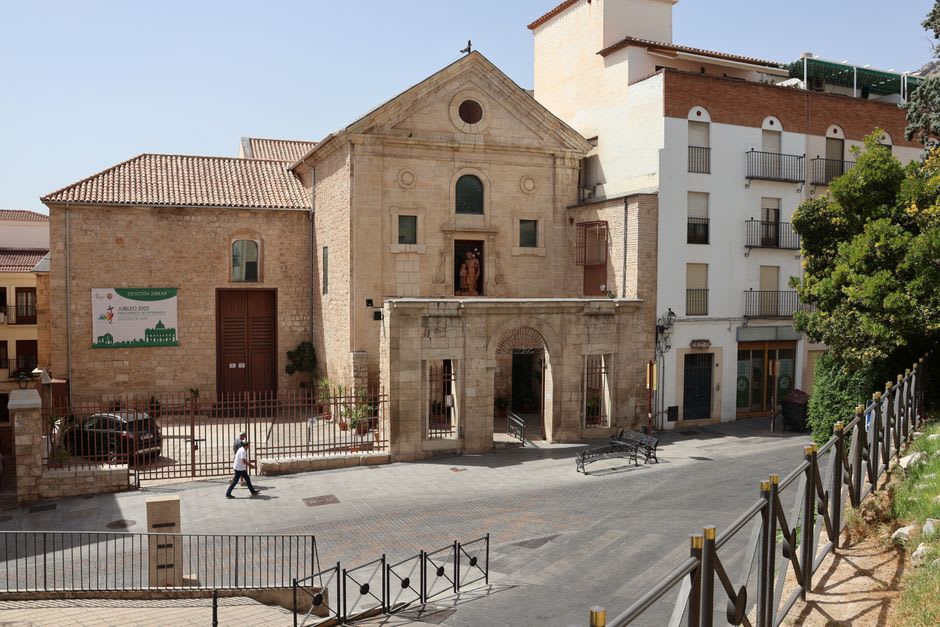
Iglesias itself, its medieval core built by the Pisans and later fortified under Aragonese rule, has a handsome, slightly worn Gothic cathedral and a grid of narrow streets that feel unmistakably shaped by centuries of mining wealth flowing through them, boom and bust in roughly equal measure. I had dinner at a trattoria near Piazza Sella specializing in the region’s own take on cassola, a spiced fish stew, and the owner talked about the mine closures the way people elsewhere talk about a factory town losing its factory — with real grief, decades on.
When to go: Spring and autumn keep temperatures manageable for walking the district’s largely shadeless mining sites. Book Porto Flavia and Grotta di Santa Barbara tours ahead — both run on limited guided time slots.