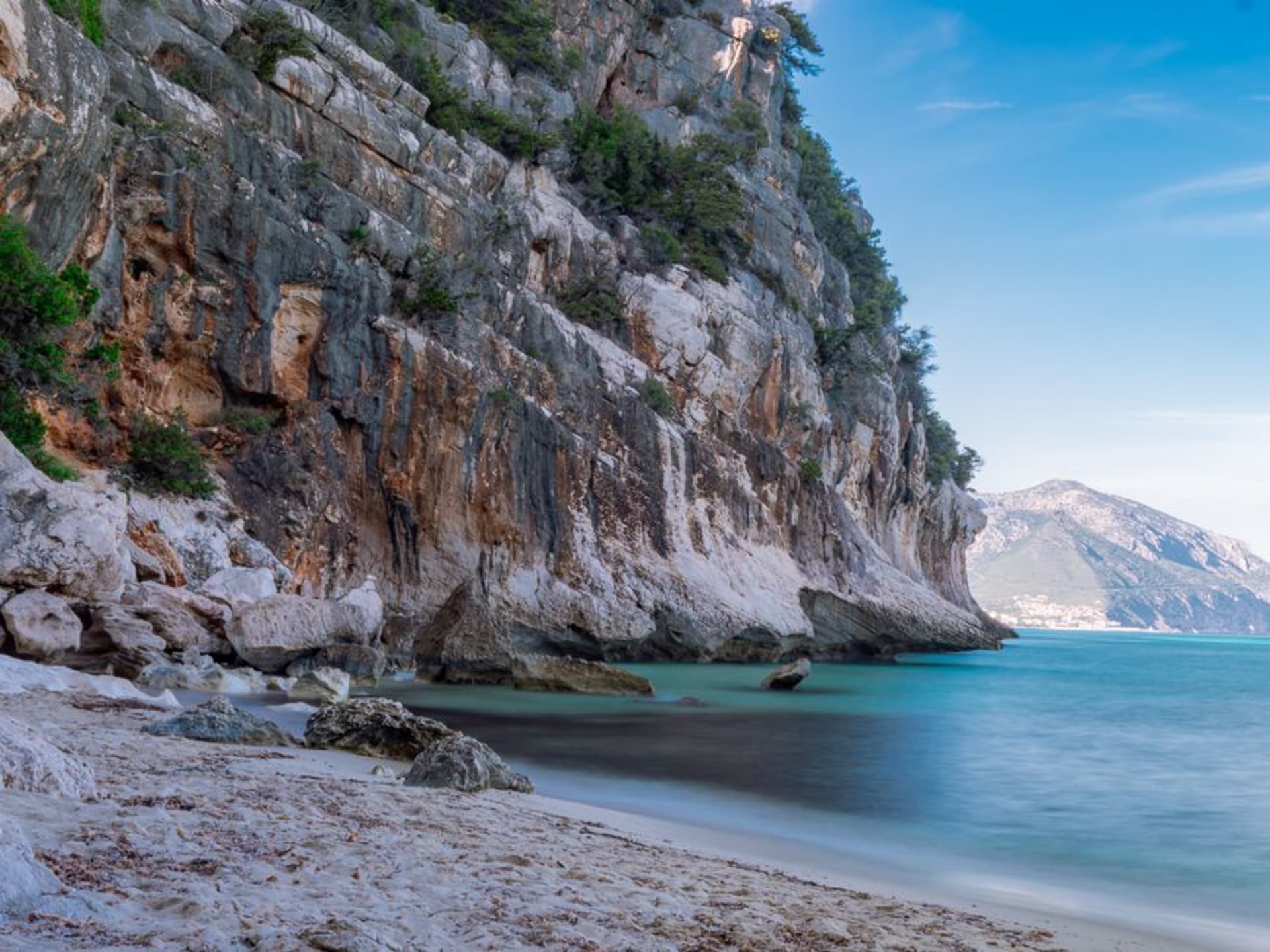
Cala Mariolu
"I picked up a handful of the pebbles and they felt more like polished glass than stone. I put them all back, reluctantly."
A pebble beach on the Gulf of Orosei famous for stones so small and rounded they look like scattered pearls, set against water that shifts through colors that don't seem geologically reasonable.
Cala Mariolu is the beach every boat captain on this stretch of the Gulf of Orosei brings up unprompted, usually with a specific hand gesture indicating the water’s improbable color range. It’s accessible only by boat from Cala Gonone or Santa Maria Navarrese, or by a serious multi-hour hike down from the Golgo plateau above, and the difficulty of reaching it is clearly load-bearing for why it still looks the way it does: essentially untouched, a narrow strip of pale, rounded pebbles between limestone cliffs that rise almost vertically on either side.
Pebbles Like Scattered Pearls
The beach’s defining feature is underfoot rather than in the view — small, perfectly rounded white and pale pink pebbles, worn smooth over millennia, that shift and click quietly with each wave. I sat and ran my hands through a patch of them for longer than I’d admit to anyone who asked, struck by how uniformly polished they were, like the sea had run some enormous tumbling machine for ten thousand years and only just finished the batch. Signs at the boat drop-off point ask visitors not to remove them, a request I noticed almost everyone actually respected, which felt like a small, specific kind of collective good behavior.
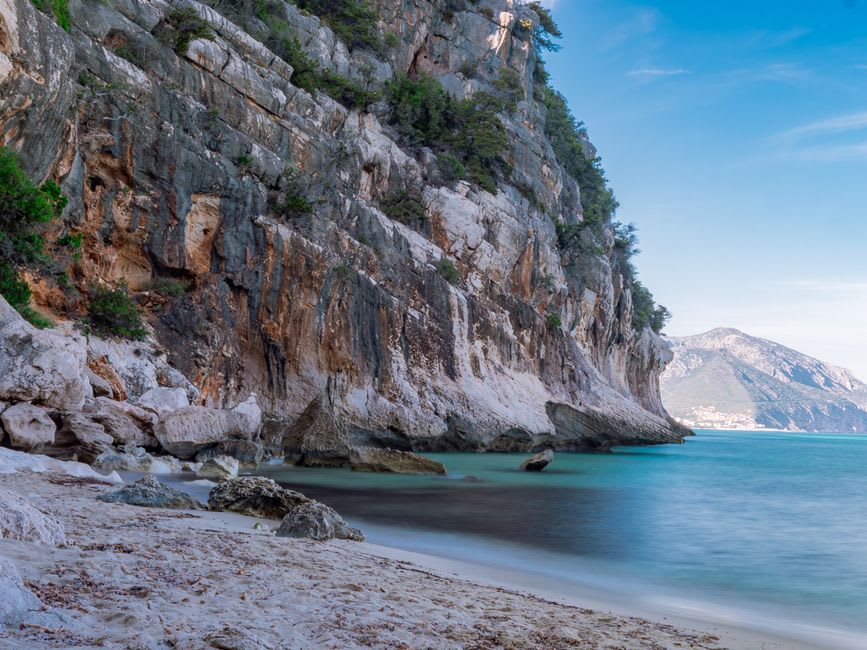
The Color That Shouldn’t Work
The water here runs through a genuinely startling gradient — pale turquoise in the first few meters, then an almost fluorescent green-blue, then a deep, saturated cobalt further out, the transitions sharp enough that from the cliff path above, the bay looks like it’s been divided into bands by something other than depth. I swam out toward the deep-blue section and treaded water for a while just looking back at the beach, the layered colors, and the sheer cliff face rising directly behind the pebbles with a handful of hardy junipers rooted improbably into its cracks.
The Boat Ride There and Back
Getting there involves a forty-minute boat trip from Cala Gonone past a coastline of caves and cliffs that would be a worthy destination on their own even without Mariolu at the end of it — I passed the Bue Marino sea caves en route, the boat slowing so everyone could peer into the dark mouth cut into the rock. On the return trip, with the afternoon light lower and the water gone gold-green near shore, I understood why people who’ve done this same trip a dozen times still lean over the rail to look.
When to go: June and September give calmer seas for the boat crossing and thinner crowds on the pebbles. Bring water shoes — the pebbles are beautiful but genuinely uncomfortable barefoot for long stretches.