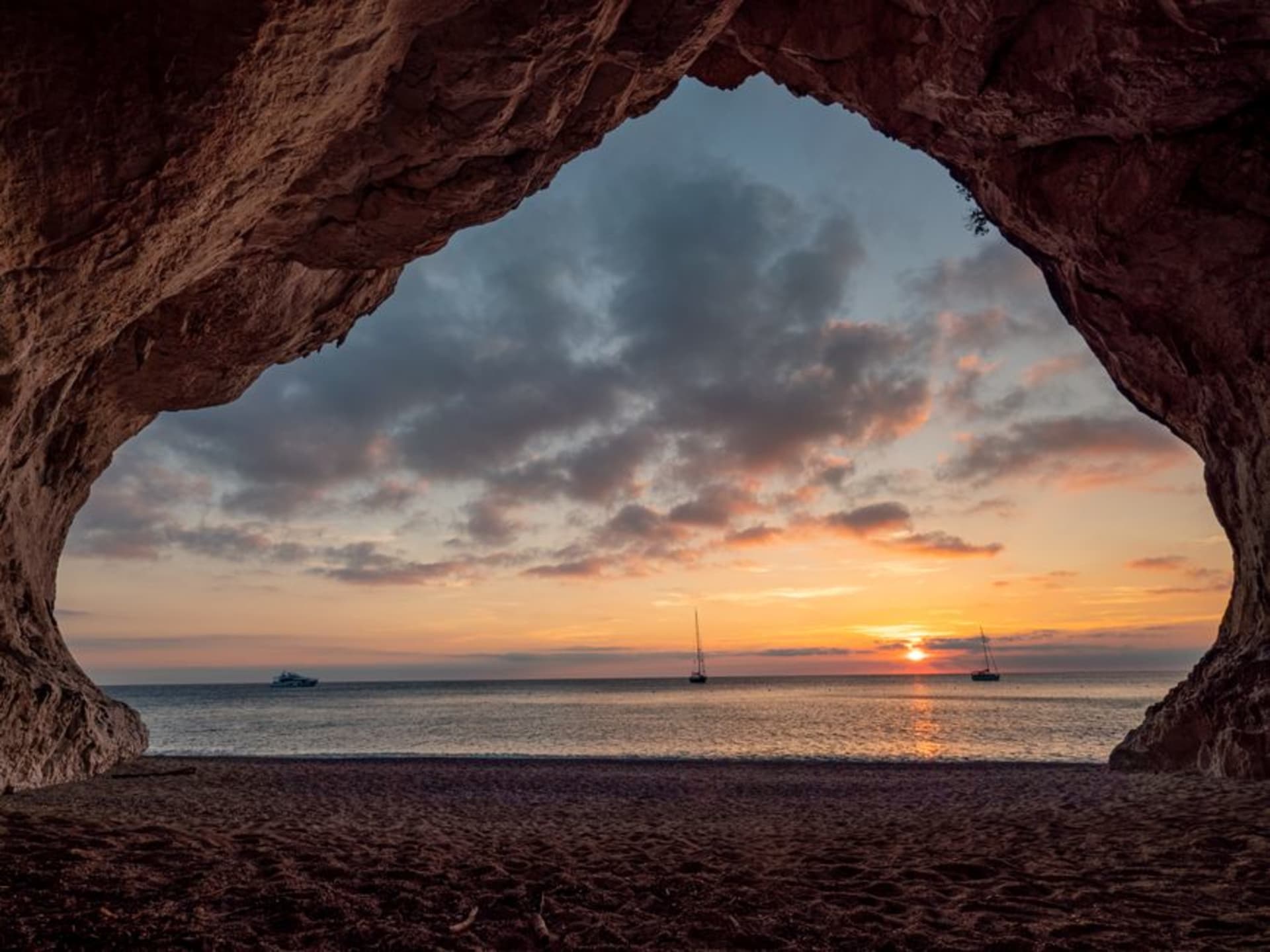
Cala Luna
"The boat driver cut the engine a hundred meters out and just let us drift in, like he wanted us to arrive slowly on purpose."
A crescent of white sand and turquoise water accessible only by boat or a long cliffside hike, backed by a cave system that once sheltered monk seals and now shelters swimmers from the midday sun.
Cala Luna doesn’t have a road. That single fact does most of the work of explaining why the beach still looks the way it looks in every photo you’ve seen of it — a tight crescent of pale sand, backed by oleander and a low limestone cliff riddled with caves, opening onto water that goes from pale green to deep blue in about fifteen meters. I got there the way most people do, by boat from Cala Gonone, though a small determined minority arrive on foot via a genuinely demanding coastal trail from Cala Fuili that took a hiking couple I met nearly three hours.
Arriving Slowly, On Purpose
The approach by sea is its own experience — twenty minutes of boat hugging a coastline of sheer limestone cliffs dropping straight into water, with sea caves opening at intervals like doorways into somewhere darker. Our driver cut the engine well before the beach and let the boat drift the last stretch in near silence, and I understood immediately why: the sound of the water against the hull, with the cliffs closing in on both sides and the beach slowly resolving into focus ahead, was worth protecting from an engine’s noise.
The Caves Behind the Sand
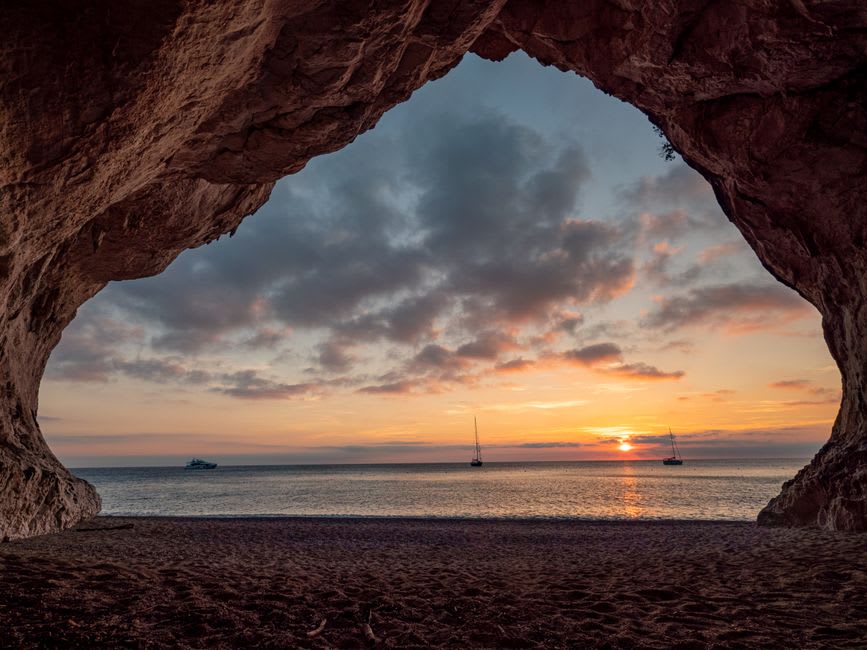
Set back from the beach, a series of caves cut into the cliff face once sheltered a small colony of Mediterranean monk seals, now locally extinct but still present in the name given to a larger cave complex further along this coast. I ducked into the nearest opening out of the midday sun and found it cool, dim, and considerably deeper than it looked from outside — the kind of space that made me understand immediately why an animal that wanted to disappear would choose it.
Midday Crowds, Early Quiet
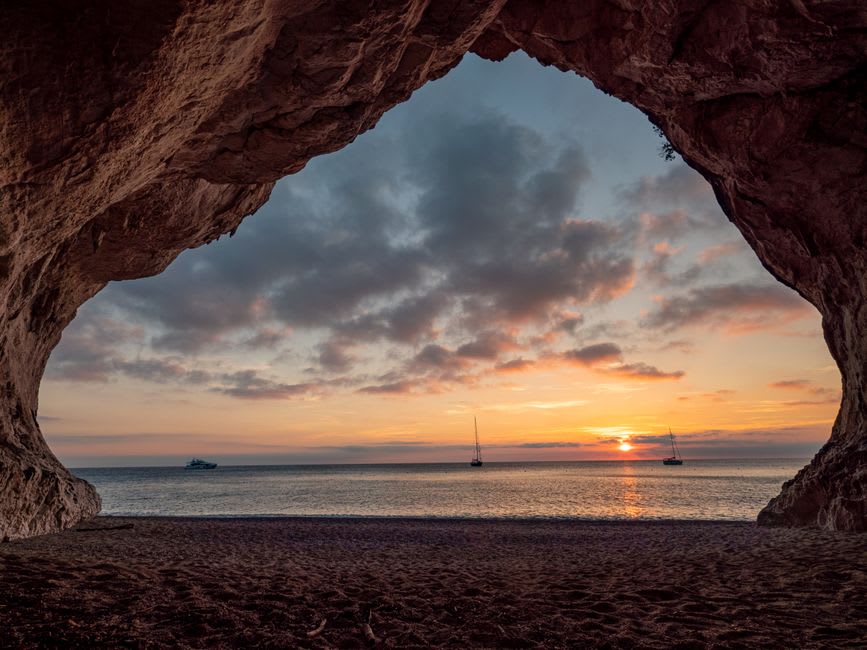
By eleven in the morning, boats arrive in a fairly constant stream from Cala Gonone and Cala Sisine, and the beach fills to a genuinely busy pitch by early afternoon. I’d taken the first boat out, at eight, and had perhaps forty minutes of near-total solitude — just the sound of small waves and a fisherman’s boat working the cliff base further along, before the day’s first wave of tourists arrived and the beach woke up properly.
When to go: Take the earliest boat you can find, ideally in June or September, to get even a brief window of the beach before the midday rush. Hikers should attempt the Cala Fuili trail only outside peak summer heat, and carry more water than seems necessary.