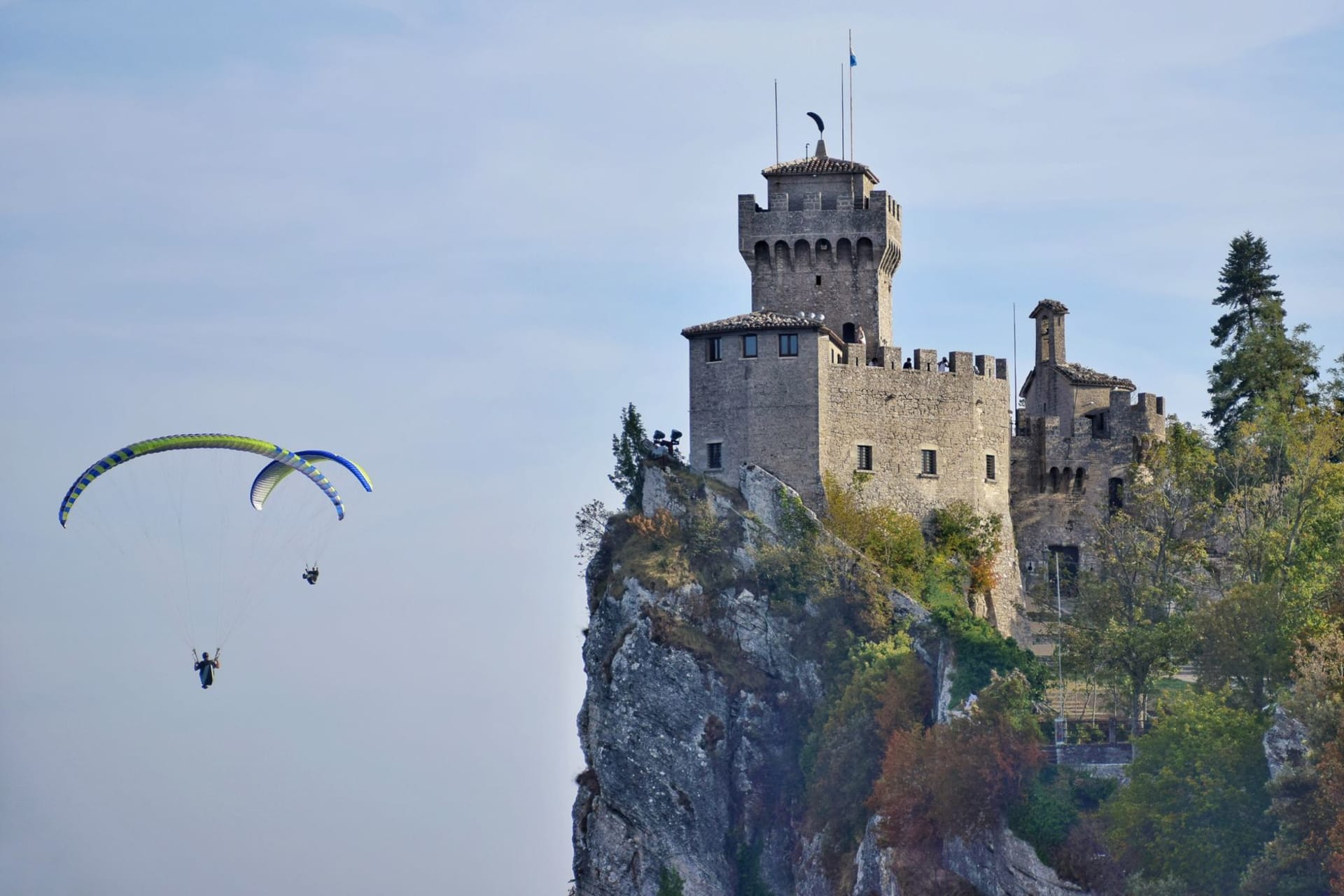
La Guaita
"Standing on a battlement built in the eleventh century, I felt less like a tourist and more like someone who had wandered into the wrong century."
I got to La Guaita before nine in the morning, when the tour buses from Rimini hadn’t yet arrived and the only other people on the ramparts were a pair of elderly Sammarinese men arguing about something in dialect while leaning on the parapet with the easy familiarity of people who have been coming here their whole lives. The fog sat low over the Romagna plain below, a flat white sea with the Adriatic glinting at its edge, and the first tower of San Marino rose from the limestone ridge in a way that made it look less like a building and more like a growth — something the mountain itself had pushed upward over a thousand years.
The climb to La Guaita is short but steep, a ramp of worn stone that deposits you at the outer gate suddenly and without ceremony. Inside, the fortress is compact, honest, and not particularly glamorous: grey limestone walls, a wooden staircase inside the keep, a few explanatory panels in Italian and English that go largely unread because the view through the arrow slits is too distracting. The tower was begun in the eleventh century and has served at various points as a fortress, a prison, and a symbol. It is still all three of those things, though the prisoners are long gone.
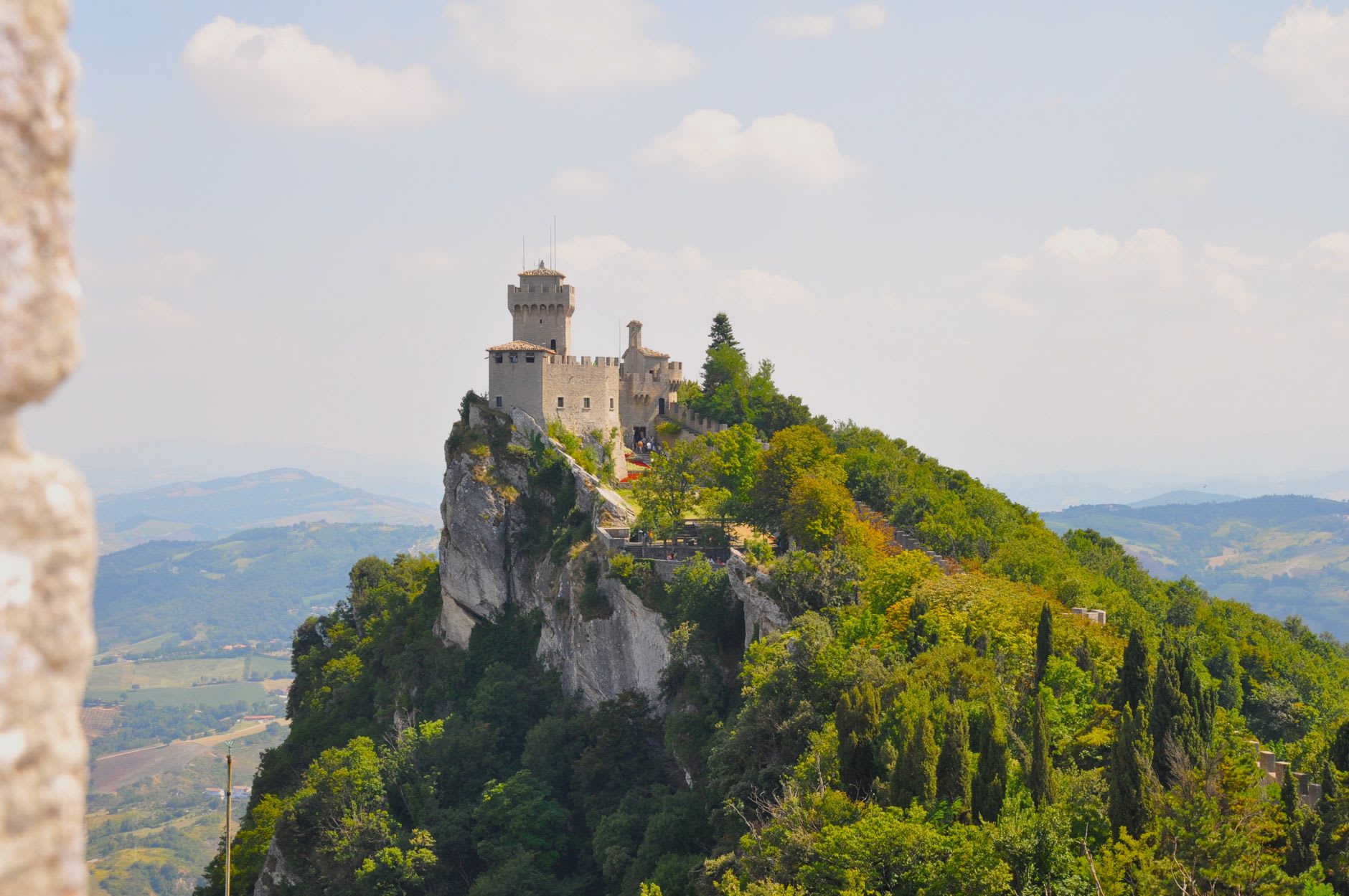
What I kept returning to was the thickness of the walls. You press your hand against the stone and it doesn’t feel like decoration — it feels like intention, like something built by people who genuinely expected to be attacked and planned accordingly. The arrow slits frame perfect narrow views of the countryside below: a distant church spire, the brown line of a highway, a cluster of orange-roofed farmhouses. Medieval architecture designed to surveil and defend, accidentally turned into the world’s most dramatic viewfinder.
From the outer battlement you can see all three towers on the ridge at once, and the logic of the fortification becomes clear. Guaita is the anchor, the first line and the most visible. Cesta rises on a higher peak to the south. Montale sits solitary and furthest away, more a watchtower than a fortress. The three form a chain along the spine of Monte Titano, connected by the walls and path called the Passo delle Streghe. Looking at them from Guaita, it seems absurd that this ridge ever needed defending. Looking at the history of the Italian peninsula in the fourteenth century, it becomes immediately obvious why it did.

By ten o’clock the tour groups had arrived and the inner courtyard had changed character entirely — selfie sticks, matching lanyards, a guide with a microphone working hard to be heard over the wind. I didn’t mind. La Guaita earns its crowds honestly. I bought a coffee from the small kiosk near the entrance, found a section of wall that nobody else was occupying, and stayed another forty minutes watching the fog dissolve over the plain below.
When to go: The tower opens at nine and the first hour is invariably the quietest. Weekdays in May or October offer the best light and the fewest bodies. In July and August, go at opening time or not at all — the path from the city gate can become genuinely uncomfortable in the afternoon heat.