Saleaula Lava Fields
"The church walls are standing. Everything inside them is lava. That's the whole sentence and the whole story."
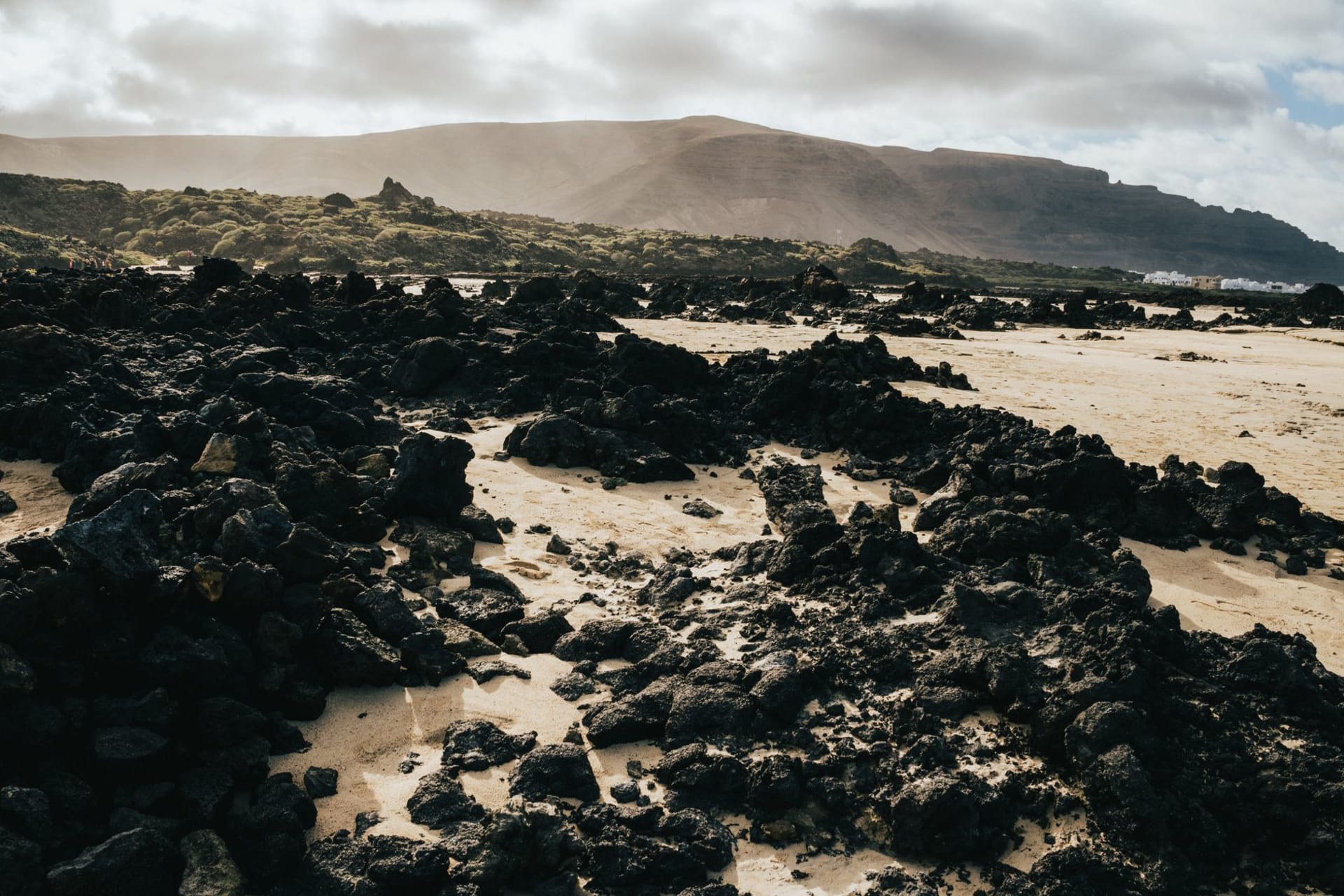
There is no interpretive center at the Saleaula Lava Fields. No pamphlet. A small sign at the road directs you down a track, you pay a few tala to a man under a tree, and then you walk out onto the lava. It stretches to the coast in a broad black field, broken only where the tops of structures push through — the walls of the village church of Our Lady of Fatima rising from the basalt like something surfacing from deep water, the remains of the LMS church nearby, the square outline of what was once a house. The lava stopped precisely at the church walls and poured in through the windows and doors, filling the interior to the sill line. The walls stand; everything inside them is stone. You can look through the window frames into a room-shaped void of hardened lava and the light that comes in from above makes it look almost like water at the bottom of a well.

The eruption happened in 1905, from vents on Mount Matavanu on the island’s interior. The lava flowed for years — the main phase lasted until 1911 — and by the time it stopped it had covered an enormous swath of Savai’i’s north coast, burying villages, plantations, and coastline under flows that in places reach fifteen meters deep. The people had time to leave. Some of the church objects were carried out before the lava arrived. But the structures themselves were consumed, and walking across the field now, six volcanic generations removed from the event, you step on a crust that gives a faint hollow sound in places — beneath you, the lava tubes that carried the flow to the sea are still there, empty now, running under the surface like a network of buried rivers.

The vegetation is beginning to reclaim the edges. Where the lava meets the older soil line, hibiscus and scrub have established themselves, and in the cracks of the basalt surface itself, small ferns are working their way in — this is how Pacific islands are made, this slow negotiation between the volcanic and the living. Standing on the lava field and looking out toward the water, I understood something about Savai’i’s temperament that the beach and the rainforest hadn’t conveyed: this island is still actively becoming itself. The volcano that created these fields is not extinct. It last erupted in 1911 and will erupt again. The ground is warm under your feet not because of the sun.
When to go: Accessible year-round. The field is exposed and shadeless, so go in the morning before the midday heat. Combined with the north coast road, Saleaula makes a good half-day loop with the beach at Manase.