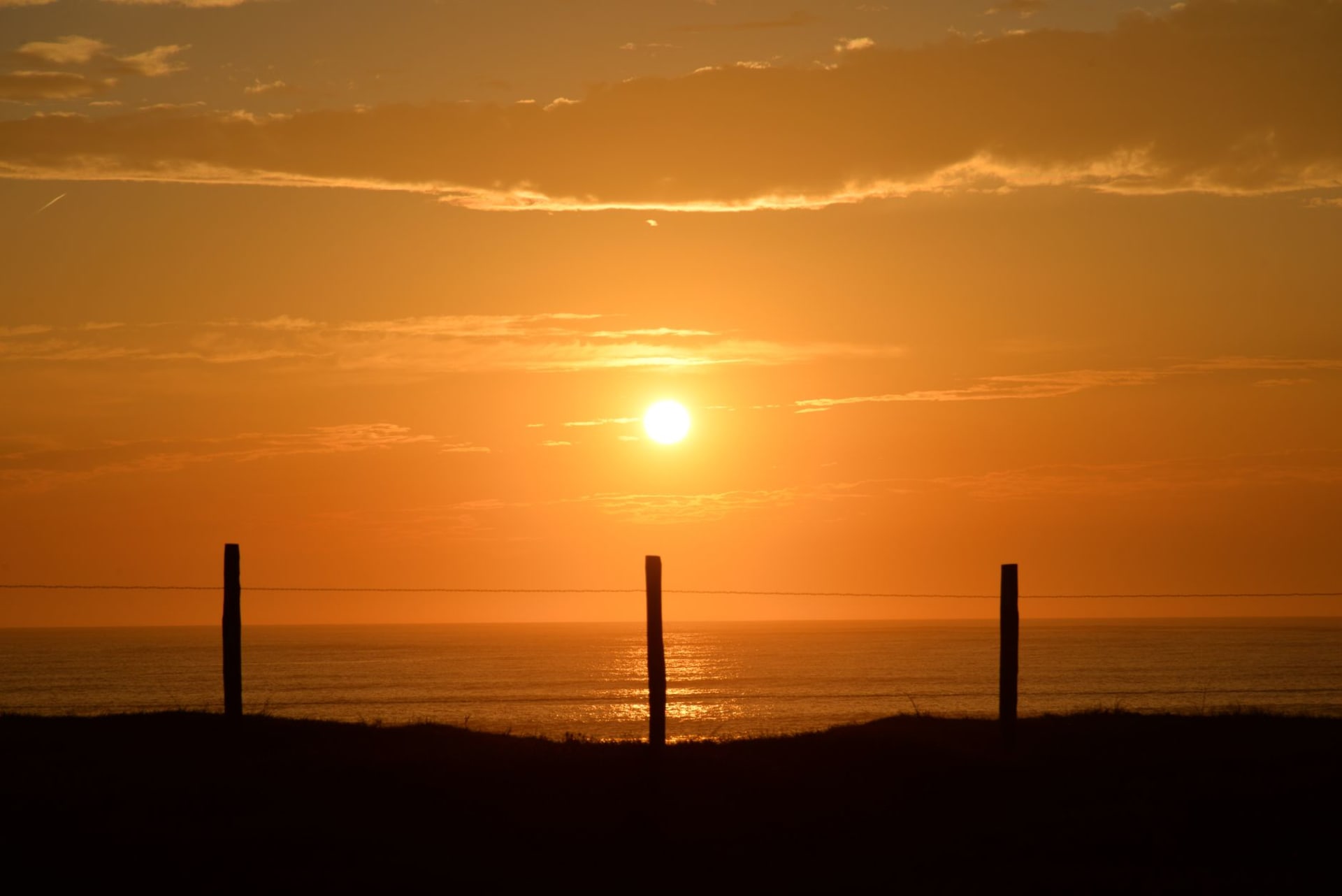
Wallilabou
"Hollywood used this bay as a pirate set. Nature made it dramatic long before that."
The drive north along the Leeward Highway from Kingstown takes about forty minutes and has the quality of a film reel showing you everything that makes Saint Vincent particular: the road cut into the cliffside above the sea, the villages of painted concrete houses stacked on narrow terraces, the fishing boats in colors that become more vivid the further north you go, the breadfruit trees overhanging every bend. Then Wallilabou Bay appears around a curve in the road and the register shifts entirely.
The bay is small and almost completely enclosed by volcanic cliffs — dark grey-green stone covered in ferns and vines — that give it a quality of containment, as if the sea here is more sheltered, more intimate than the ocean you’ve been driving beside. The sand is black, or near-black, the particular granular darkness of volcanic sediment, and it holds heat in a way that white sand doesn’t. The water is transparent over the dark bottom — jade green with flashes of teal in the shallows.
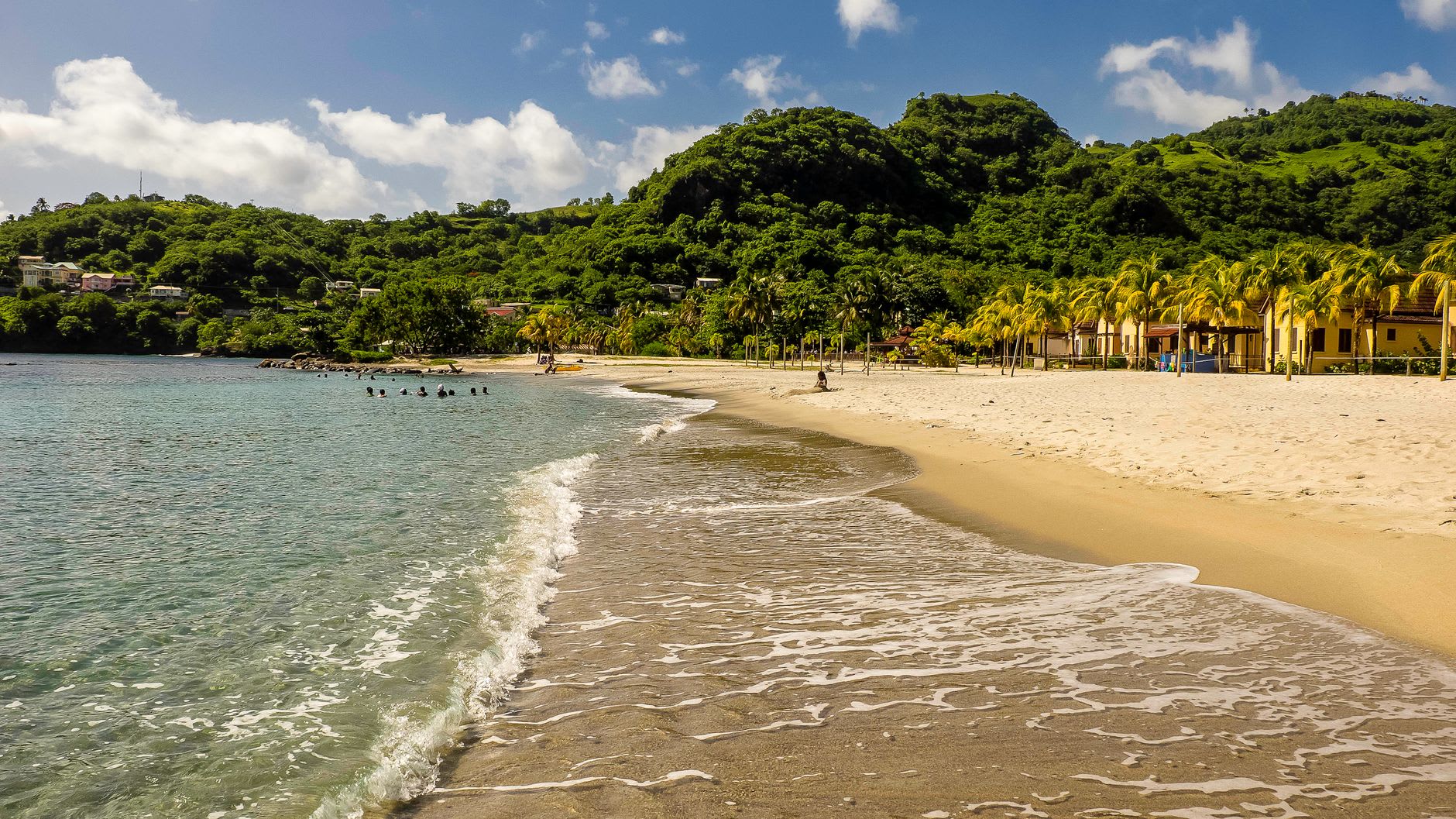
In 2002 and 2003, the Disney production crew built an eighteenth-century pirate port on this beach for the filming of Pirates of the Caribbean: The Curse of the Black Pearl. The set — wooden piers, warehouse facades, a blacksmith shop — was convincing enough that locals still point out exactly where Captain Jack Sparrow stood. The structures themselves are gone, absorbed by rot and re-vegetation, but the anchor posts remain in the sand and a few rusted metal fittings are visible at low tide. The ruins are neither maintained nor promoted. They are simply there, which makes them more interesting.
What the film production correctly identified was the bay’s inherent theatricality. The dark cliffs, the enclosed water, the quality of the light when the afternoon sun cuts through the jungle canopy and lands in bars on the black sand — it all has a quality of set dressing that nature assembled without any directorial assistance. A small restaurant runs near the waterfront, serving fried fish and local provisions to the few day-trippers who make the drive up from Kingstown. The proprietor was, when I visited, watching a cricket match on a television hung in the shade of a corrugated iron overhang and was mildly put out that the snapper had not arrived yet.
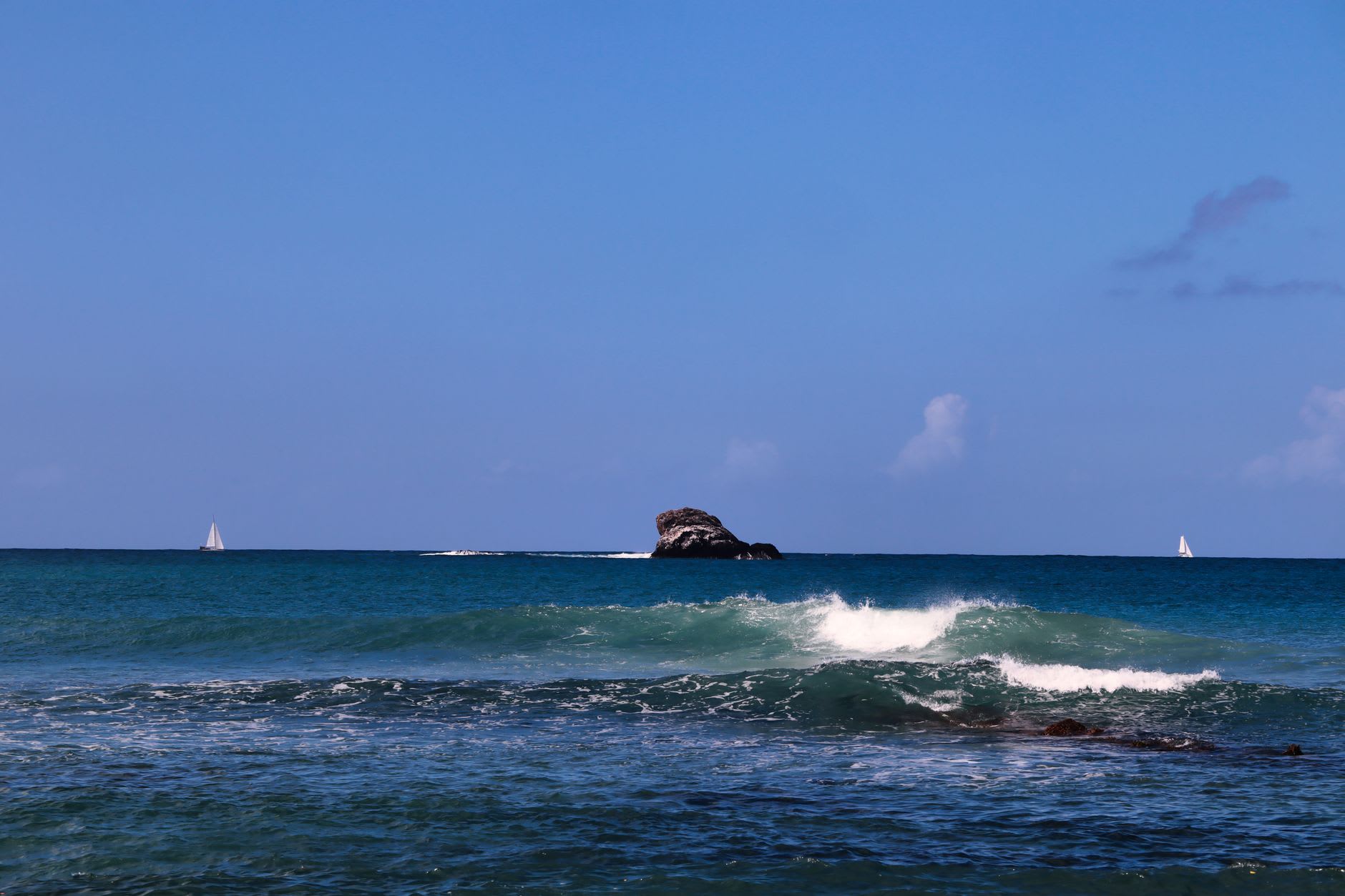
There are a few yachts at anchor when the trades allow it — the bay is attractive to sailors who want a peaceful overnight away from the Kingstown harbor scene — and in the evenings the enclosing cliffs turn the sound of the rigging lines and the water against the hulls into something close to music. I didn’t stay on a boat. I sat on the black sand until the light was gone, then drove back to Kingstown in the dark with the headlights finding the road through the jungle.
When to go: November through April, the drier months, make the drive north safer on what is a genuinely narrow coastal road. The bay is beautiful year-round but most accessible when the leeward coast is calm. Come on a weekday morning if you want the beach to yourself — day-trippers from Kingstown tend to arrive late morning and leave by mid-afternoon.