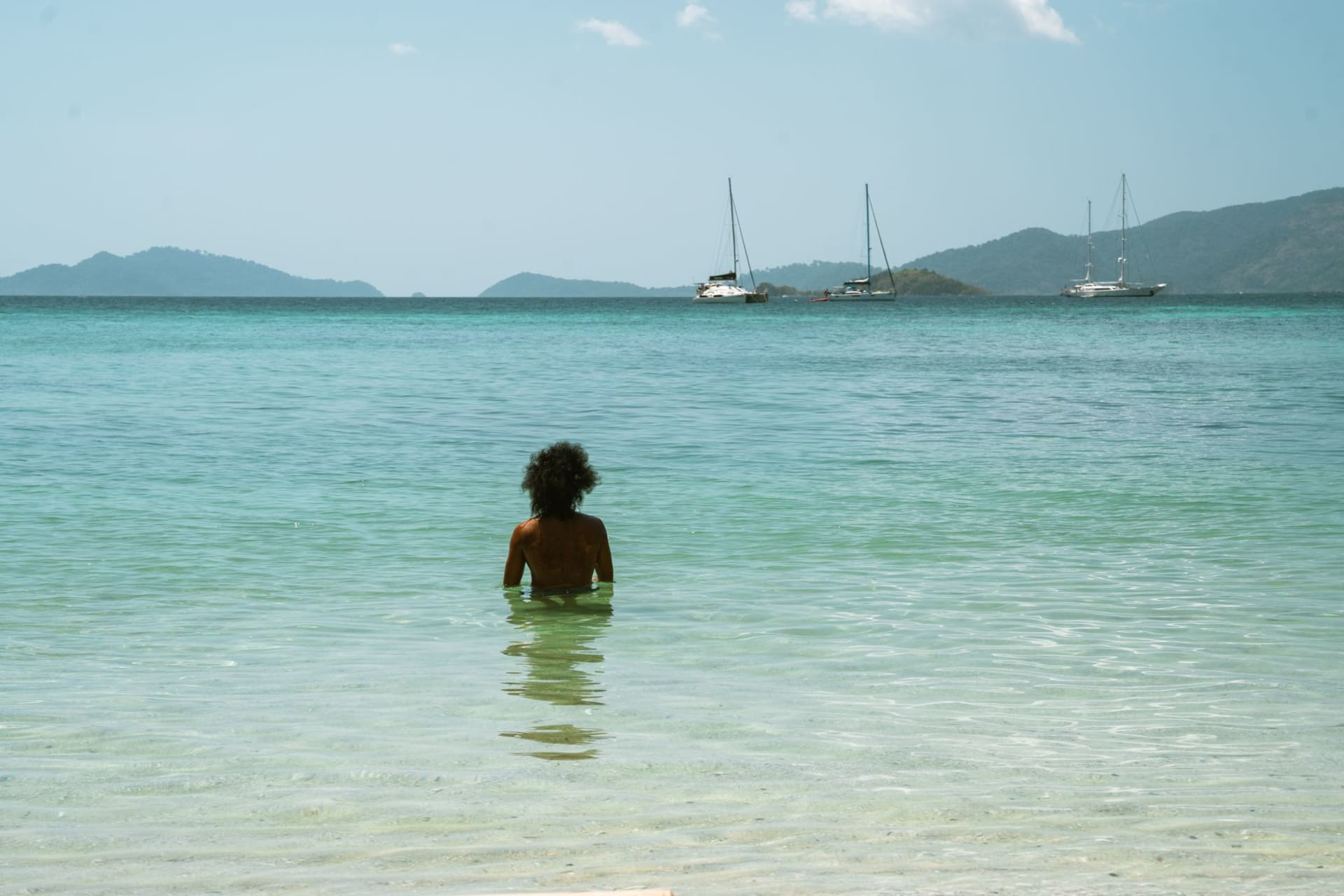
Tobago Cays
"The turtles at Tobago Cays are not performing. They're just eating. That's the whole point."
You get to the Tobago Cays by boat. There is no other way. There is no airport, no ferry, no pier attached to anything resembling infrastructure — you sail in on a charter, or you come by water taxi from Union Island, or you borrow a friend’s dinghy and motor across the channel, keeping one eye on the reef markers. The necessity of this effort is not incidental to the experience. It is the experience.
I came on a charter out of Bequia — five days, three other sailors, a Vincentian skipper named Dex who had the particular quality of extreme competence paired with extremely minimal speech. He brought us in through the Horseshoe Reef at slack tide and we anchored in eight meters of water so clear I could read the sand ripples on the bottom. The five islands — Petit Rameau, Petit Bateau, Baradal, Jamesby, and Petit Tobac — lie inside the reef like something arranged by hand. They are all uninhabited. The national park that protects them has no visitors center, no gift shop, no fee booth. A park warden occasionally passes in a dinghy. That is the entirety of the human apparatus.

The turtles are what people come to see, and they deliver. Hawksbill turtles — some of them impressively large, with shells that have the weathered quality of very old wood — graze on the sea grass beds in the shallows off Baradal. They are unhurried. They surface to breathe, drift back down, continue eating. They have adapted to the presence of snorkelers in the way that a cow adapts to the presence of people in a field — mild awareness, continued grazing. Swimming alongside one, close enough to see the individual scales on its flippers, is one of those experiences that rearranges your sense of scale briefly, the way very good travel always does.
The snorkeling on the Horseshoe Reef itself is extraordinary. The coral is healthy — unusual enough in the Caribbean now to feel like a gift — with brain coral formations the size of small cars and reef fish in colors so oversaturated they look like something from a child’s illustration. We spent hours in the water, rotating between the reef and the sea grass beds, surfacing occasionally to eat sandwiches and compare notes on what we’d seen.
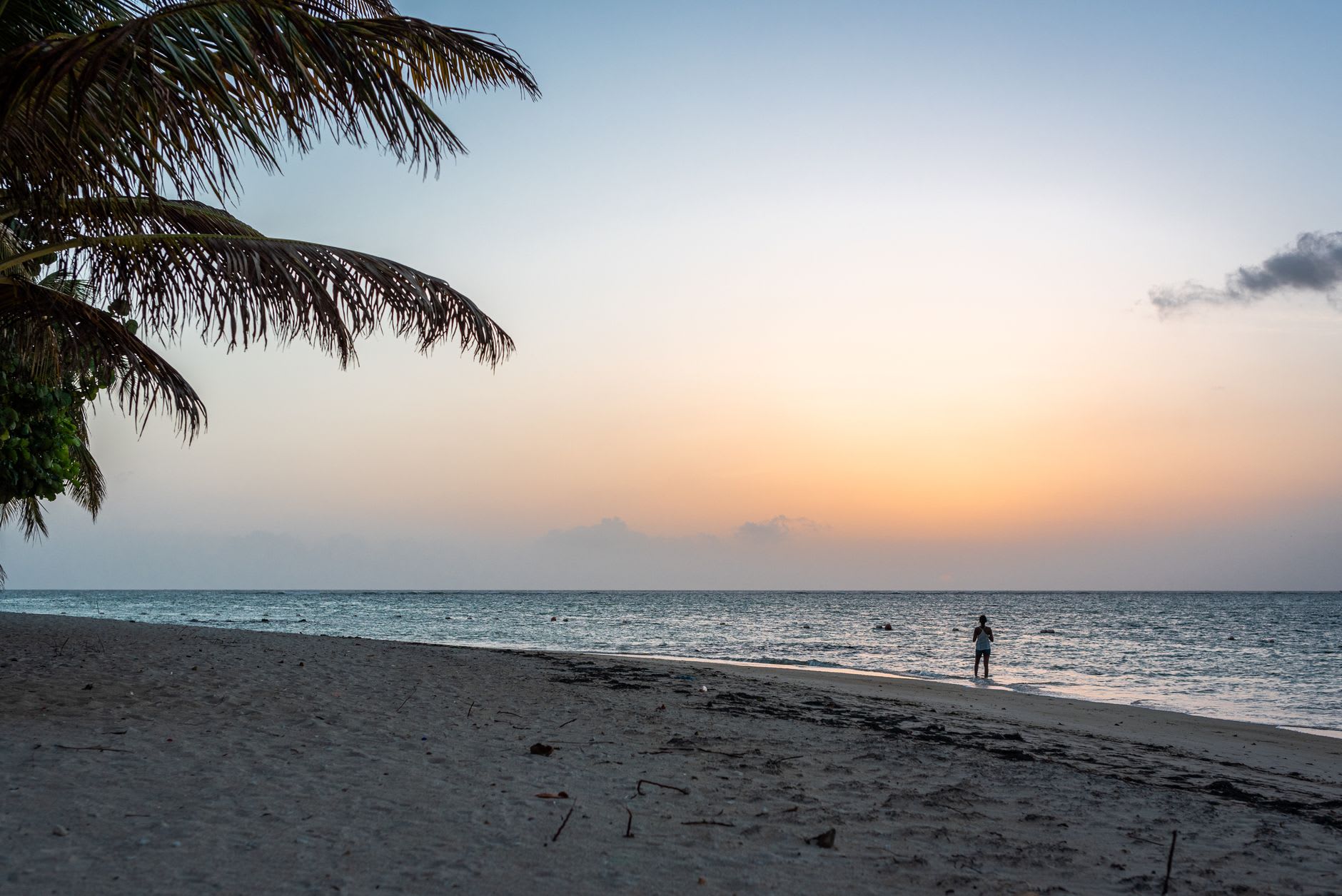
In the evenings, the boats in the anchorage lit up one by one, and the cook boats — local vendors who motor between the yachts selling grilled fish and lobster — made their rounds. The smell of grilling over charcoal drifted across the water. There is something almost impossibly complete about eating fresh-grilled snapper on the deck of a boat inside one of the Caribbean’s great reef systems as the stars come out. I know how that sounds. I also know it’s true.
When to go: December through April, the dry season, when trade winds keep the water clear and the anchorage manageable. Avoid the Christmas to New Year peak if you value a quieter anchorage — January and February are the sweet spot. The park service occasionally limits anchor numbers to protect the sea grass; plan to arrive early.