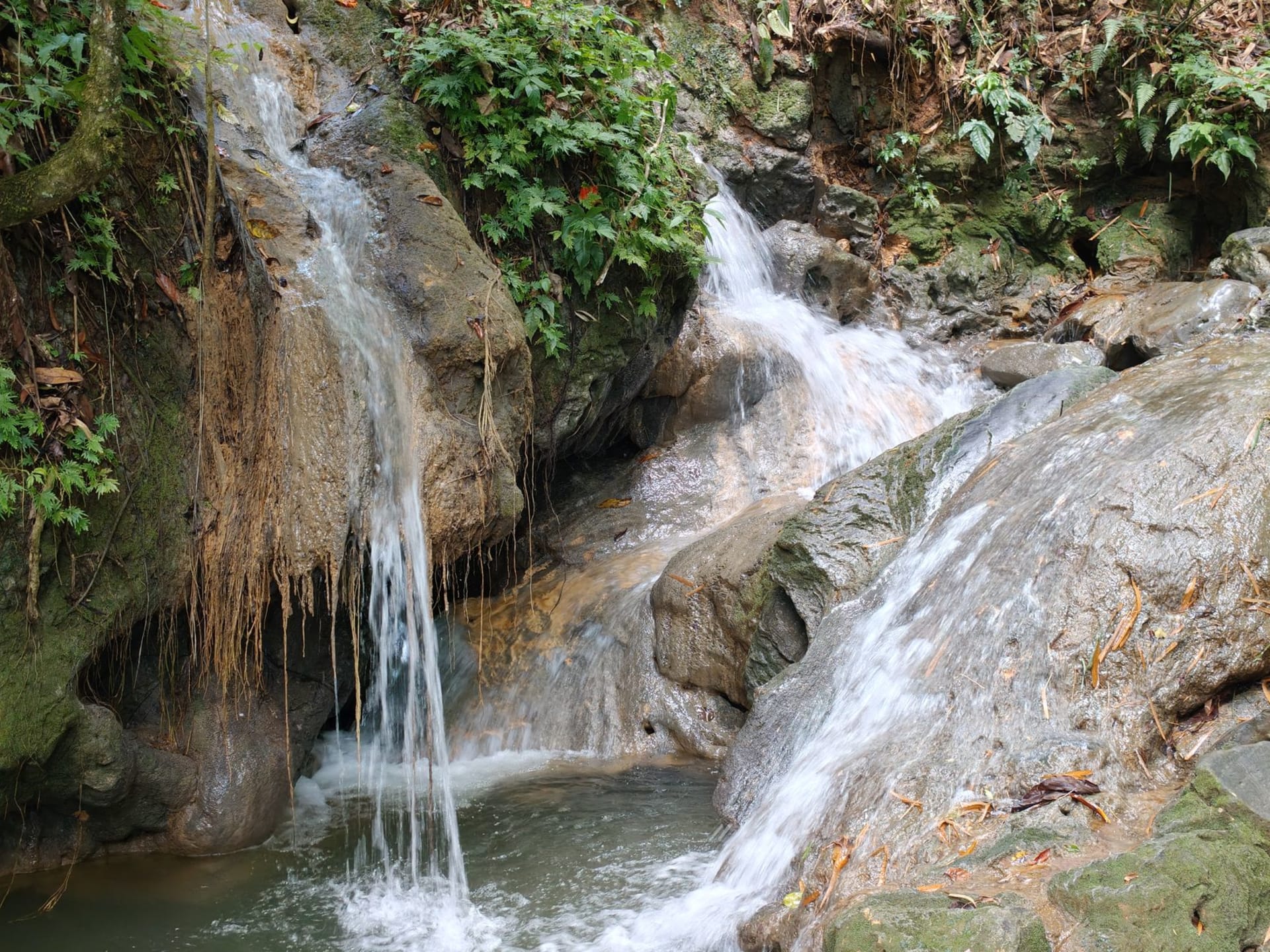
Diamond Falls Botanical Gardens
"The waterfall is the color of a bruise and a sunset at the same time. I've never seen anything quite like it."
The entrance to Diamond Falls Botanical Gardens is modest — a gate on the road outside Soufrière, a small car park, the sound of birds before you’ve fully stopped the engine. What happens inside is disproportionate to the entrance, which is exactly how the best botanical gardens work. Within fifty meters of the gate, the path narrows and the canopy closes overhead and the temperature drops by several degrees, and the sound of the waterfall — which you cannot yet see — begins to layer itself over the birdsong from somewhere ahead.
The Diamond River runs through a landscape that has been shaped by both mineral-rich volcanic water and two hundred years of intentional cultivation. The gardens were established in the eighteenth century, originally for the therapeutic use of French soldiers who bathed in the mineral-rich springs, and the bones of that original planting are still visible in the shape of the place. But what fills those bones now is an exuberance of tropical growth — heliconias in every stage from bud to full flare, bromeliads anchored to every available surface, tree ferns that belong to a vocabulary of green I didn’t have before arriving.

The waterfall itself stops you. The Diamond River drops about fifteen meters over volcanic rock that has been stained by its mineral content into something extraordinary — bands of yellow and orange from sulphur and iron compounds, areas of deep black, streaks of white calcite, all of it wet and gleaming and shifting in color as the light changes behind the spray. It is the color of something internal, geological, not quite of the surface world, and no photograph I took of it came close to what the thing actually looks like in person. I stood in front of it for longer than I intended.
The mineral baths beside the falls are the therapeutic element that the French soldiers once used. There are two pools — one outdoor, one covered — that are fed by the same mineral-rich water that colors the falls. The temperature is warm but not hot, and the water has a slight mineral tang if you accidentally taste it. I spent twenty minutes in the outdoor pool watching a hummingbird work the heliconias at the garden’s edge, which felt like a reasonable way to spend twenty minutes on a volcanic island.

The gardens cover about six acres and take between forty-five minutes and two hours to walk through, depending on how long you linger at any given plant. There are labeled specimens throughout — Latinized names and common names and brief notes on medicinal or culinary use — and the quality of the planting is genuinely horticultural rather than purely decorative. Someone has been thinking about what grows next to what, about height and color and the timing of flowers, and the result is a garden that rewards attention.
When to go: The gardens are open daily and accessible year-round. Rainy season makes the waterfall more dramatic and the gardens even more intensely green, though the path can be muddy. Morning visits get better light on the falls and quieter garden paths. Combine with Sulphur Springs nearby for a full day in the Soufrière volcanic landscape.