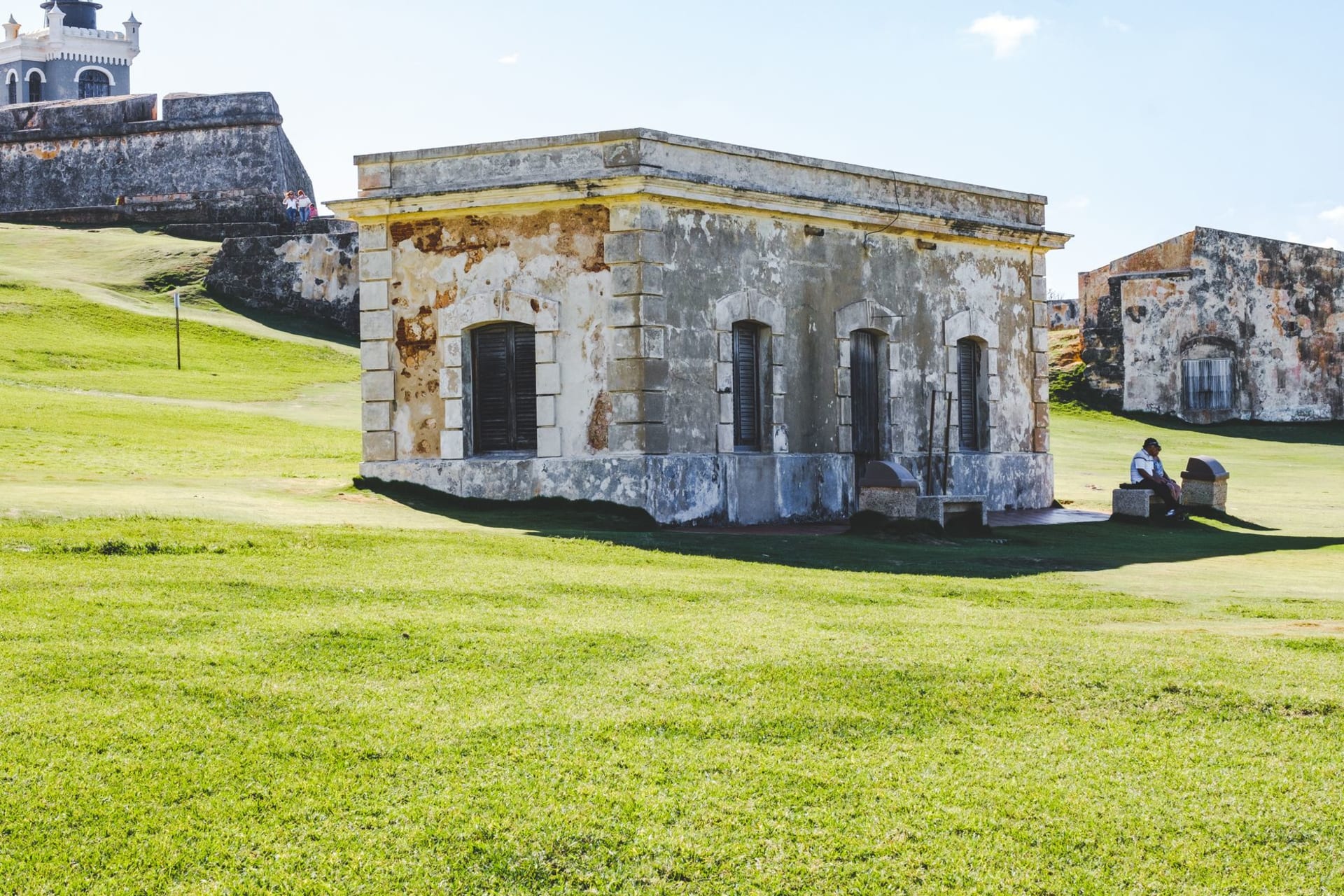
Brimstone Hill Fortress
"Six islands visible from up here. The enslaved people who built this couldn't leave the one they were standing on."
The road up to Brimstone Hill curves through cane fields and then suddenly there is no more cane — just a dark volcanic plug rising from the green coastal plain, and on top of it, unmistakable, the stone walls of one of the best-preserved 17th-century fortresses in the Americas. I had read about it before coming, but reading about a thing and standing below it are different experiences. The hill is steep and abrupt, like a fist rising from flat ground, and the fortress seems to grow directly from the rock, as if the same geology produced both.
The entrance opens onto a citadel and then a series of ramparts, terraces, and stone staircases that climb in stages. Green vervet monkeys run across the paths without looking at you — they have been here as long as anyone alive and they know it. The stonework is extraordinary: massive blocks cut and fitted by enslaved Africans over more than a century, beginning in the 1690s. The information panels make no effort to hide this history, and neither should they. The fortress was built by people who had no choice, to protect an economy built on their exploitation. Standing on those walls, holding that thought, changes what you see.
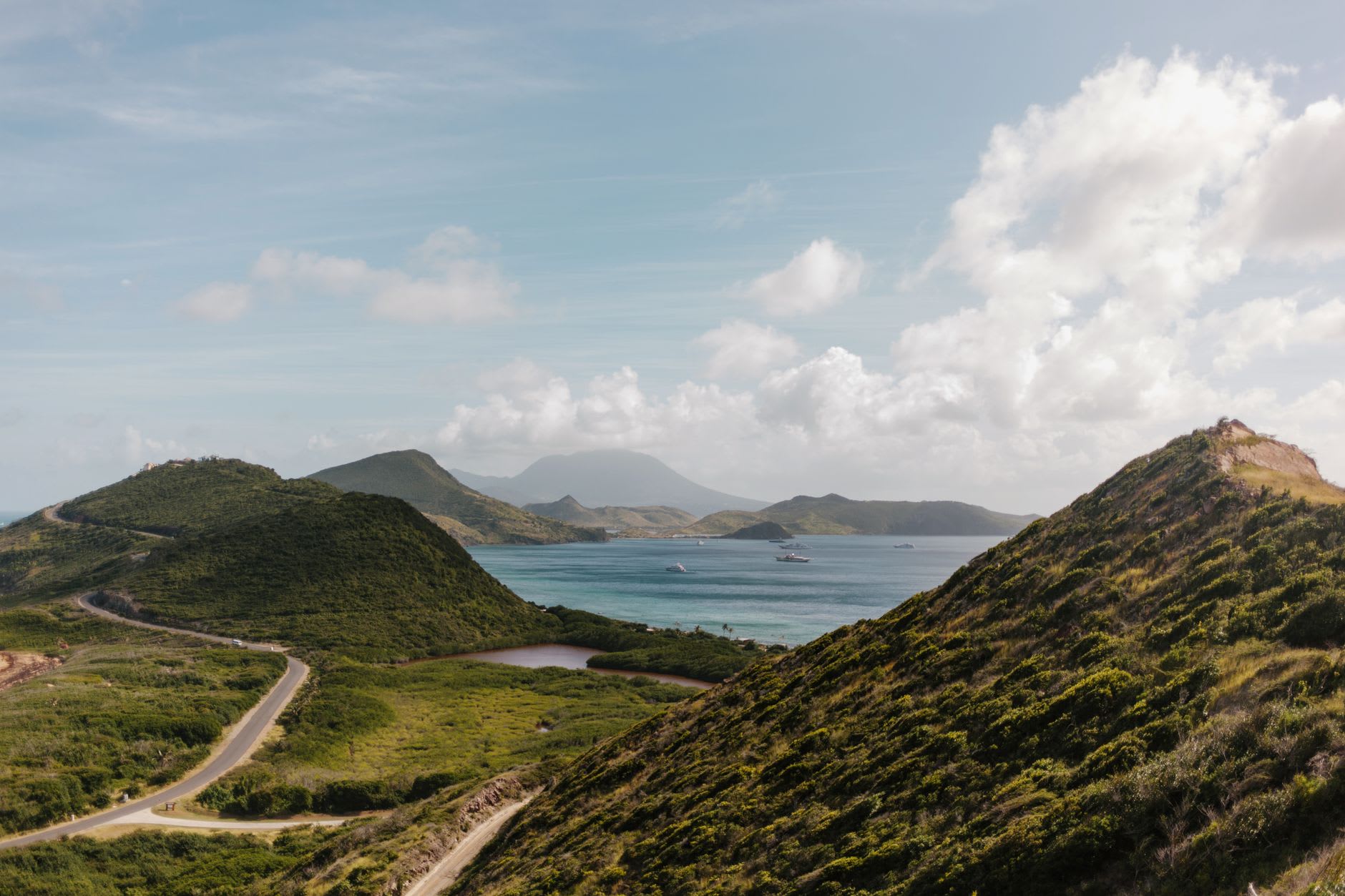
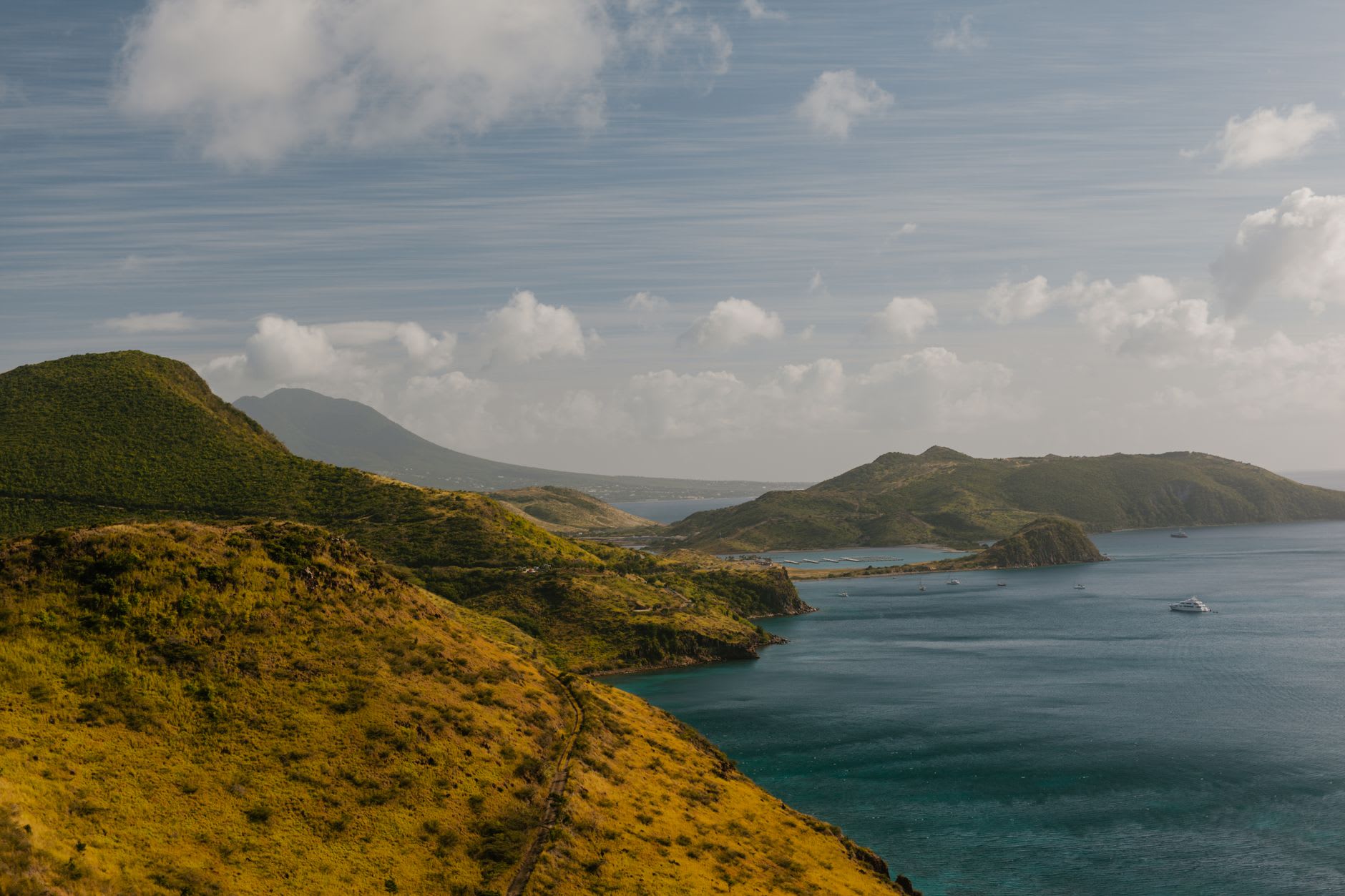
At the top, from the Magazine Bastion or the Prince of Wales Bastion, the island opens out in every direction. To the west, the Caribbean Sea; to the east, the Atlantic — you can see the tonal shift in the water, blue becoming a harder blue. Saint Eustatius is close enough to feel like you could shout to it. Nevis sits to the south, its peak wearing the usual cloud. On the clearest mornings, Saba, Montserrat, Saint Martin, Sint Eustatius — I counted six islands from the top rampart and felt for a moment what it meant to control a view like this in the 18th century. The strategic logic was obvious and so was the cost.
The cannons are still in place along the batteries, cast-iron barrels trained out over the water toward threats that have not arrived in two hundred years. A flock of brown pelicans circled below the walls on a thermal, not going anywhere in particular.
The museum inside the citadel is modest but thoughtful — military artifacts, maps of the 1782 siege when French forces under the Comte de Grasse took the fort, and documentation of the enslaved and free colored workers who built and maintained it. I spent more time in the museum than I had planned, which is usually a sign that someone put care into the curation.
When to go: Early morning before cruise ship excursions arrive — it gets noticeably busier by midday. The dry season (December to April) gives the clearest views across to the other islands. Bring water; the walk between terraces in afternoon heat is more demanding than the map suggests.