Kano
"Kano didn't feel like a stop on the way somewhere. It felt like the somewhere everyone else had been heading to for a thousand years."
A thousand-year-old caravan city where camel trains once met salt and kola nuts, and the old walls still hum with trade.
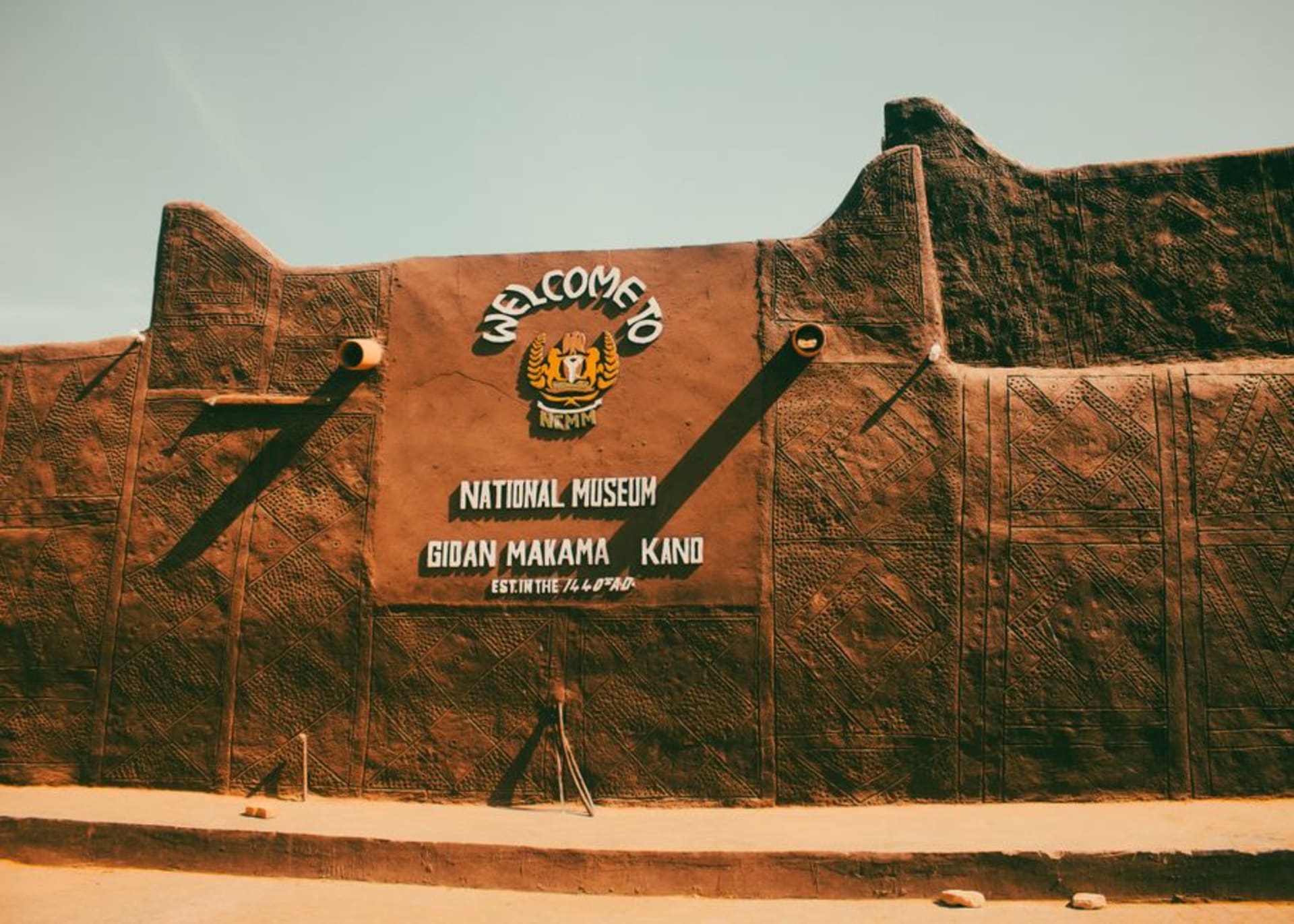
Lia and I had planned Kano as a two-night stopover on the way further into the Sahel, and we ended up staying five. There’s a version of West Africa people picture that’s all coastline and colonial forts, and then there’s Kano, a city that was already old — already a Hausa city-state trading across the desert — by the time most of the places I grew up hearing about even existed. You feel the weight of that the moment you pass through a gap in the old walls. Sections of that mud-brick rampart date back to the 15th century, expanded piece by piece over generations, and driving through one of the old gates, I remember turning to Lia and saying it was like passing through the rib cage of something still alive.
We spent our first real morning at Kurmi Market, and I mean spent — we went in around nine and didn’t resurface until well past two. It’s one of the oldest markets in West Africa, and it still moves like a trade route rather than a shopping district: leather workers stitching in doorways, dye pits staining hands indigo, stalls of kola nuts stacked the way I imagine they were stacked when caravans still crossed the Sahara carrying salt out and leather back. I bought a small leather satchel from a man who barely looked up from his awl to negotiate the price, and I still use it. Lia haggled over indigo-dyed cloth with a patience I don’t have, and won.

The other place that stayed with me was Gidan Rumfa, the Emir’s Palace, which has been the seat of traditional authority here since the 15th century and became the center of a Fulani-ruled emirate after the Sokoto Caliphate’s jihad in the early 1800s. You can’t just wander in — we went with a local guide who’d grown up two streets away and talked about the palace the way some people talk about family — but even from outside, the scale of it tells you something about how long power has been organized here, uninterrupted, in this one spot. I remember the call to prayer rolling out over the palace walls as the light went orange, and neither of us said anything for a while.

What got me most, honestly, was just the geography of it — Kano sitting at the southern hinge of the Sahel, roughly 840 kilometers from Lagos but a different world entirely, a city built by people who understood distance long before anyone had a name for globalization. We ate suya from a stand near our guesthouse almost every night, the smoke and the spice mix following us down the street, and I kept thinking about all the traders who must have eaten something similar after a day at Kurmi Market, centuries before Lia and I ever showed up with our two backpacks and too many questions.
When to go: Aim for November through February, when the dry season keeps the heat manageable — by March the Sahel starts building toward the punishing temperatures of April and May, and walking the old city under that sun is a very different, much harder experience.