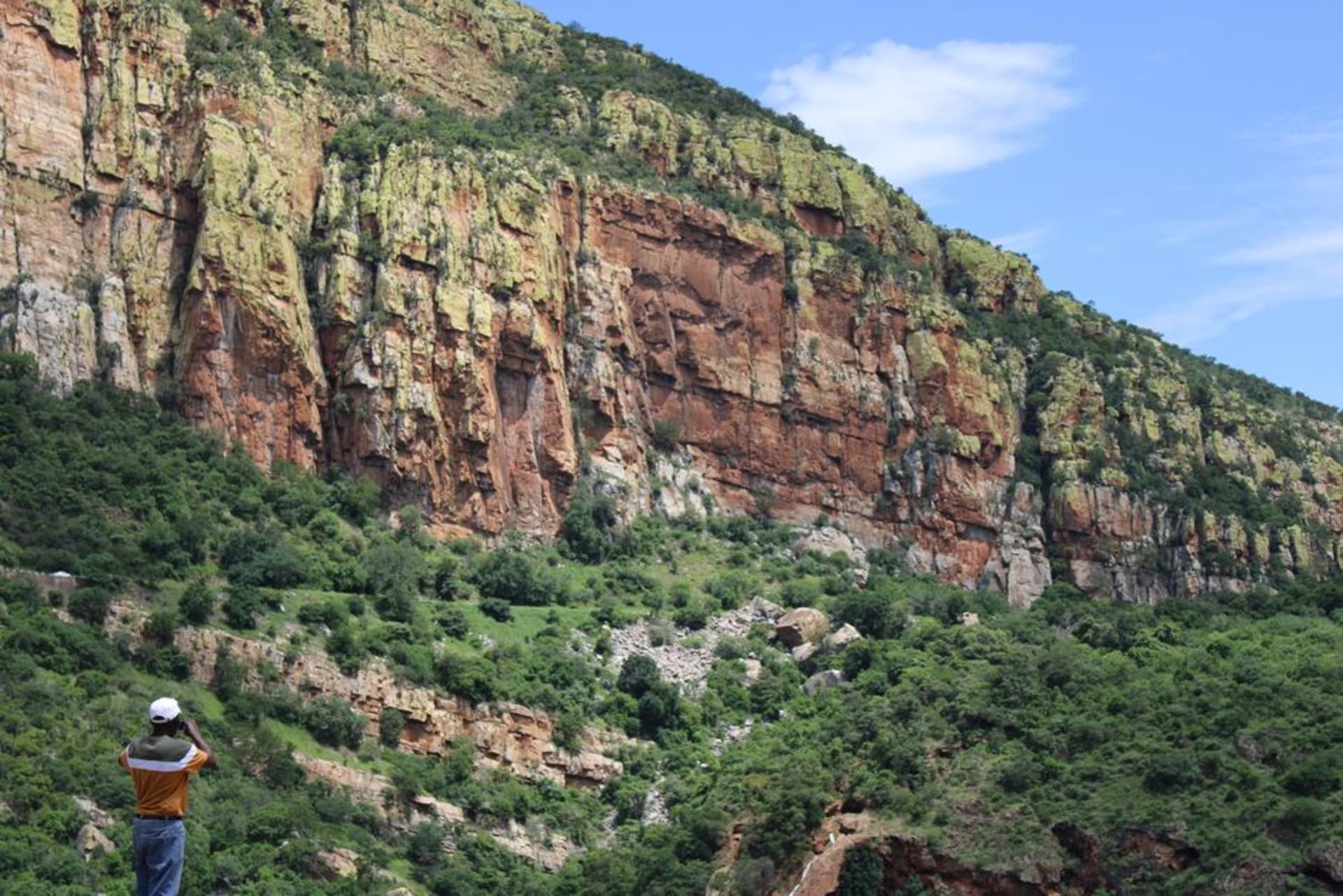
Bandiagara Escarpment (Dogon Country)
"I have stood under a lot of cliffs. I have never stood under one that was also a graveyard, a granary, and a church."
A 150-kilometer sandstone cliff where Dogon granaries cling to the rock and the dead of two vanished peoples still sleep in the caves above.
I’d been warned, in the vague way people warn you about places they’ve never actually seen, that Dogon Country would be “intense.” Nobody bothered to explain what that meant, so I arrived in Sangha with Lia expecting heat and dust and left instead with a stiff neck from three days of looking straight up. The escarpment doesn’t announce itself gradually — you’re on the plateau, flat scrubland stretching in every direction, and then the ground simply stops and drops five hundred meters into a valley that seems to have been carved by something with more patience than water usually has. Our guide, a young Dogon man named Amadou whose family still farmed onions on the plain below, pointed out the first cluster of dwellings tucked into the cliff face and told me, almost as an aside, that they weren’t Dogon at all — they belonged to the Tellem, who lived there a thousand years before his ancestors ever arrived from the Mande highlands in the fourteenth century. I remember doing the math wrong twice before it landed: a thousand years is longer than most European cathedrals have existed.
We started the trek at Teli, one of the classic jumping-off points, and it was there that the sheer logic of the place clicked into focus. The granaries — squat mud towers with conical thatched roofs, some old, some freshly re-plastered after the last rains — aren’t just storage. They’re the whole economy stacked vertically: millet up top where it stays dry, ancestors and Tellem bones tucked into burial caves higher still, the living down below where the well is. Lia kept stopping to photograph the toguna, the low-roofed men’s meeting huts built deliberately too short to stand up in, so that arguments would have to happen sitting down. I liked that detail more than almost anything else on the trip — architecture as conflict resolution.
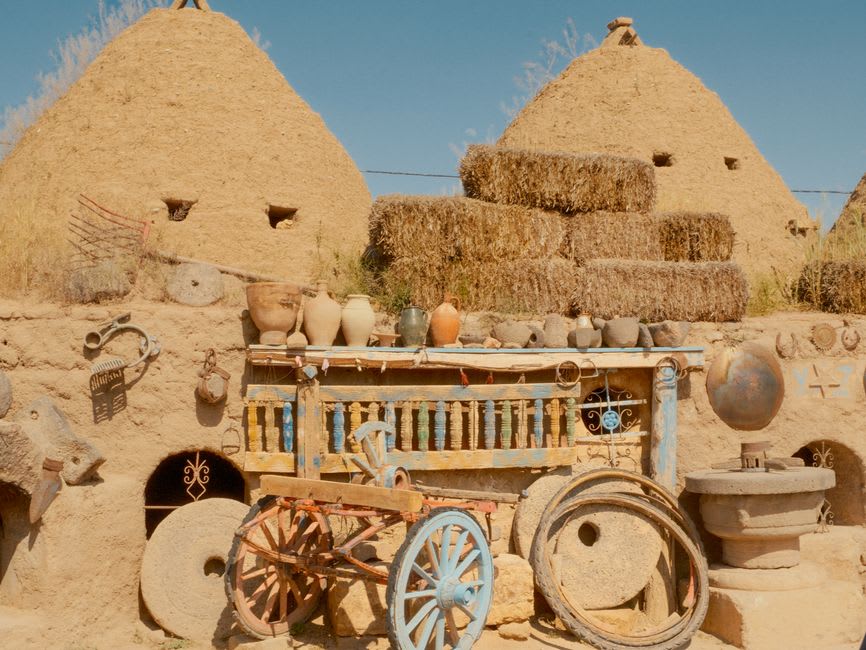
The heat by midday was the kind that makes you stop talking, so we rested in the shade of a baobab outside a compound whose walls were carved with the same angular symbols I’d later see repeated in the masks stored for the dama ceremonies — funerary rites that, Amadou said, only happen once every several years and that outsiders rarely get to witness properly. We didn’t see a mask dance ourselves; what we got instead was quieter and, I think, better: an old man sitting in the doorway of his family’s granary, watching us the way you’d watch weather, unbothered, while his grandchildren chased a goat between the walls. UNESCO listed this place in 1989 for the geology and the culture in the same breath, and by day two I understood why nobody could have separated the two even if they’d tried. The cliff isn’t a backdrop here. It’s load-bearing, literally and otherwise.
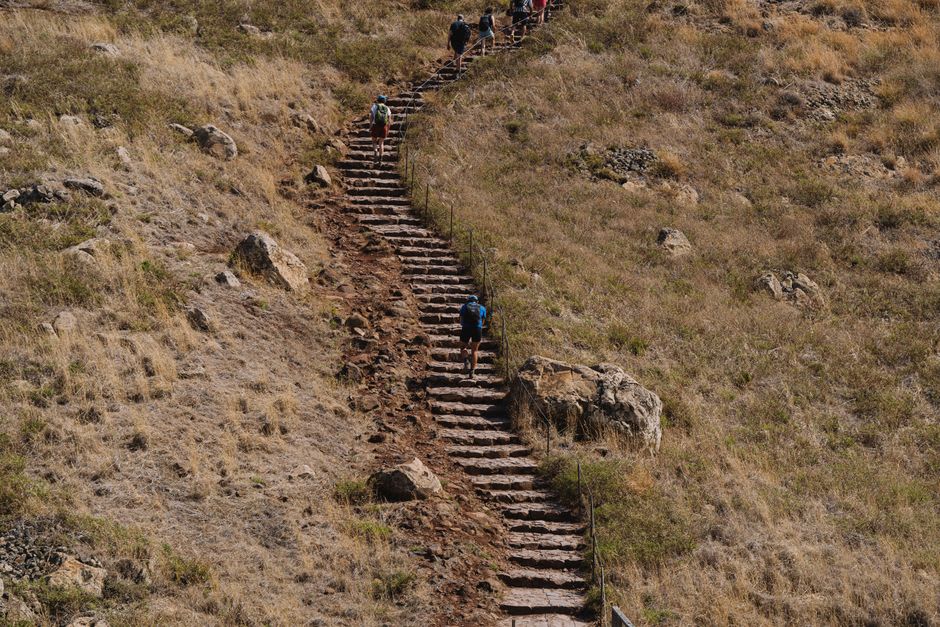
On our last evening we climbed a short section of the plateau trail to watch the light change on the rock — that particular late-afternoon color that turns sandstone the shade of a lit ember — and Lia said almost nothing for a long time, which for her is its own kind of verdict. I thought about the Toloy who’d apparently been there even before the Tellem, and the Tellem before the Dogon, each generation building on top of the last one’s silence, and how strange it was that a cliff could hold that much history without collapsing under the weight of it.
When to go: Aim for November through February, when the dry season keeps the heat manageable and the trekking trails firm underfoot — outside that window the humidity and heat on the plateau turn the longer walks into an ordeal. And whatever the season, check current regional security advisories before you book anything; this part of Mali has not always been straightforward to visit, and that can change on short notice.