Tamanrasset
"The Hoggar doesn't look like Earth. I mean that as a fact, not a metaphor."
Tamanrasset is not easy to reach and does not pretend to be. The overland route from northern Algeria crosses more than 2,000 kilometers through progressively more extreme terrain, a journey that takes the better part of a week by trans-Saharan truck convoy if you’re serious about it. The alternative is to fly, which deposits you in an airport ringed by black volcanic rock, in a town that feels like the last outpost before the planet ends — not dramatically, but as a simple geographic fact.
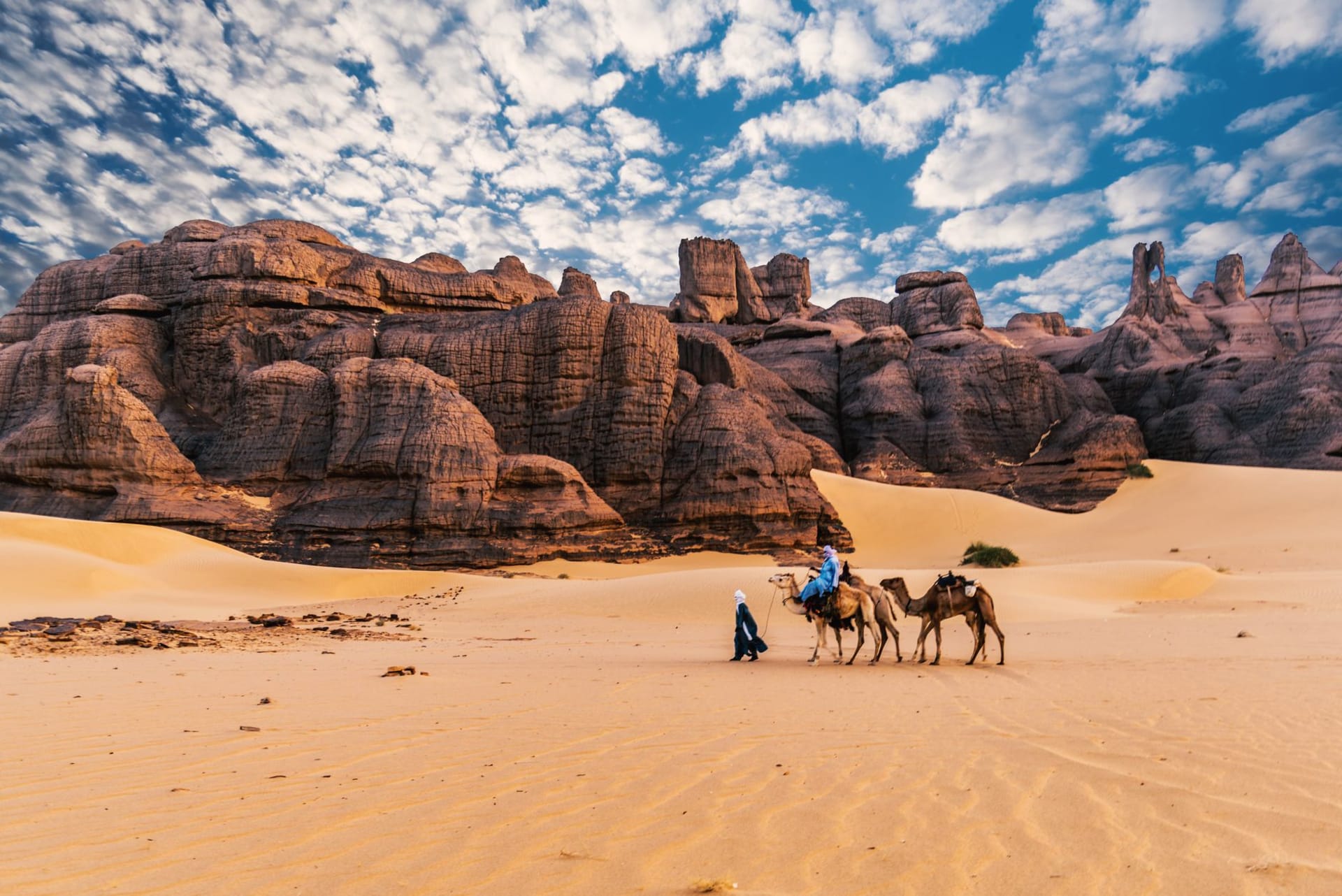
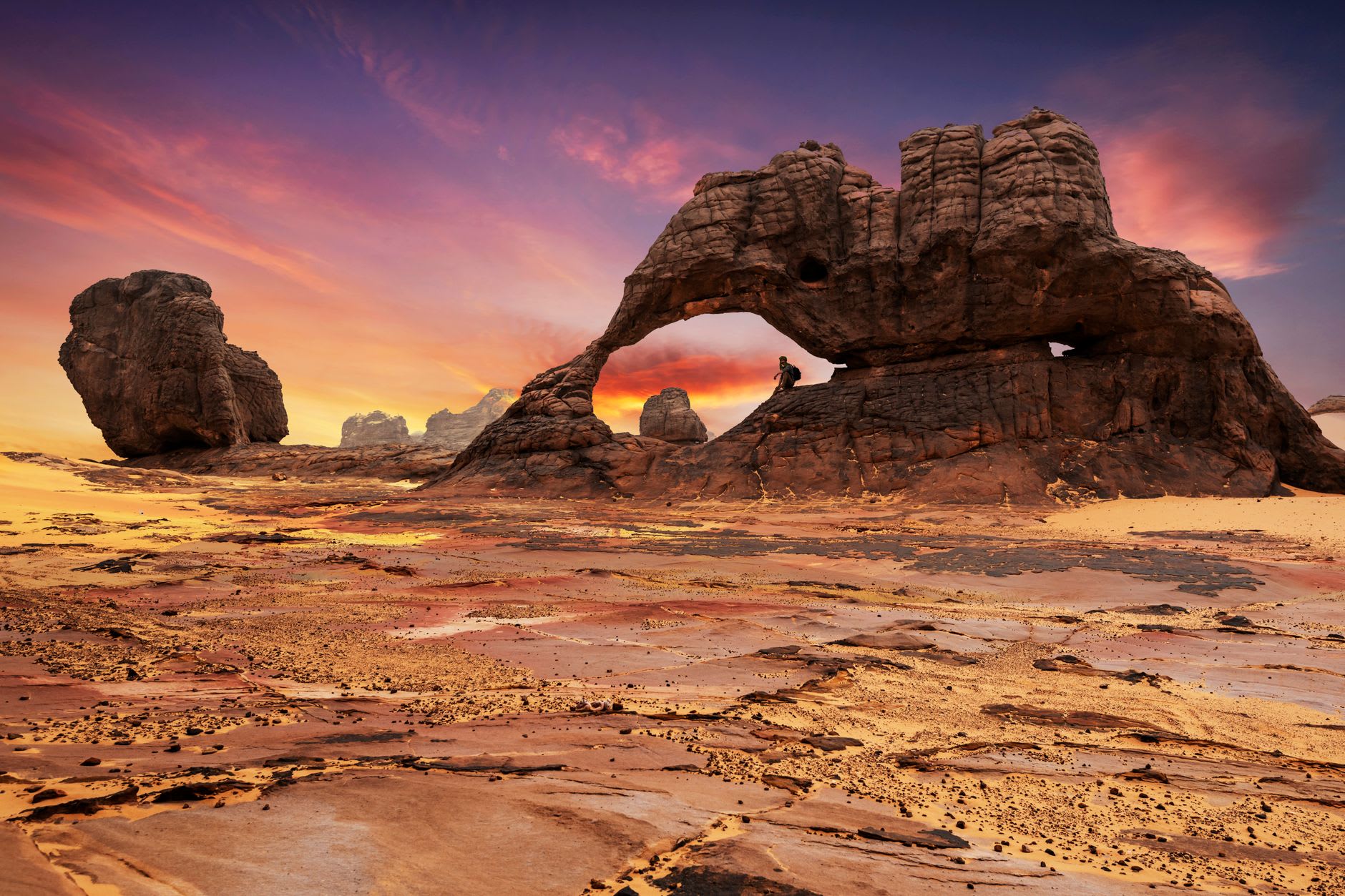
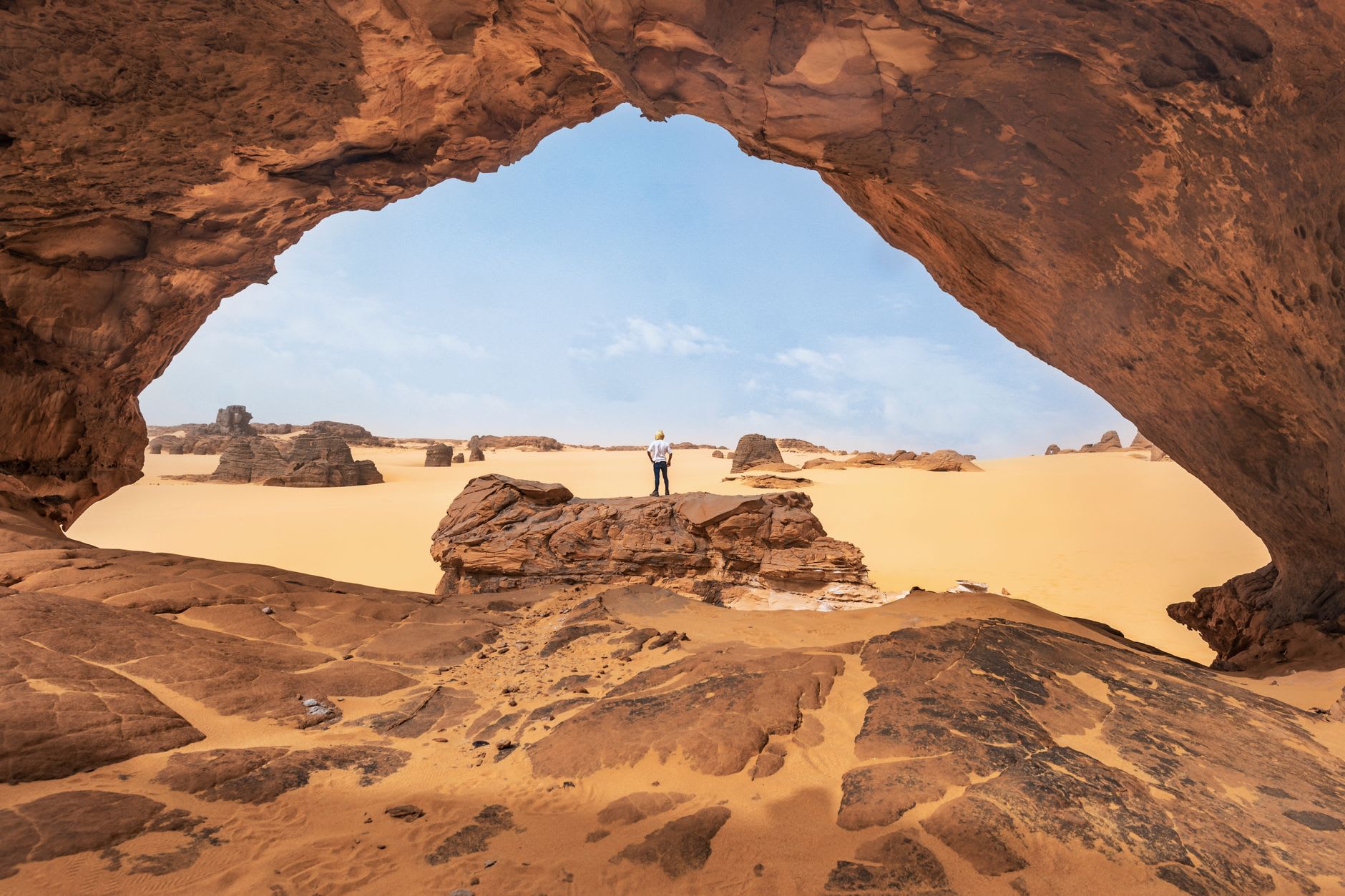
The Hoggar Mountains — Tamanrasset’s reason for being — rise from the flat desert plain in formations that look like something a computer generated while trying to simulate geology without understanding it. These are ancient volcanic plugs, called gours, worn to points and columns over millions of years, black and dark red against the pale desert floor. At sunset they glow briefly copper before going entirely dark, and the effect is of an enormous natural theater lit for one hour and then switched off for the night.
This is Tuareg country in a fundamental sense. Tamanrasset is the administrative center of its province and an important cultural capital for the Tuareg people, who call the Hoggar region “Kel Ahaggar” — the people of the Ahaggar. The veiled men in indigo and the women in bright embroidered robes are not a performance for visitors; they are simply how people dress here, as they have for centuries. The Tuareg silver jewelry — complex geometric designs in oxidized silver, with inlaid leather and semi-precious stones — is made and sold locally and is among the most distinctive material culture of the entire Sahara. I spent a morning in the central market looking at jewelry with a trader who spoke French and knew the name and origin of every technique, and what I bought cost less than I felt comfortable paying.
The summit of Assekrem, accessible by piste at 2,728 meters above sea level, is where the hermit Charles de Foucauld built his hermitage in the early 20th century, and where the sunrise over the Hoggar is regularly described as one of the finest views in Africa. I went up in the dark in the back of a 4x4, arrived in the cold before first light, and stood on a rocky platform surrounded by volcanic spires while the sky went from black to grey to pink to gold. The jagged shapes of the Hoggar emerged from darkness piece by piece, as if being assembled in real time by something that was in no hurry. The silence was the specific Saharan silence — total, weighted, slightly reproachful of anyone who tries to describe it.
The town itself is modest: a central market, several guesthouses, and the practical administration of a remote desert capital. The mechoui at the main market — whole lamb slow-roasted over a wood fire — is served with flat bread and harissa and eaten communally from a shared tray. The mint tea here, as everywhere in the Sahara, comes in three rounds and cannot be hurried under any circumstances.
When to go: November through March. The Assekrem sunrise is worth the effort at any point in this window, but January is the coldest month and the night on the plateau is genuinely frigid — bring proper layers regardless of what the daytime temperature suggests. Check current security advisories before traveling to southern Algeria; the border regions have historically required coordination with local authorities and independent travel has at times been restricted.