Maras Salt Terraces
"There are places where the phrase 'ancient technology' stops feeling like a compliment and starts feeling like awe."
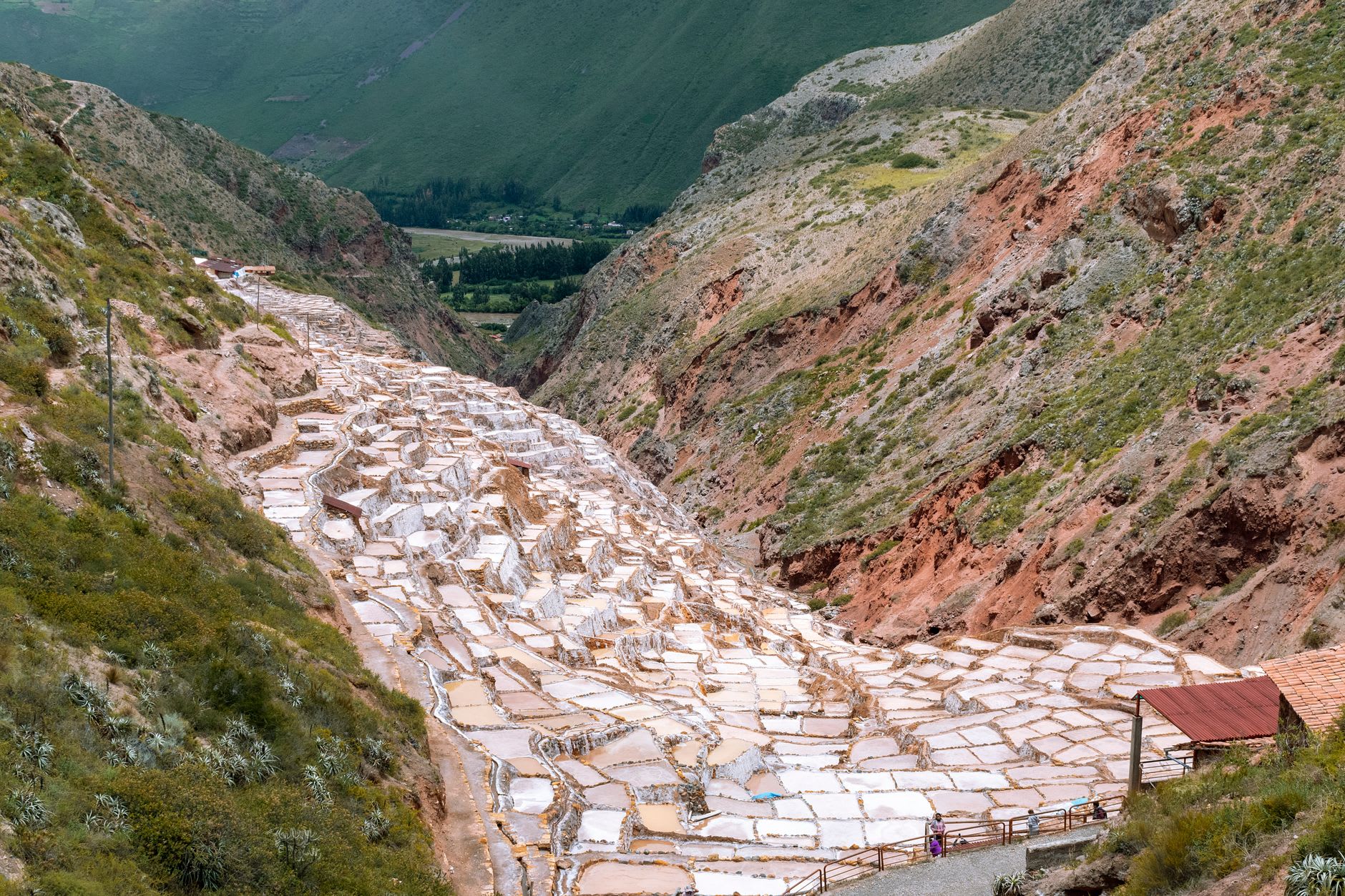
I found the Maras salt terraces on a bicycle, the way most people probably should. The road from Maras village is unpaved and drops toward the terraces with enough gradient that you’re mostly steering rather than pedalling, and the first view arrives without warning — a hillside covered in thousands of small white pans, each one fed by a salt spring that has been flowing since before the Inca decided to formalise what the local communities were already doing. I stopped and sat on the edge of the path for longer than made practical sense, trying to count the pools. There are something like three thousand of them. I stopped counting around two hundred.
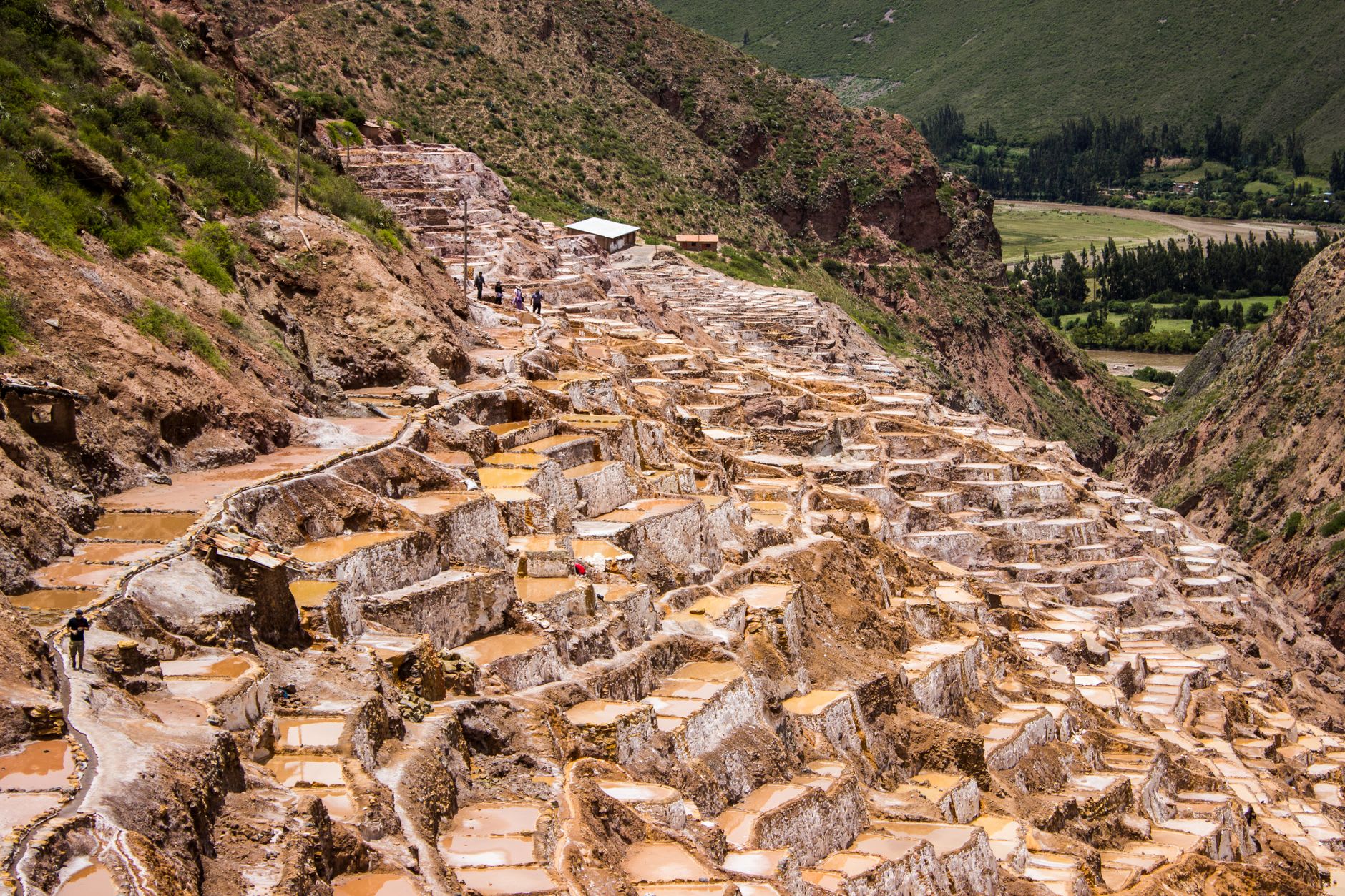
The terraces are carved into the slope in an irregular, organic way — not the geometric precision of Moray, not the grand engineered scale of the agricultural terracing at Pisac. These pools are small, roughly rectangular, sized for an individual family or cooperative to work. Each one is separated from the next by low mud walls, and the water that feeds them comes from a single salt spring, diverted through channels that predate the Spanish conquest by centuries. Salt families have worked individual pools here for generations, and when you walk among them — which you can, carefully, on the narrow paths between the walls — you pass people with shallow-draft rakes pushing brine to the edges and leaving white crystalline residue that will be harvested when it’s thick enough.
The colour changes through the day in ways that reward staying beyond the first ten minutes. In the morning, when the sun is low, the pools are white and silver, reflecting sky back at you. By afternoon the shadows from the surrounding walls pool in the corners and the briny residue catches an amber and pink light that makes the whole hillside look like something between a salt flat and a painting. The air near the spring source smells of minerals and faintly of something I couldn’t identify — not unpleasant, specific to this particular aquifer, this particular geology.
I bought salt in a small bag from one of the workers on the way out. It was pink and coarse and tasted different from any salt I’d had before — rounder, more mineral, with a slight echo of altitude. I used it on everything for the rest of the trip and ran out two days before leaving Peru, which remains a small regret.
The site works well combined with Moray, six kilometres away. A bicycle rental from Maras village gets you to both in a half-day, and the combination of Moray’s severe geometry and the salt terraces’ organic irregularity makes the contrast itself an argument about the different ways the Inca understood landscape and productivity.
When to go: The salt terraces operate year-round, since the spring flows continuously regardless of season. Dry season (May–October) gives better light and firmer roads for cycling; in rainy season the dirt track from Maras village can become genuinely difficult. Morning light is harsh and bleaching on the white pools; late afternoon — around four — is when the colour variation is most dramatic. Combine with Moray and budget at least three hours total for both sites.