Rubavu
"The volcano across the water was someone else's emergency, and yet we all kept glancing at it."
Rubavu sits at the northern end of Lake Kivu, pressed right up against the Congolese border in a way that makes the geopolitics feel almost casual. The main street runs down to the lake, and at the bottom there are beach bars, fish restaurants, and a low concrete promenade where people walk in the evenings as if this were the Mediterranean. Across the water, Mount Nyiragongo looms — one of the world’s most active volcanoes, its crater holding a permanent lava lake that glows orange at night if the cloud cover is thin enough. I stood on the beach at ten o’clock in the evening, looking west, thinking: that red smear in the sky is a mountain that is actively melting.
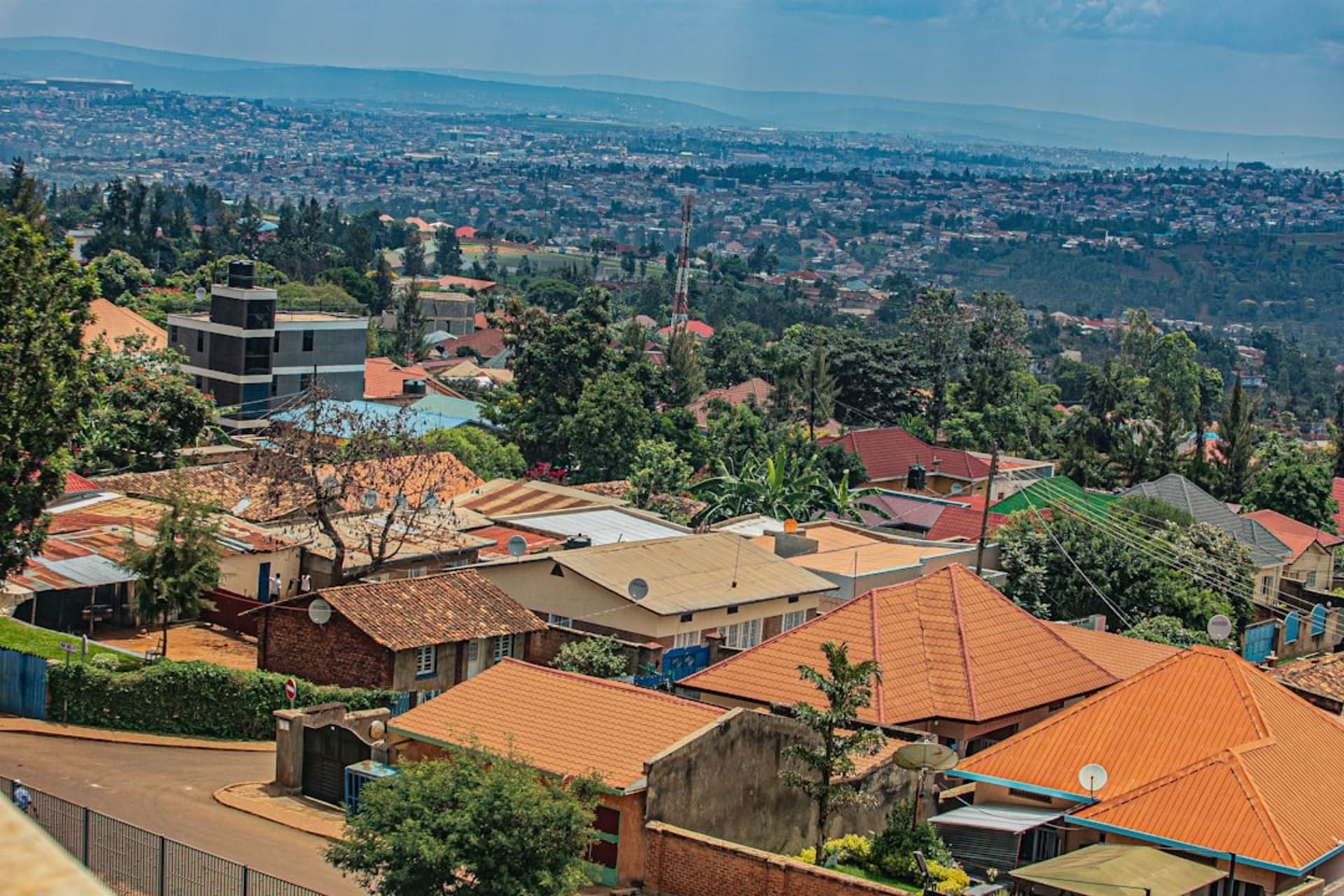
The town itself — still called Gisenyi by older residents and most taxi drivers — has a divided personality. The lower lakeside quarter is a resort town in the rough-and-ready sense: hotels built for Kigali businesspeople seeking weekends near water, European-style patisseries incongruously good, beach clubs where the young professional class of Goma (just across the border) and Kigali converge. The upper town, climbing the hillside, is a working Rwandan market town where the real economy happens in produce stalls and mobile-money shops and the air smells of frying dough and diesel.

The border crossing at Petite Barrière is one of the more surreal frontiers I’ve crossed. You walk across a bridge — literally, you walk, no vehicle required — and you are in Goma, DRC, a city of roughly two million people that has been through extraordinary upheaval. Day trips are possible and the contrast is immediate and humbling: Goma’s streets are volcanic rock-paved from a 2002 lava flow that destroyed much of the city and then hardened into the road surface, which is simultaneously the most dramatic urban detail I have ever encountered and the most matter-of-fact reminder that living on an active volcano requires a particular philosophical acceptance. Most travelers visit just for an afternoon, and the process has been streamlined enough to be manageable.
Back in Rubavu, the mornings are the best part. The lake mist burns off slowly and the water gradually turns from gray to deep blue. Fishermen paddle out before sunrise, and by eight o’clock they’re back on shore cleaning the night’s catch — small, bright silver fish sorted into plastic buckets. I found a table at a wooden restaurant over the water that served fried tilapia with ugali and a bowl of tomato-onion sauce, and the whole thing cost essentially nothing, and I sat there for two hours watching the pirogues work the near shore while Nyiragongo sat huge and patient across the border.

The lava beaches north of town are genuinely strange — black volcanic sand and rock, improbably soft in places, where you half-expect the water to be warm. It isn’t, but swimming in a lake that’s surrounded by volcanoes while a real volcano smokes on the horizon is the kind of experience that earns its own category.
When to go: Rubavu works year-round as the town itself is the attraction. June through September brings drier days and clearer views of Nyiragongo across the water. Weekends see Kigali visitors arrive in numbers and the beach bars fill up. Come on a Tuesday morning for the market and the fishermen and the relative quiet.