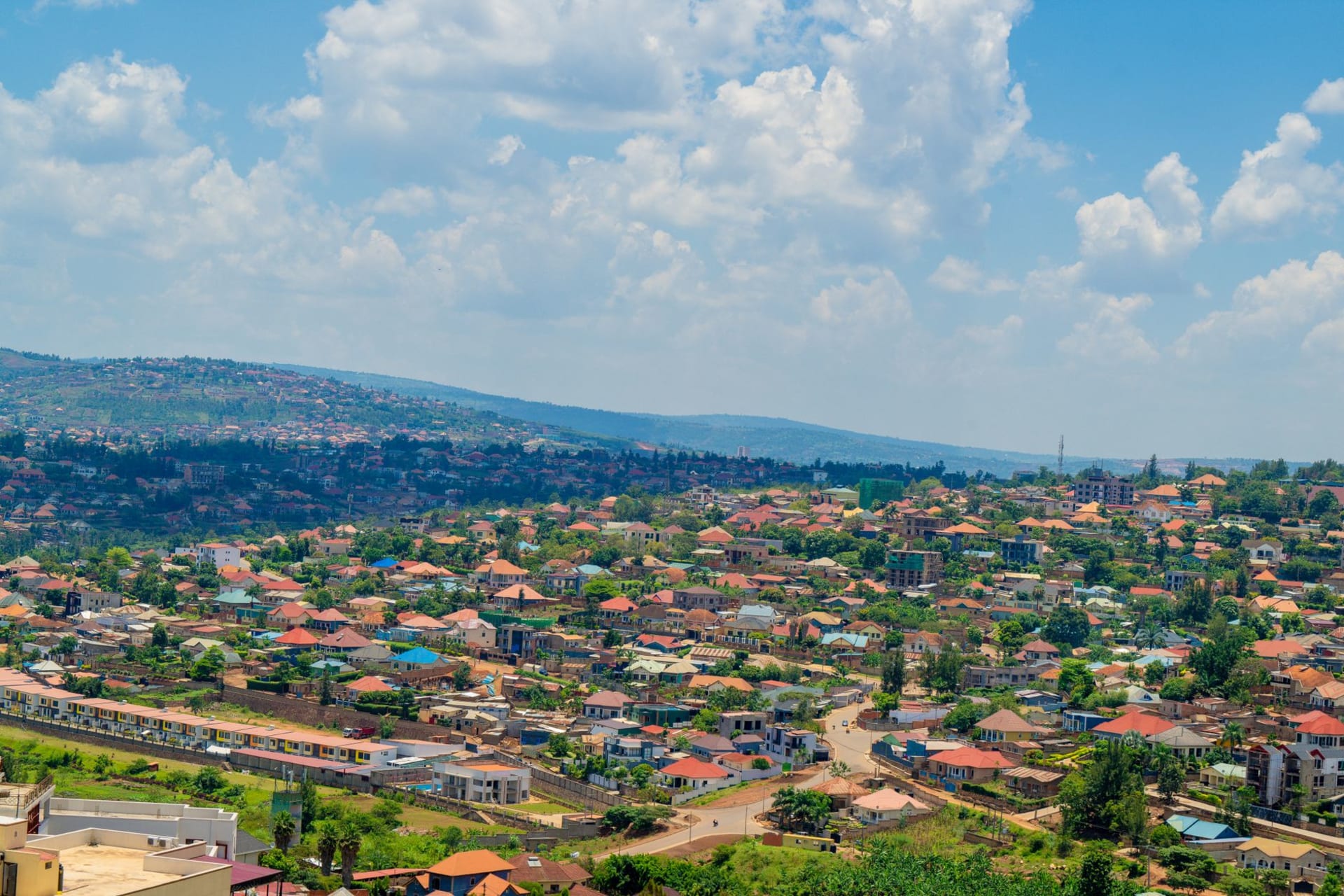
The road to Karongi takes you west from Kigali on a route that gradually dismantles the capital’s urgency. You climb, descend, climb again, each ridge revealing more extravagant hillside scenery, and then the road drops toward the lake and suddenly you are on a narrow peninsula with water on three sides and the forested slopes of the Congolese mountains visible to the west, and the sensation is of the world having concluded itself at a satisfactory point and simply stopped.
Karongi — still called Kibuye by almost everyone — sits at the end of this peninsula like a small town that arrived here by chance and found no good reason to leave. The streets are quiet enough that you hear your footsteps. Fishing boats are pulled up on the pebbled beaches in the late afternoon, their owners mending nets on the waterfront with a slowness that feels deliberately instructive. A man at a tea stall told me, when I mentioned I was from France, that the lake was better than the sea because there was no salt and no tides, and that this made it more civilized. I have thought about this observation since.

The genocide memorial at Karongi carries particular gravity. In April 1994, thousands of Tutsi civilians sought refuge in the church here and were killed. The memorial is small and somber — a room with benches and photographs, a garden with mass graves marked simply. I went on a quiet morning when I was the only visitor, and spent time there with the kind of stillness that the place demands. Karongi was among the hardest-hit areas in the Western Province during the genocide, and the memorial is honest about this without dramatizing it, which seems to be the Rwandan way.
The islands scattered in the lake near Karongi are the best reason to linger. Napoleon Island harbors the largest known colony of fruit bats in Rwanda — at dusk, they emerge from the trees in a slow, wheeling cloud that takes several minutes to fully depart, a spectacle entirely out of proportion to the island’s modest size. Amahoro Island has a small beach and is empty enough on weekdays that I spent an afternoon there alone, swimming in water that was cooler than expected and clearer than I had any right to hope for, the forested hills reflected in the surface around me. The boat ride out takes fifteen minutes on a wooden pirogue, and the boatman didn’t speak and I didn’t speak and the lake did the rest.

The guesthouses on the Karongi waterfront are simple — concrete rooms with mosquito nets, cold water in the morning, and terraces facing the lake — but the view compensates for everything the amenities omit. I woke before dawn and sat on a plastic chair with instant coffee and watched the lake change through four different colors before sunrise had fully committed to the day. It remains one of my better mornings in Africa.
When to go: Karongi is best from June through September, when clear days allow the full view of the Congolese mountains across the water. The islands are accessible year-round by boat. The town is significantly quieter on weekdays — arrive on a Sunday evening to find families from Kigali enjoying weekend relaxation on the waterfront, which creates an animated atmosphere that the town doesn’t have during the week.