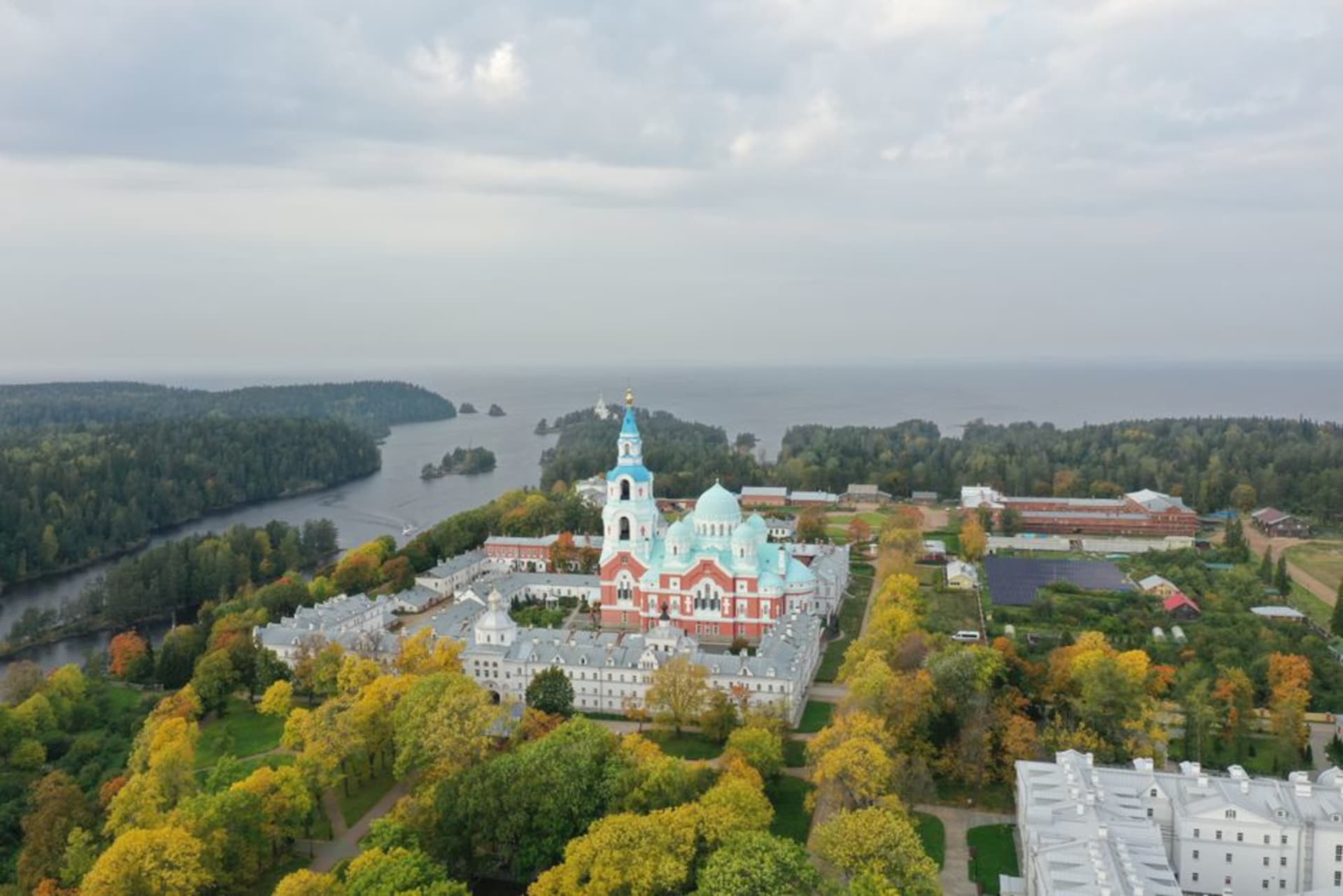
Valaam Island
"The lake decides when you can leave, and somehow that made me want to stay longer."
A monastery archipelago in Lake Ladoga where bells carry over the water and roughly 200 monks still keep the hours the old way.
I almost missed the hydrofoil out of Sortavala. Lia had gone back for her jacket and I was standing on the dock counting the minutes, and it occurred to me that this was probably the wrong way to arrive at a monastery — flustered, sweating, checking my watch. Valaam has a way of correcting you for that within the first ten minutes on the water. Lake Ladoga opened up grey and enormous, Europe’s biggest lake by a wide margin, and somewhere out there was an archipelago of some fifty islands that monks had been quietly occupying since the 14th century. By the time we cleared the last skerries and the bell tower came into view — that unmistakable green-and-white spire of the Transfiguration of the Savior Monastery — my pulse had slowed to match the boat’s.
We didn’t book a guide, which in hindsight was both a mistake and the best decision we made. We wandered up from the pier past vegetable gardens tended by monks in black robes, past a woman selling dried fish and jars of berry preserve from a folding table, and into the lower church, where the smell of beeswax candles hit before my eyes adjusted to the dark. Sergius and Herman, the monks traditionally credited with founding the place, are buried somewhere beneath all that gold leaf and iconography, and what struck me wasn’t the age of it — most of what you see was rebuilt in the 18th and 19th centuries — but how lived-in it still felt. This isn’t a museum. Around 200 monks live and work here now, and we kept nearly walking into one carrying firewood or hauling nets down to the water.
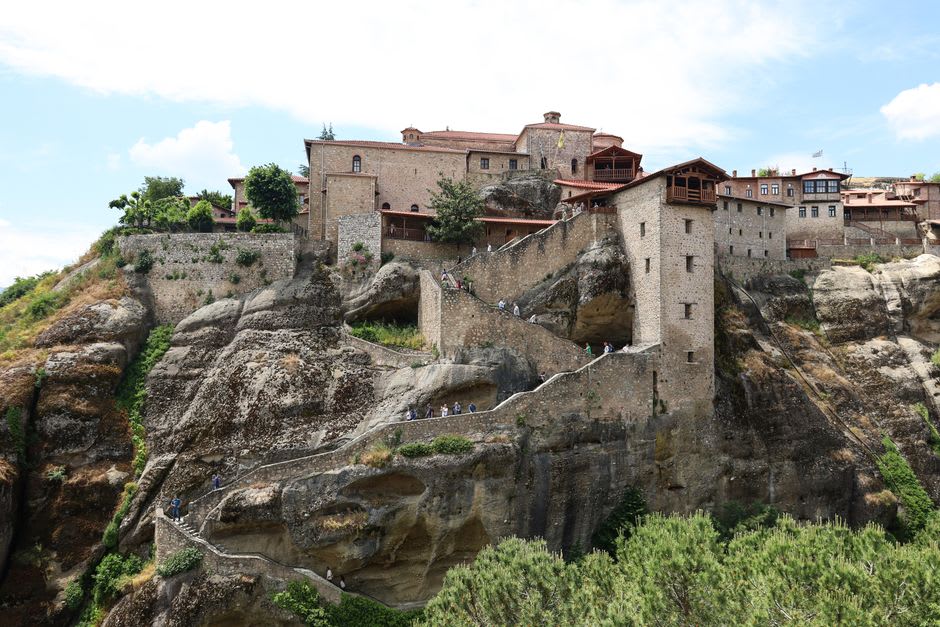
Lia found a bench near the old orchard and just sat there for an hour while I wandered further into the woods, past a scattering of wooden hermitages where solitary monks apparently still live in near-total silence. I thought a lot, walking those paths, about the monks who evacuated during the Winter War — Valaam belonged to Finland from 1918 until 1940, and when the fighting came, the community fled across the ice to found New Valamo on Finnish soil, carrying icons and bells with them. Standing there, it was hard not to feel the weight of that departure and the strangeness of the return decades later, under a different flag, to rebuild what had been left behind.
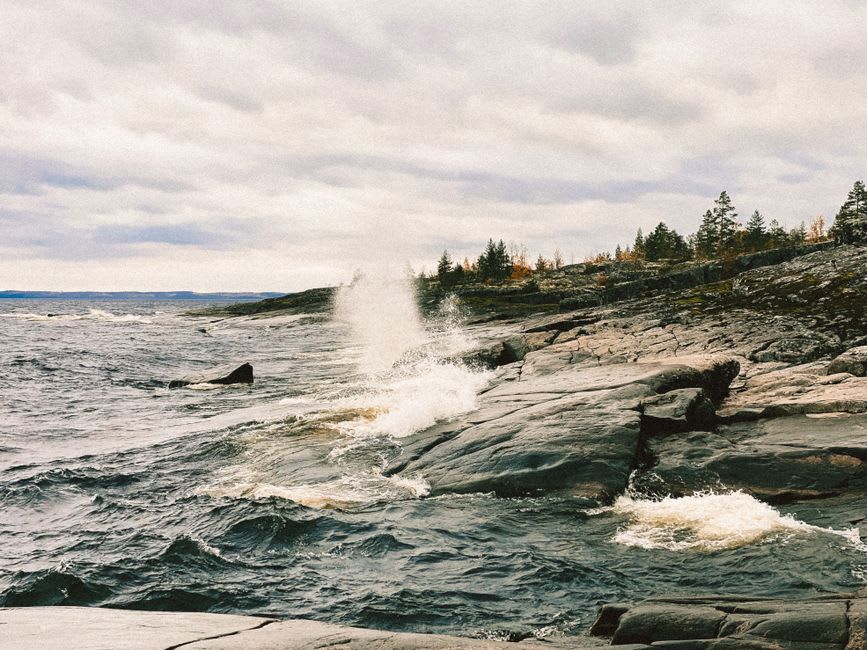
We ate dinner that night back in Sortavala — smoked whitefish from the same lake, which felt right — and I remember Lia saying she hadn’t expected an island to feel so much like a held breath. That’s the best way I can describe Valaam: a place that exists slightly outside of time, reachable only by boat, and entirely at the mercy of the lake’s moods.
When to go: aim for June through August, once Lake Ladoga has shed its ice and the boats from Sortavala are running on something close to a reliable schedule.