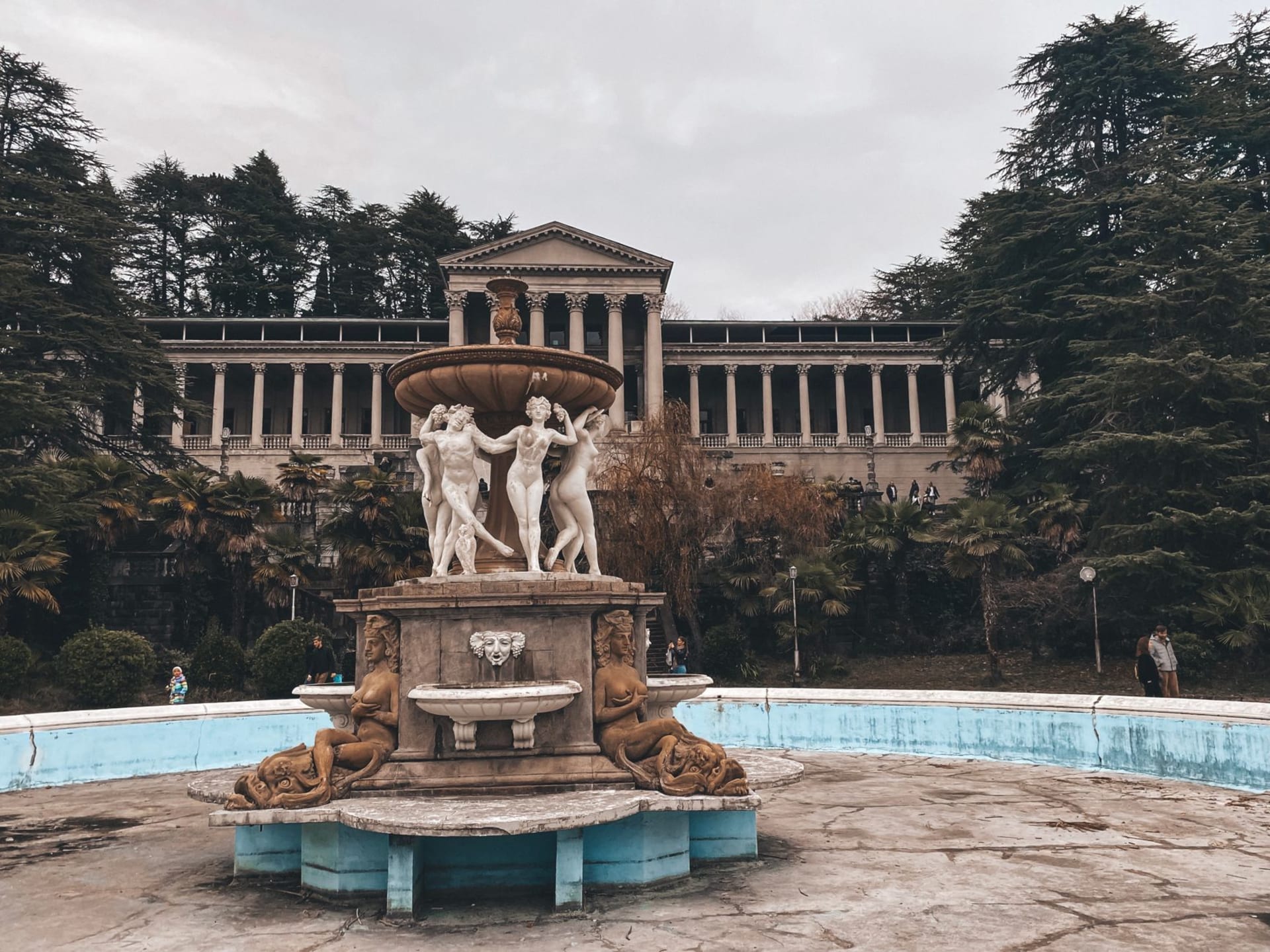
Sochi
"I swam in the Black Sea in October while snow sat on the peaks above Krasnaya Polyana — Russia is full of these impossible juxtapositions."
My understanding of Russia and subtropical did not overlap until Sochi. I arrived in October expecting something transitional, something bracing, and instead found palm trees on the promenade, bougainvillea still in bloom, and the Black Sea holding enough warmth to swim in — while above the city the Caucasus mountains wore fresh snow on their upper slopes. The air smelled of salt and eucalyptus. A man in swim shorts walked past a woman in a fur coat. I had arrived somewhere that the climate had not quite resolved with itself.

The beach culture here is particular — not the performative leisure of the Mediterranean but something more purposeful, almost medical in its seriousness. Russians take the Black Sea as a health matter, a tonic, a restorative. The pebble beaches (there is almost no sand in Sochi) host women of a certain age doing exercises in the shallows and men playing cards under awnings and children navigating the wave break with the confidence of people who have been doing this since they could walk. The sea itself is unusually dark and warm for a body of this size, and swimming out fifty meters from shore, turning back to see the palms and the city and then above it the white peaks of the Caucasus, produces the specific vertigo of a landscape that contains too many climates at once.
Krasnaya Polyana, the mountain village forty minutes up into the Caucasus above Sochi, became the centerpiece of the 2014 Winter Olympics and now wears the infrastructure of that event like a suit bought for someone else. The cable cars are excellent and the views from the upper stations are extraordinary — forty kilometers of mountain range in both directions, the Black Sea glinting to the west — but there is a certain ghostliness to the purpose-built resort areas, the hotels still oversized for regular footfall. The skiing in winter is genuinely good; the hiking in summer is better.

Stalin’s dacha, a twenty-minute drive from the center, is the strangest tourist attraction in a region not short of them. The building is frozen precisely as it was at his death in 1953 — the billiard table, the dining table set for fourteen, the bedroom with its single military bed and the green walls he insisted on painting every room because he believed it calmed him. A guide in a voice entirely free of editorial judgment explains that the bowls of fruit on the tables were replaced every day for fifteen years after his death, because no one could quite bring themselves to stop. I stood in the billiard room for a long time afterward, trying to understand what I was looking at.
When to go: June through September for the beach and the sea swimming. December through March for skiing at Krasnaya Polyana. May and October are underrated: warm enough to swim, thin enough on tourists to feel like the city belongs to the people who live there.