Jodhpur
"The cannon marks on Mehrangarh's gate have been there for three hundred years. Nobody filled them in. That's a choice."
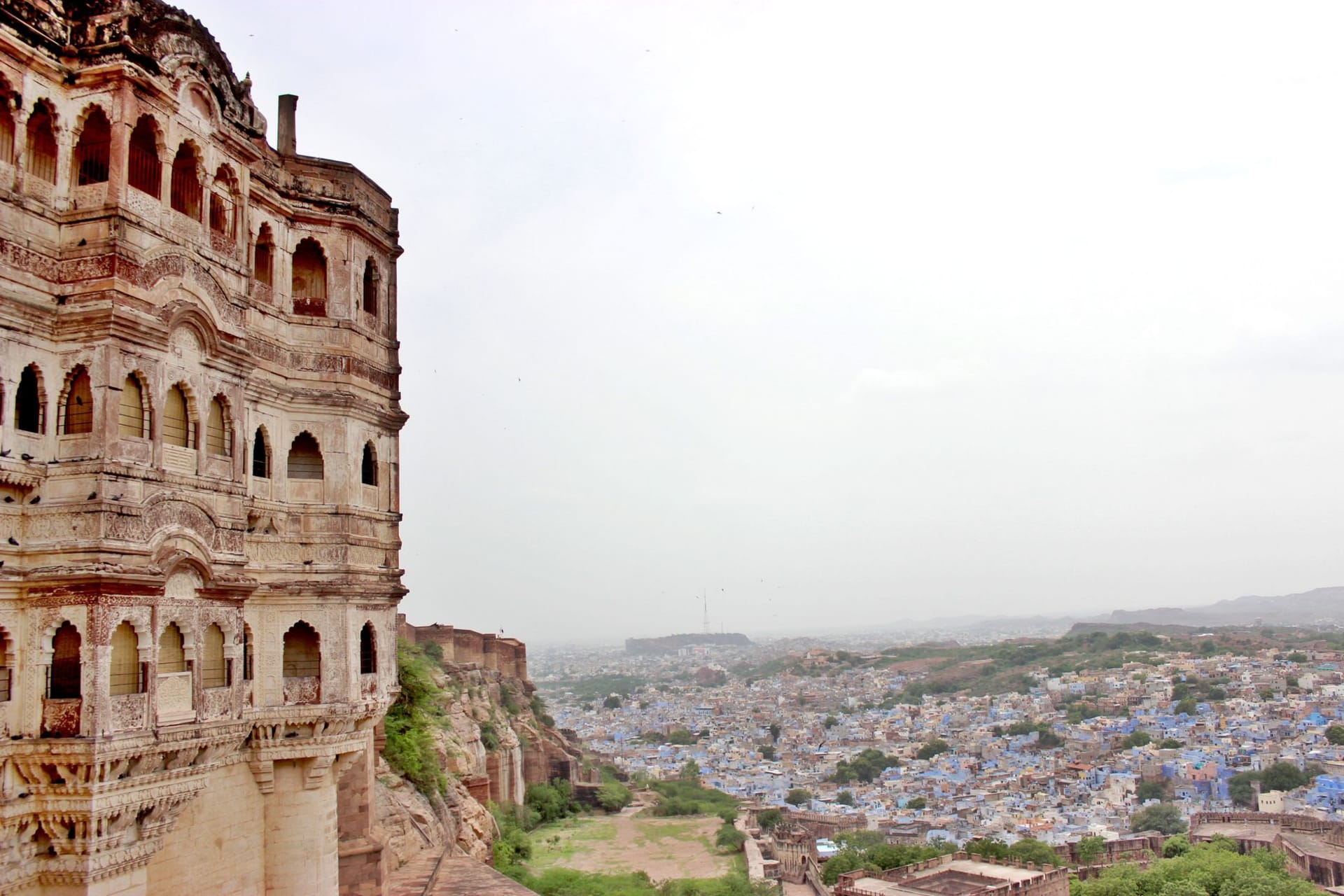
I climbed to the ramparts of Mehrangarh on my second morning and stood there for longer than I’d planned, looking down at what was essentially a sea of blue. From that height the old city of Jodhpur is hypnotic — not one shade of blue but dozens, from pale sky-wash to the deep indigo of a freshly painted doorway, every house a slightly different interpretation of the same colour. The tradition began as a Brahmin marker and has long since become something the whole old city embraced, and from the fort walls it reads as one of the most distinctive urban landscapes I have encountered anywhere. Then I noticed the cannon marks.
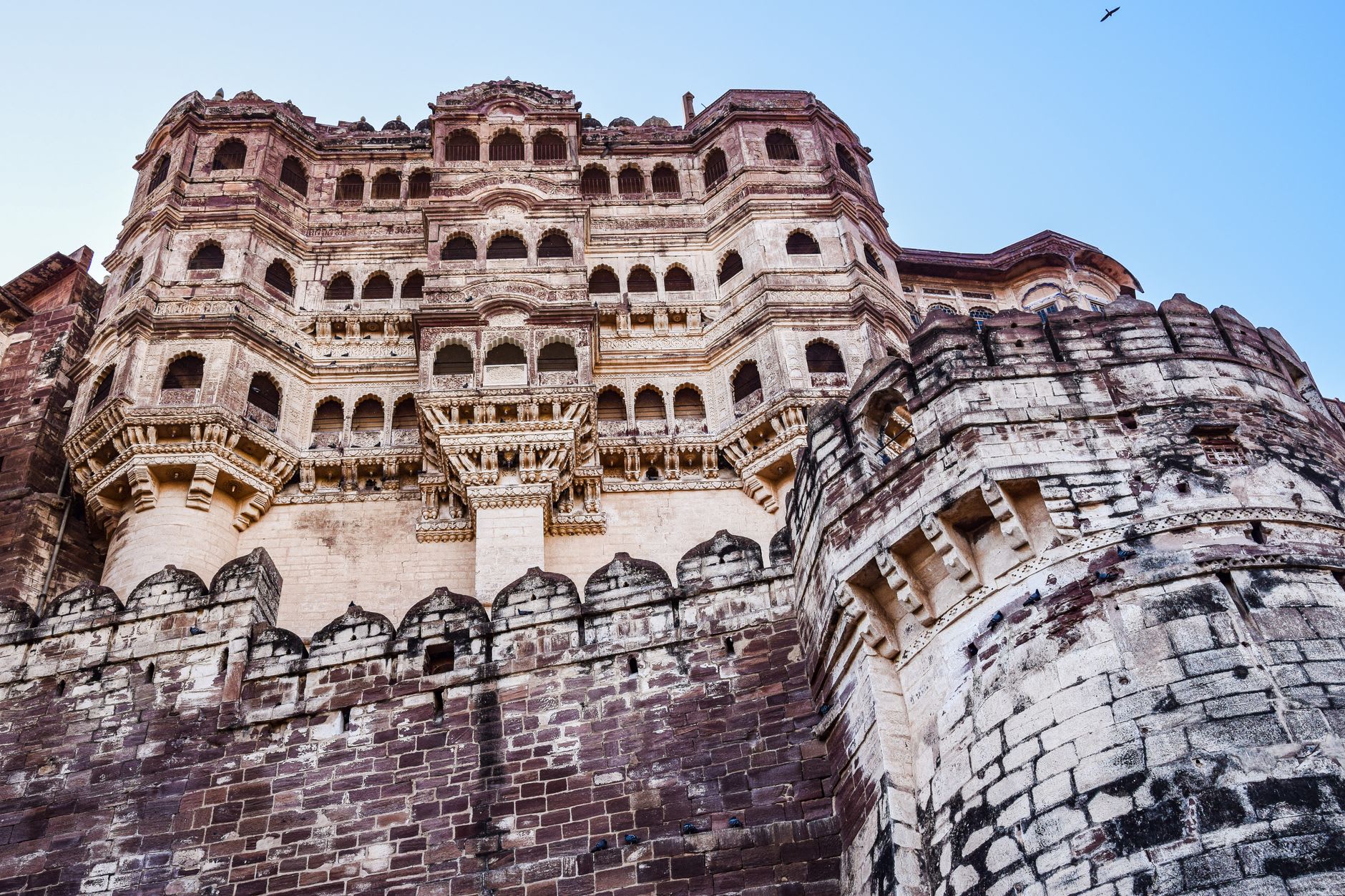
The main gate of the fort carries dents from cannonballs fired by the army of Jaipur in 1807. They were never repaired. The Rathore dynasty apparently decided the scars were worth keeping — a reminder, perhaps, of what the fort had survived. Inside the fortifications the museum is one of the finest in Rajasthan: howdahs (elephant saddles) encrusted with silver, royal cradles so elaborate they look like small palaces, and a collection of miniature paintings where the battles and hunts and court ceremonies are rendered with a precision that approaches obsession. The scale of the place is medieval in the truest sense — the walls are nine meters thick in places, built by rulers who took permanence seriously.
Below the fort, the Sadar Market runs on its own logic, a tangle of stalls selling everything from saffron to embroidered slippers. I found a stall near the clock tower selling mirchi vada — fat green chillies stuffed with spiced potato, dipped in chickpea batter and deep-fried — and ate three standing at the cart while the seller watched with the particular pride of someone who knows they are providing something genuinely good. The heat of the chilli and the softness of the potato filling and the crunch of the batter — it’s exactly the kind of street food that has no business tasting as sophisticated as it does.

A short walk from the market the Jaswant Thada sits in near-silence — a white marble cenotaph built in 1899 for a maharaja, its walls thin enough to be translucent in sunlight, the stone almost glowing. After the stone density of the fort above and the noise of the market below, the Thada’s gardens feel like a held breath. I sat there for an hour reading, watching a pair of peacocks move unhurriedly across the grass, and felt the city recalibrate around me.
When to go: October through March offers the most comfortable temperatures. The blue of the buildings reads most vividly in the morning light before the heat flattens everything. If you can manage only one Rajasthan city alongside Jaisalmer, make it Jodhpur — the fort alone is worth the detour.