
Fraser Island (K'gari)
"You drive off the barge onto the beach and suddenly the beach is the road — and everything you thought you understood about travel shifts slightly."
The world's largest sand island, where eucalyptus forests grow in pure silica, freshwater lakes perch above the sea, and the beach is the only road.

I had been told that the beach was the road, but nothing quite prepares you for it. You drive the 4WD off the barge at Inskip Point and onto Seventy-Five Mile Beach, and there are no lane markings, no kerbs, no streetlights — just 120 kilometres of hard-packed sand running north along the coast, the Coral Sea to your right and the vegetated dunes to your left, and the same low-tide window as everyone else before the wash returns and reclaims the lower beach. The first ten minutes I checked the tide app obsessively. After that I understood that this is simply how K’gari works, and I relaxed into the deeply specific pleasure of driving at 80 kilometres an hour on a beach while frigate birds circled overhead and the surf crashed to within a few metres of the passenger-side window.

K’gari — the Butchulla word for paradise, now the island’s official name — is the world’s largest sand island: 122 kilometres long, built from sand drifted north along the Queensland coast over 750,000 years. The improbability of it staggers you once you start thinking about it. Eucalyptus forests growing in pure silica. Freshwater lakes perched hundreds of metres above sea level, held in place only by compacted organic matter and the logic of geological patience. Creeks running the colour of strong tea from the tannin-rich vegetation, emptying into the ocean through valleys that look like something out of a subtropical jungle. Nothing about the island’s ecology should function according to any intuition I brought to it, and yet it functions magnificently.
Lake McKenzie is where the island delivers its most dramatic paradox: a perched lake of rainwater sitting in white silica sand, the water so clear and soft it feels physically different on the skin from any water I’ve encountered. The clarity is disconcerting at first — you keep checking whether you’re actually in water or hovering above a transparent floor. The colour shifts between white near the shore and a deep blue at the centre, and swimming in it on a grey afternoon with the tea-coloured outlet creek running in from one side is quietly one of the more extraordinary experiences Australia has on offer.

The dingoes are K’gari’s other paradox. The island holds one of Australia’s last genetically pure dingo populations, and the animals are beautiful — sandy-coloured, yellow-eyed, moving through the campsite edges at dusk with the purposeful confidence of animals that regard the human presence as an inconvenient seasonal influx. The rules about not feeding them exist for good ecological reason. I watched one working the shoreline at Eli Creek at dusk, hunting the ghost crabs that emerge in the low tide with a patience that made the whole operation look like a kind of meditation. The sight of a wild dog hunting on a beach in the failing light was the kind of thing that earns a journey.
The Maheno shipwreck, rusting magnificently on the open beach forty kilometres north of the barge crossing, gives the island its ghost-story aesthetic: a Scottish-built ocean liner wrecked by a cyclone in 1935 while being towed to Japan for scrap, now half-buried in the sand and oxidised into deep rust-orange. From a distance on the beach, with the sea behind it and the dunes above, it looks like a still from a film about the end of something. Up close, with the waves running through its hull and the birds nesting in what were once passenger cabins, it looks like what it is: the sea explaining its position on the matter of permanence.
When to go: August through October is optimum — warm but not scorching, low humidity, the island accessible without the summer crowd peak. June and July work but school holidays push pressure onto the iconic sites. December through February is summer: hot, wet, storms, and occasionally closed beach sections. Book accommodation months ahead for the July school holiday period.
Keep exploring
More from Queensland
 queensland
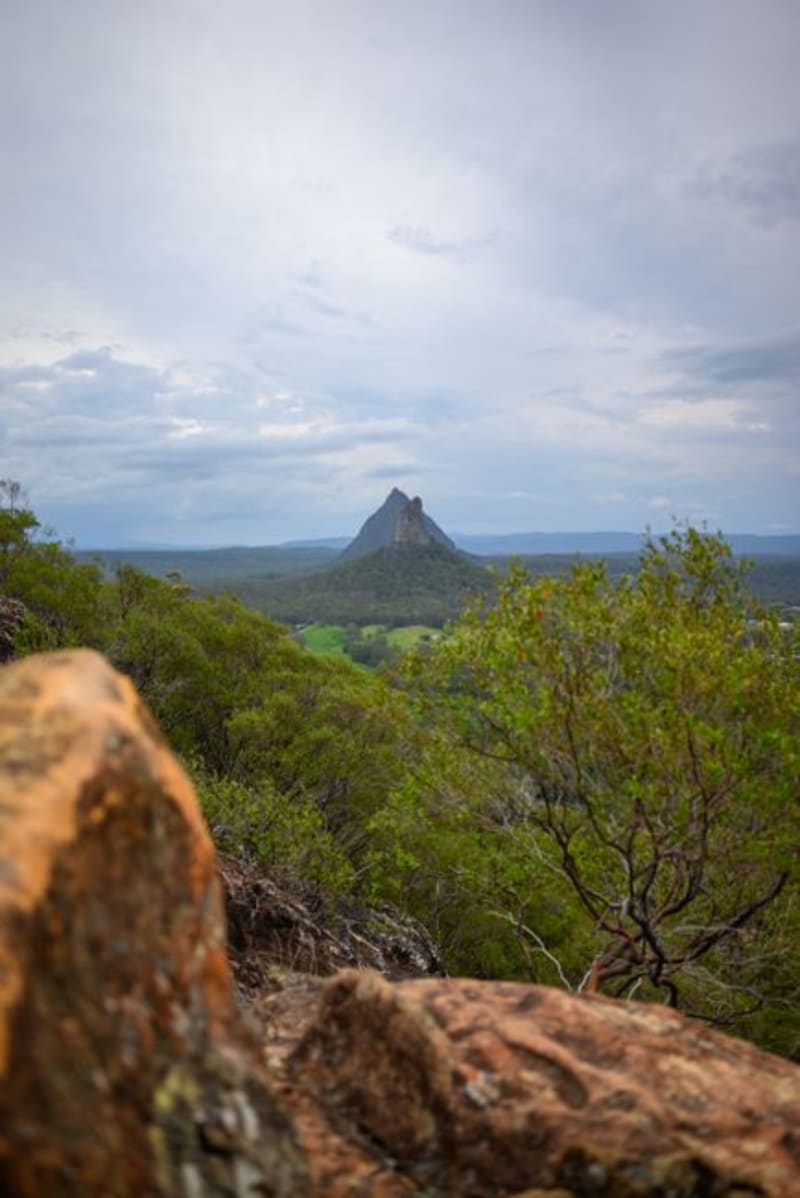
Glass House Mountains
A cluster of volcanic plugs rising abruptly from the Sunshine Coast hinterland, named by Cook and climbed by everyone who's ever needed a reason to feel small.
Explore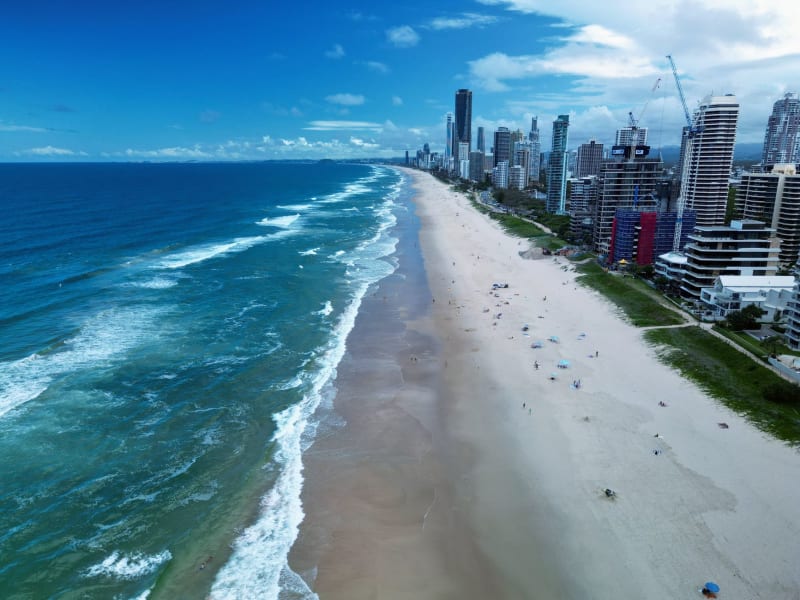 queensland
Gold Coast
Queensland's unashamed pleasure machine — high-rises, consistent surf, and a hinterland rainforest that exists on its own terms forty minutes away.
Explore queensland
Granite Belt (Stanthorpe)
Queensland's cool-climate wine country, high on the Great Dividing Range, where granite boulders, frost and Italian-migrant winemaking traditions produce a very un-tropical version of the state.
Explore queensland
Hervey Bay
The whale-watching capital of Australia, a calm strip of coast facing Fraser Island where humpbacks pause to rest, socialize and, occasionally, put on a show.
Explore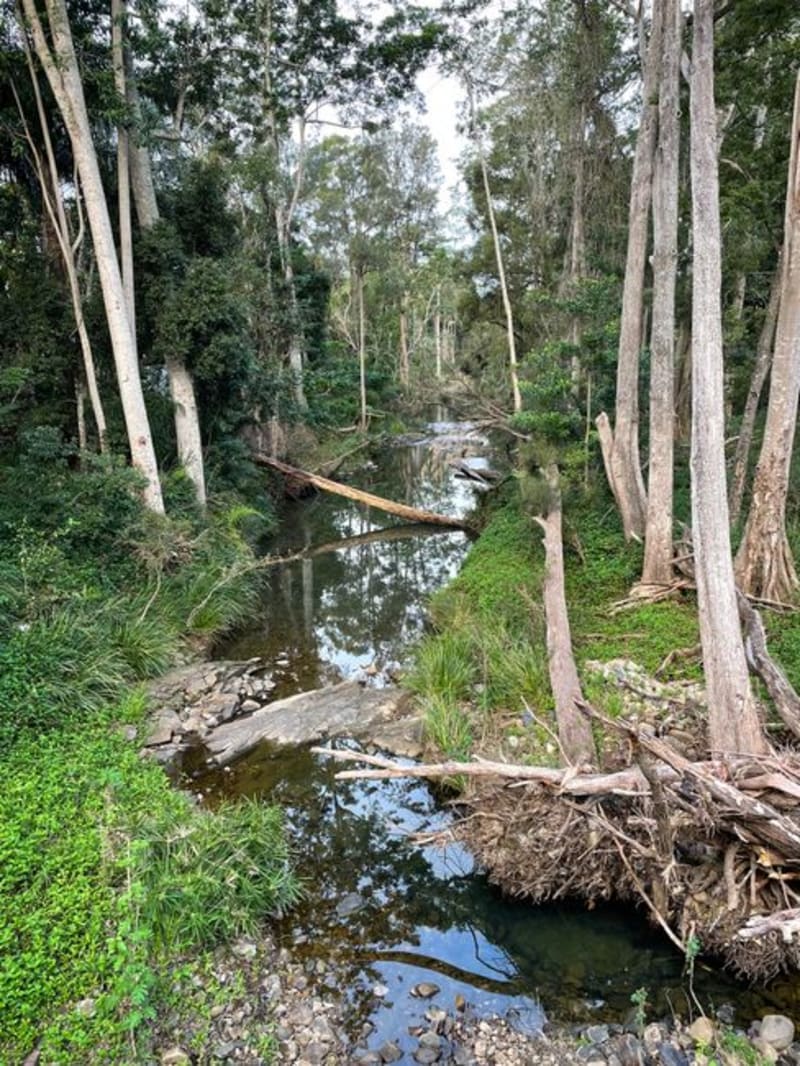 queensland
Lamington National Park
Ancient subtropical rainforest along the McPherson Range, thick with waterfalls, wildlife and the kind of quiet that makes the Gold Coast skyline feel like it's on another continent.
Explore queensland
Longreach
The heart of Queensland's outback channel country, birthplace of Qantas and home to the Stockman's Hall of Fame, where the horizon is flat in every direction you look.
Explore