The mainland gateway to the Whitsundays — a compact, unpretentious sailing town where backpackers and yacht owners drink at the same bars.
Airlie Beach exists almost entirely because of what’s offshore, and it wears that purpose openly — this is a town built around a marina, organized around boat departures, populated by a rotating cast of backpackers saving for their reef trip, deckhands between charters, and retirees who sold everything to buy a yacht and never quite got around to leaving. I checked into a hostel two streets back from the water and within an hour had been recruited into a conversation about sail trim by a Scotsman who’d been “just passing through” for four months.
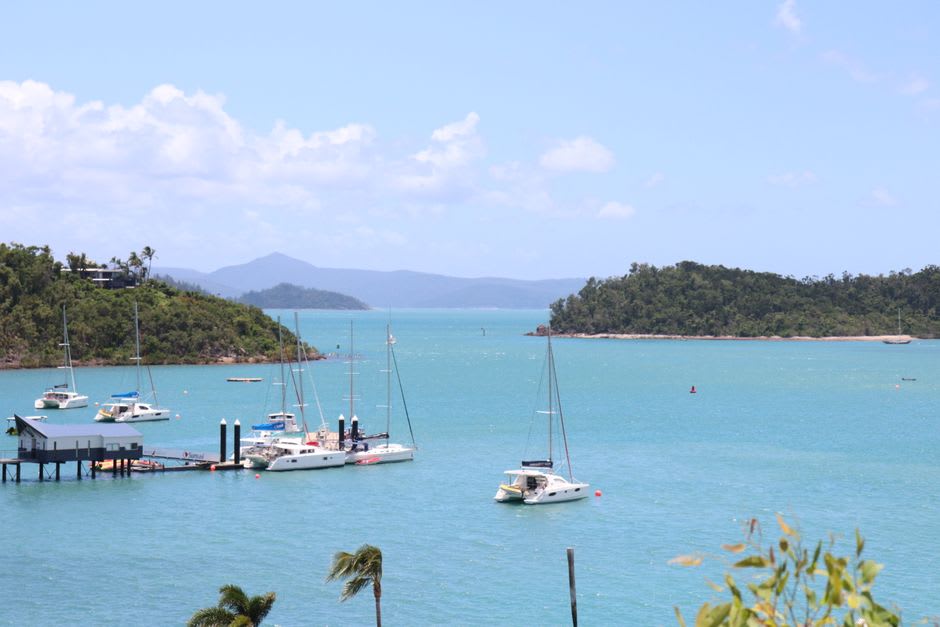
The town itself has no real beach worth swimming at — the mud flats and marine stinger risk make the actual coastline mostly decorative — so Airlie solved this the pragmatic Australian way by building the Lagoon, a free saltwater swimming lagoon right on the foreshore, landscaped with palms and ringed by grass where half the town seems to gather at sunset with a six-pack and a folding chair. I spent more evenings there than I expected to, swimming laps as the sky went orange behind Pioneer Bay and the yachts on their moorings turned to silhouettes.
But the town’s real function is logistics, and it does that job extremely well: this is where you sort out which of the dozens of Whitsunday sailing trips suits your budget and tolerance for other backpackers, where the day-trip boats to Whitehaven Beach depart, where the dive shops brief you before the reef pontoons, and where everyone ends up back at night regardless of which boat they took out. The main strip, Shute Harbour Road, runs a few hundred metres of bars and cheap Thai food and tour operator shopfronts, unglamorous in a way that felt honest after some of the more curated coastal towns further south.
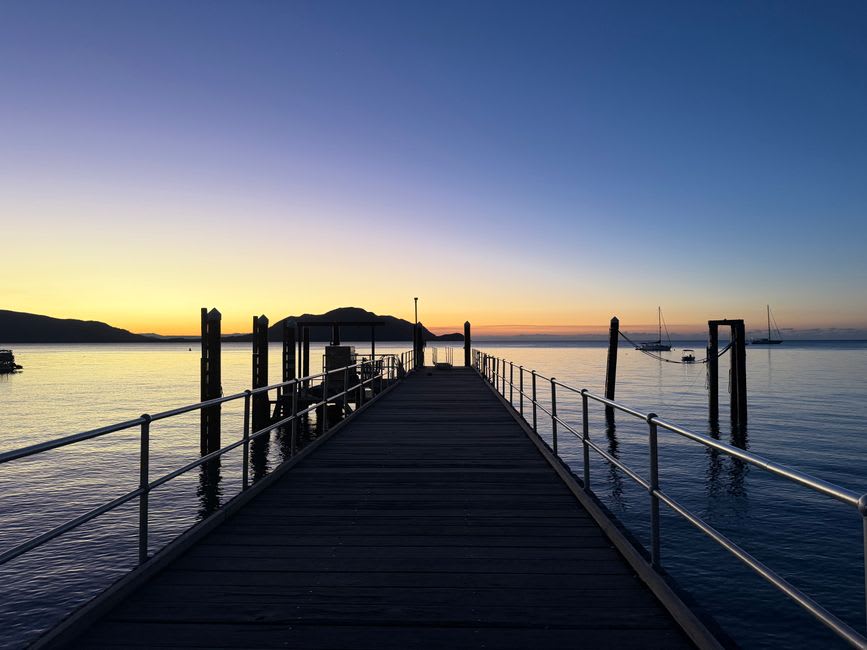
I did an overnight sailing trip out of the marina that left at four in the afternoon and returned two days later sunburnt, salt-crusted and thoroughly converted to the idea that a boat is the only correct way to see this coastline — the town looked different coming back into it, smaller and more temporary, which felt about right for a place whose entire job is to launch you somewhere better.
When to go: June through August is peak season — dry, mild, and the best visibility for reef trips, though also the busiest and most expensive. Shoulder months of May and September offer a good compromise between weather and crowds; avoid the cyclone-risk months of January and February for anything involving small boats.
Keep exploring
More from Queensland
 queensland
 Cairns
A city built entirely around the act of departure — for the reef, the rainforest, the Cape — and somehow remarkable for it.
Explore queensland
 Cape York Peninsula
Australia's last genuinely remote frontier — red dirt tracks, crocodile rivers, ancient rock art, and a tip-of-the-continent ending that earns every kilometre of dust.
Explore queensland
 Carnarvon Gorge
A sandstone canyon deep in Queensland's central highlands, cut by a permanent creek and lined with Aboriginal rock art thousands of years old.
Explore queensland
 Cooktown
The end of the sealed road in Far North Queensland — a small river town with deep colonial history, a sky full of stars, and the distinct feeling of having arrived somewhere real.
Explore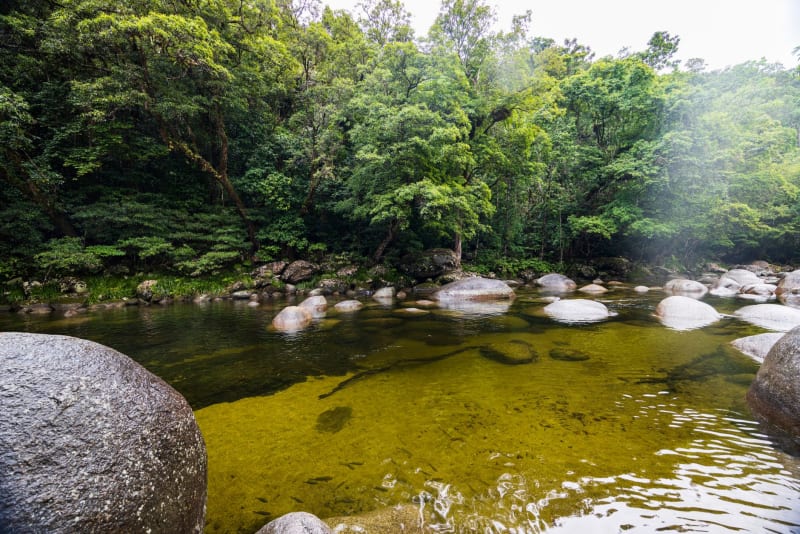 queensland
 Daintree Rainforest
The world's oldest surviving tropical rainforest, 135 million years uninterrupted, where the trees predate the continent they grow on.
Explore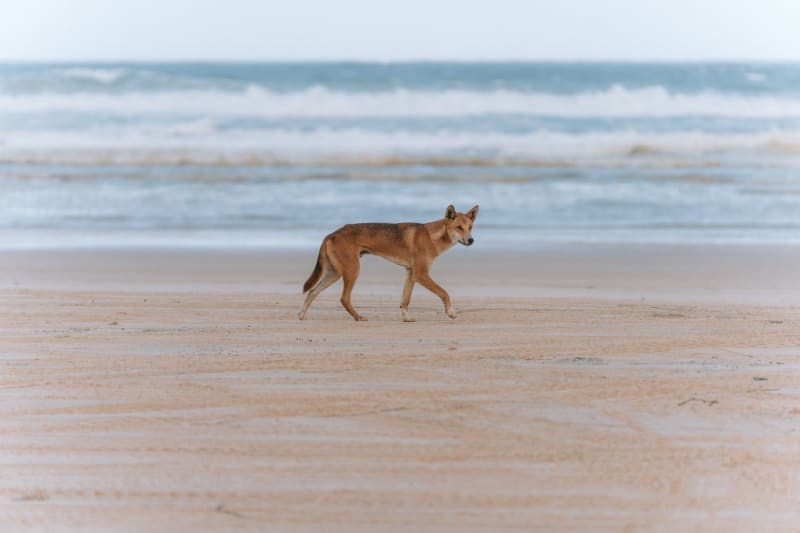 queensland
 Fraser Island (K'gari)
The world's largest sand island, where eucalyptus forests grow in pure silica, freshwater lakes perch above the sea, and the beach is the only road.
Explore