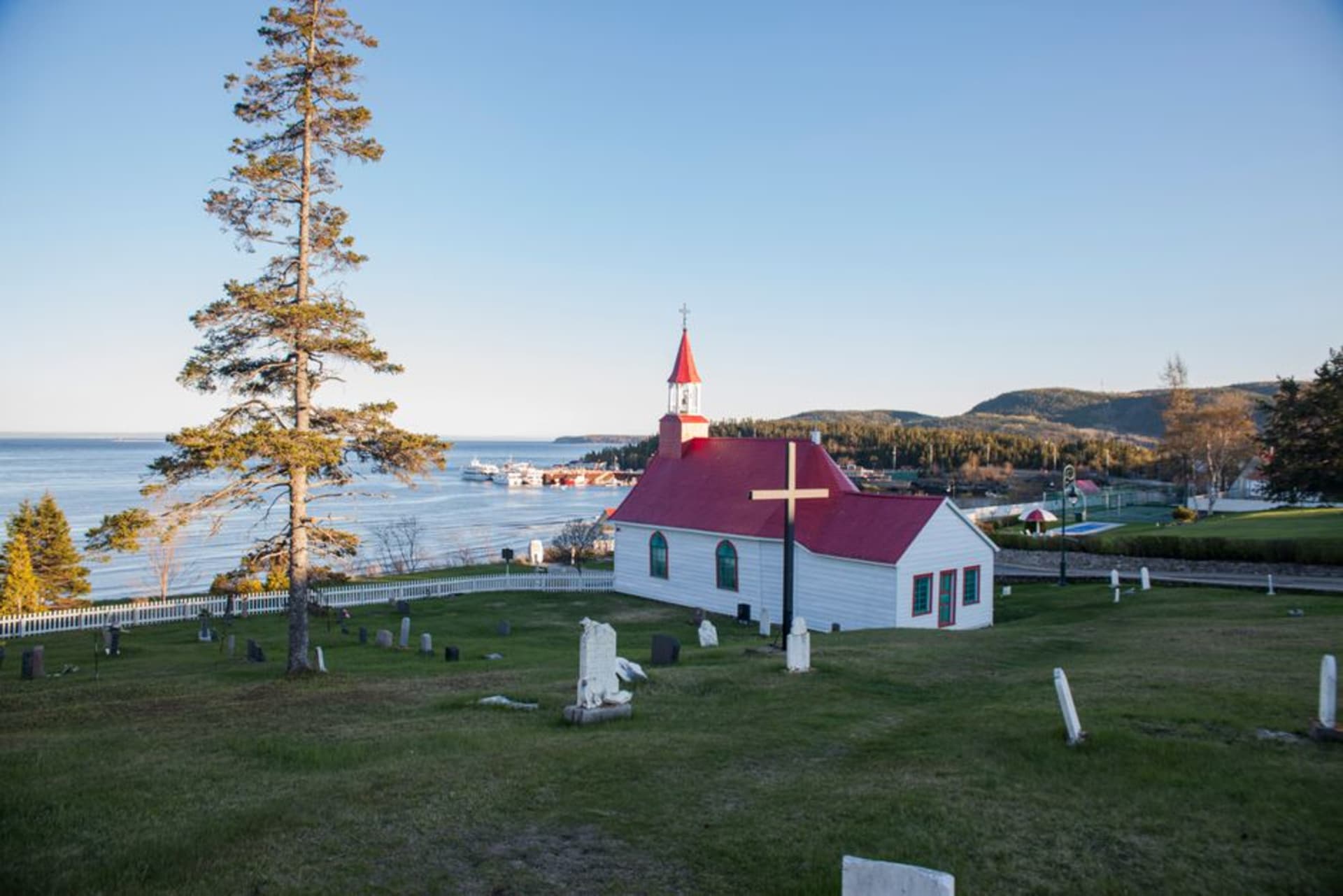
Tadoussac
"Tadoussac is a village built at the exact spot where two bodies of water disagree, and the whales come to referee."
The village where the Saguenay fjord meets the St. Lawrence and turns the water into a whale feeding ground — one of the oldest trading posts in North America, still built around the tide.
Lia spotted the first whale before I did, which has become something of a pattern between us — she has better peripheral vision, or more patience, or both. We were standing on the wooden viewing platform above the dunes at Tadoussac, coffee going cold in our hands, when she grabbed my arm and pointed at a dark hump breaking the surface where the Saguenay’s black water meets the pale green of the St. Lawrence. A minke whale, unhurried, feeding in the upwelling that this confluence creates. Within twenty minutes we’d counted three more, plus a raft of belugas moving like ghosts just beneath the surface. Tadoussac does this to people on their first afternoon, and it did it to us.
The village itself predates most of what we think of as Canada. The Tadoussac trading post, a reconstructed version of which still stands near the harbour, was established in 1600 — the first fur trading post in New France, and one of the oldest continuously inhabited European settlements north of Florida. The Innu had been meeting here for trade long before that, drawn by the same thing that draws the whales: the confluence itself, where the fjord’s cold, nutrient-dense water collides with the St. Lawrence and creates one of the richest marine feeding zones on the eastern seaboard.
We stayed at a small auberge above the marina and spent two days doing the thing you do in Tadoussac, which is alternating between land-based whale watching from the point and boat excursions out into the confluence itself. The Zodiac trip took us close enough to a fin whale — the second largest animal on the planet — that Lia stopped taking photos entirely and just watched, which for her is the highest compliment a place can earn. The captain cut the engine each time a whale surfaced nearby, and the silence that followed, broken only by the exhale of a whale the size of a school bus, is not something I’ve fully recovered from.
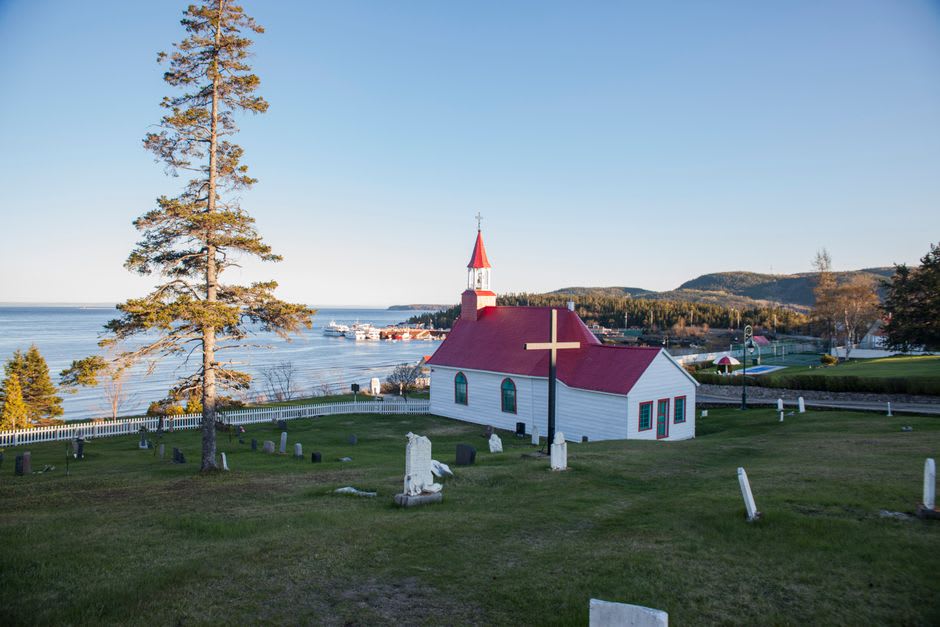
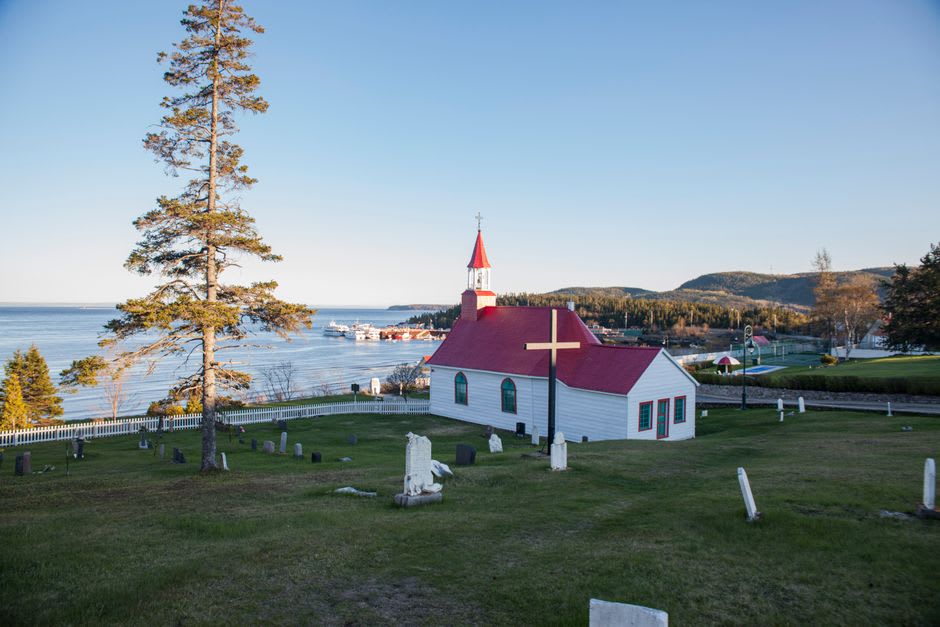
The dunes above the village — massive sand terraces left behind by the retreat of the last ice age — are worth the climb for the view alone: the fjord opening to the south, the St. Lawrence stretching wide to the east, and the little cluster of red-roofed buildings that makes up the village below. The Hôtel Tadoussac, red-roofed and white-walled, has been the visual anchor of every postcard of this place since 1942, and it earns the reputation.
When to go: June through October for whale watching, with the confluence at its most active in August and September when krill concentrations peak. Come by ferry from Baie-Sainte-Catherine if you’re continuing north along the Charlevoix coast — the crossing itself is often a whale sighting in miniature.