
Île d'Orléans
"The island is 20 minutes from Quebec City and 50 years behind it — both of these are compliments."
The bridge to Île d’Orléans is a modest single-span thing, barely worth noting on any map, but crossing it I felt the particular kind of deceleration that happens when you enter a place that has decided not to hurry. It was June, and the island was a moving thing of green — field after field of strawberries and potatoes and hay, farmhouses in Quebec stone sitting exactly where they have sat since the 17th century, the St. Lawrence glittering below the low escarpment. Jacques Cartier called it l’île de Bacchus when he arrived in 1535 for the wild grapes. I drove slowly and the name made sense.
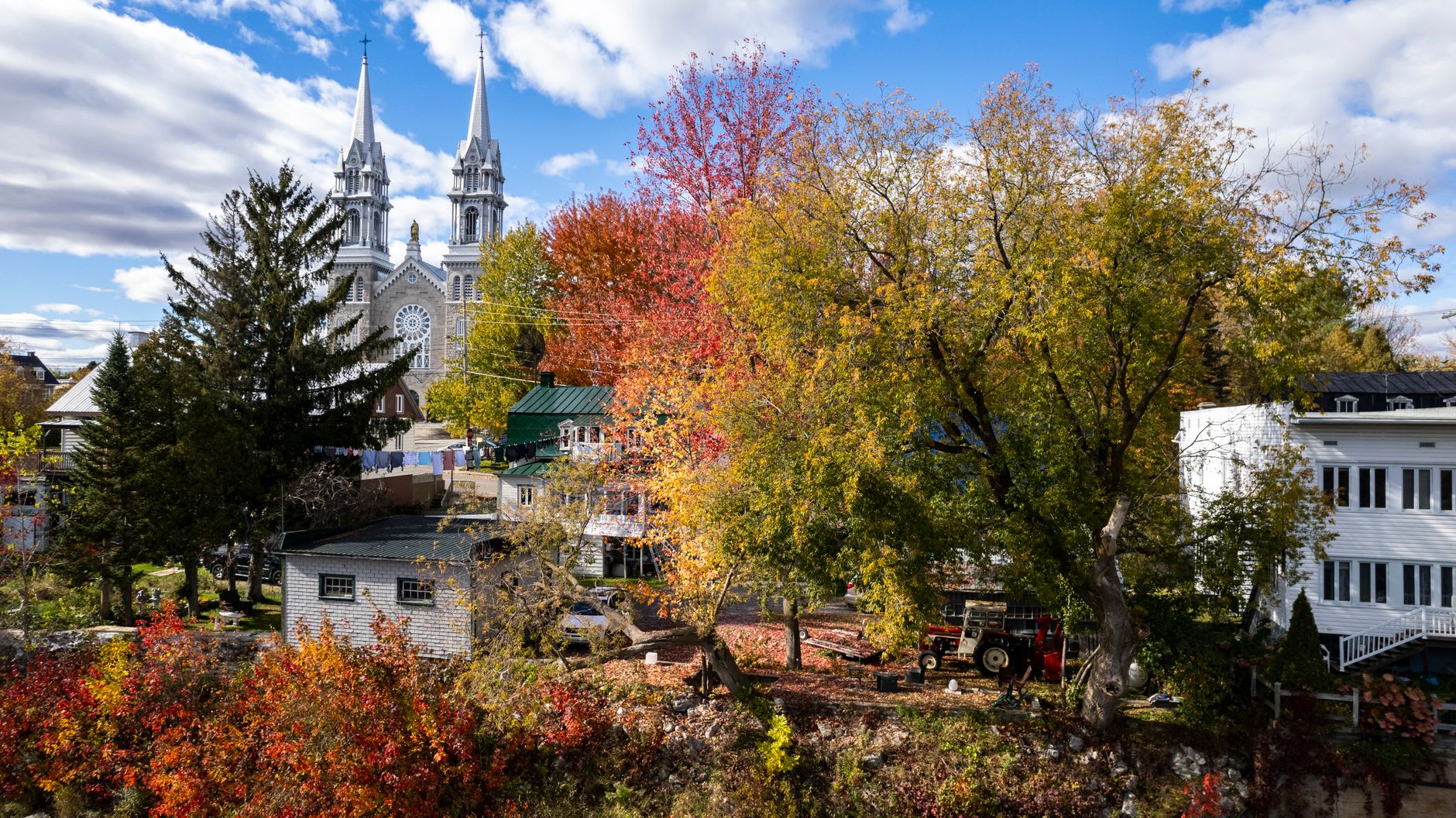
The island is 34 kilometres long and divided into six parishes, each with its own church and its own particular agricultural character. I stopped first at a roadside stand near Saint-Laurent selling fraises des champs — field strawberries, the small intensely flavoured kind — and ate them from a cardboard container standing beside my car while a farm dog watched from the shade. They tasted the way strawberries are supposed to taste and almost never do anymore: warm, slightly tart, with a density that supermarket strawberries have bred out of themselves entirely. The vendor, an older woman who spoke French with an accent I had to concentrate to follow, explained that the island’s microclimate — cooled by the river, protected from frost by the water on all sides — makes these possible. She seemed entirely unsurprised that I had driven across a bridge specifically to eat them.
The churches are the island’s great architectural inheritance. Sainte-Famille, on the northeast shore, has the only triple-belfry facade in Quebec, and sitting in the square before it on a Tuesday afternoon with the river behind me and absolutely no one else around, I felt the island’s particular temporal quality most acutely. This is not a performance of rurality — it is the real thing, somewhat worn at the edges, slightly indifferent to whether you find it photogenic.

The island makes wine and cider at small domaines that have been growing apples since the French planted them here in the 1600s. Domaine Steinbach, just east of the bridge on the south shore, serves ciders that are dry and funky and not at all what I expected from an operation surrounded by pastoral scenery. I bought a bottle of cidre de glace — apple ice cider, a Quebec speciality — to take back to the city. The sweetness of it was extravagant but earned, the way all sweetness is more forgivable when winter has been involved in making it.
When to go: June for strawberry season, which lasts about three weeks and feels like it shouldn’t be missed. September and October for apple harvest and cidre de glace. The island is beautiful year-round but the farms are the point — visit when something is being grown or harvested.