The Pearl-Qatar
"Everything here is a copy of something, but the water between the yachts is genuinely beautiful."
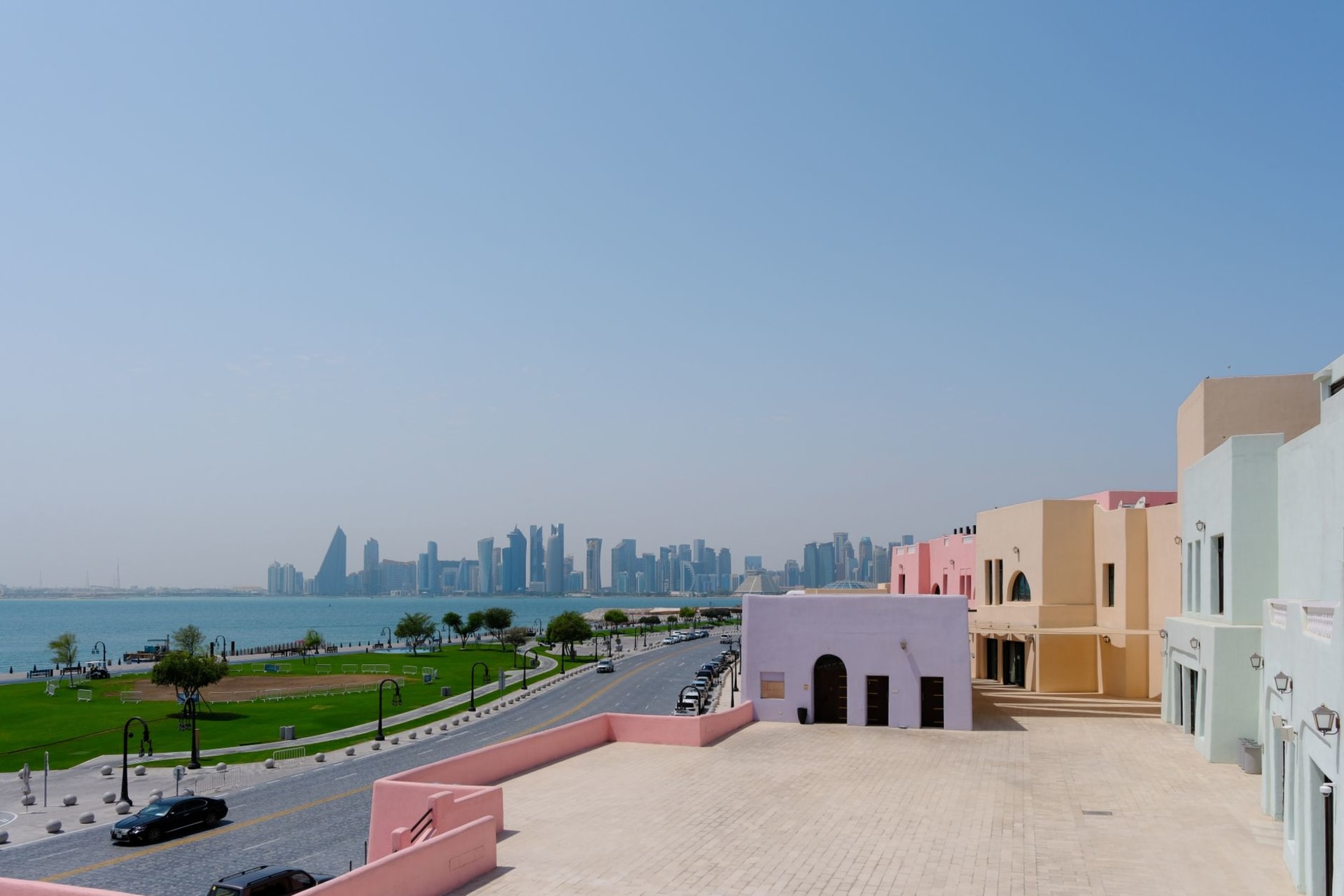
The Pearl-Qatar is the kind of place that could only exist somewhere with unlimited capital, unlimited ambition, and a clean slate of sand and sea. An artificial island of about four square kilometers, built on a stretch of the Gulf that was historically one of the peninsula’s prime pearl-fishing grounds — the name is not accidental — it was designed to house thirty-two thousand residents in apartments and townhouses modeled loosely on Mediterranean architecture. Walking around it, I felt a very specific kind of dissonance: the buildings are references to Nice, Venice, and Greek island villages, the streets are named in Italian, the café awnings are striped in colors you’d find in Cannes, and yet the light, the heat, the smell of the Gulf underneath everything makes none of it quite hold together.
I arrived by taxi from central Doha in about fifteen minutes, which helped orient the experience — the Pearl is not far from the city, but it feels like a proposition about a different kind of life. Porto Arabia, the main marina, is a broad circular harbor lined with cafés, restaurants, and boutiques, yachts moored in rows at the center, the reflection of the surrounding buildings doubling in the still water at dusk. It is undeniably photogenic. The architecture is not convincingly European, but the light on water doesn’t need cultural authenticity to look beautiful.
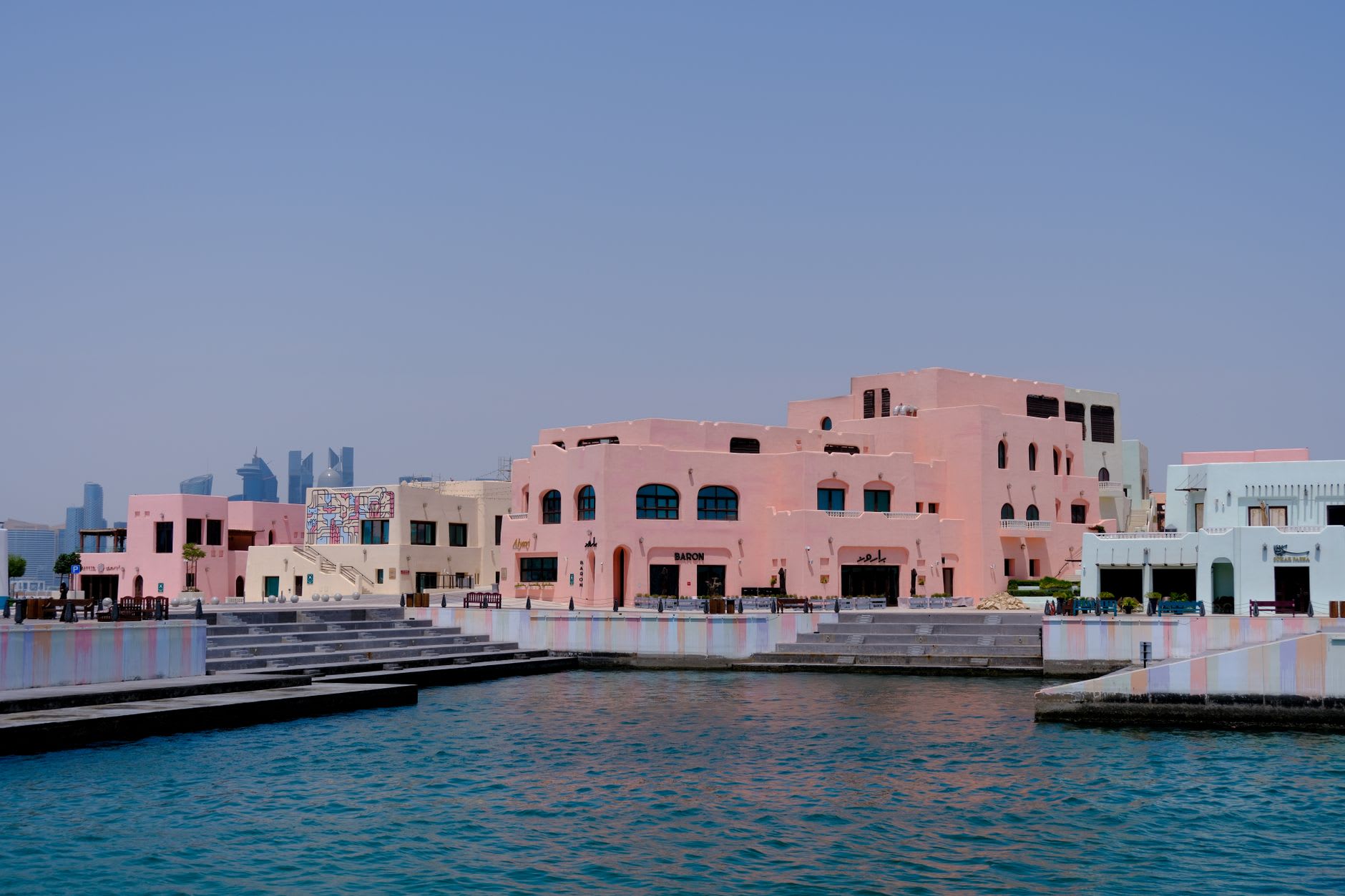
I walked the promenade for an hour before settling at a café where the coffee was excellent and expensive, brought by a server who spoke four languages and used all of them in the course of taking my order. This is the Pearl’s social character: it is primarily inhabited by the expatriate professional class — European bankers, American consultants, Lebanese restaurateurs, and every nationality that ends up in Doha’s upper-middle tier — and the result is a particular kind of cosmopolitan normalcy. Couples pushed strollers. Groups of women sat together over brunch. Nobody seemed particularly interested in Qatar’s specific culture because the Pearl, by design, is not specifically Qatar’s culture.
And yet. Walk away from Porto Arabia toward Qanat Quartier — another section of the island designed around Venetian-style water canals, painted facades in ochre and terracotta — and there is a moment when the place becomes something genuinely interesting rather than just constructed. The canals are narrow enough that buildings on opposite sides lean toward each other, the water between them a deep jade green. In the evening, the facades catch the last light. A family of cats had taken up residence on one of the canal bridges. A woman in an abaya was feeding bread to pigeons who had presumably never been near Venice and didn’t care. The whole scene had an odd tenderness to it.
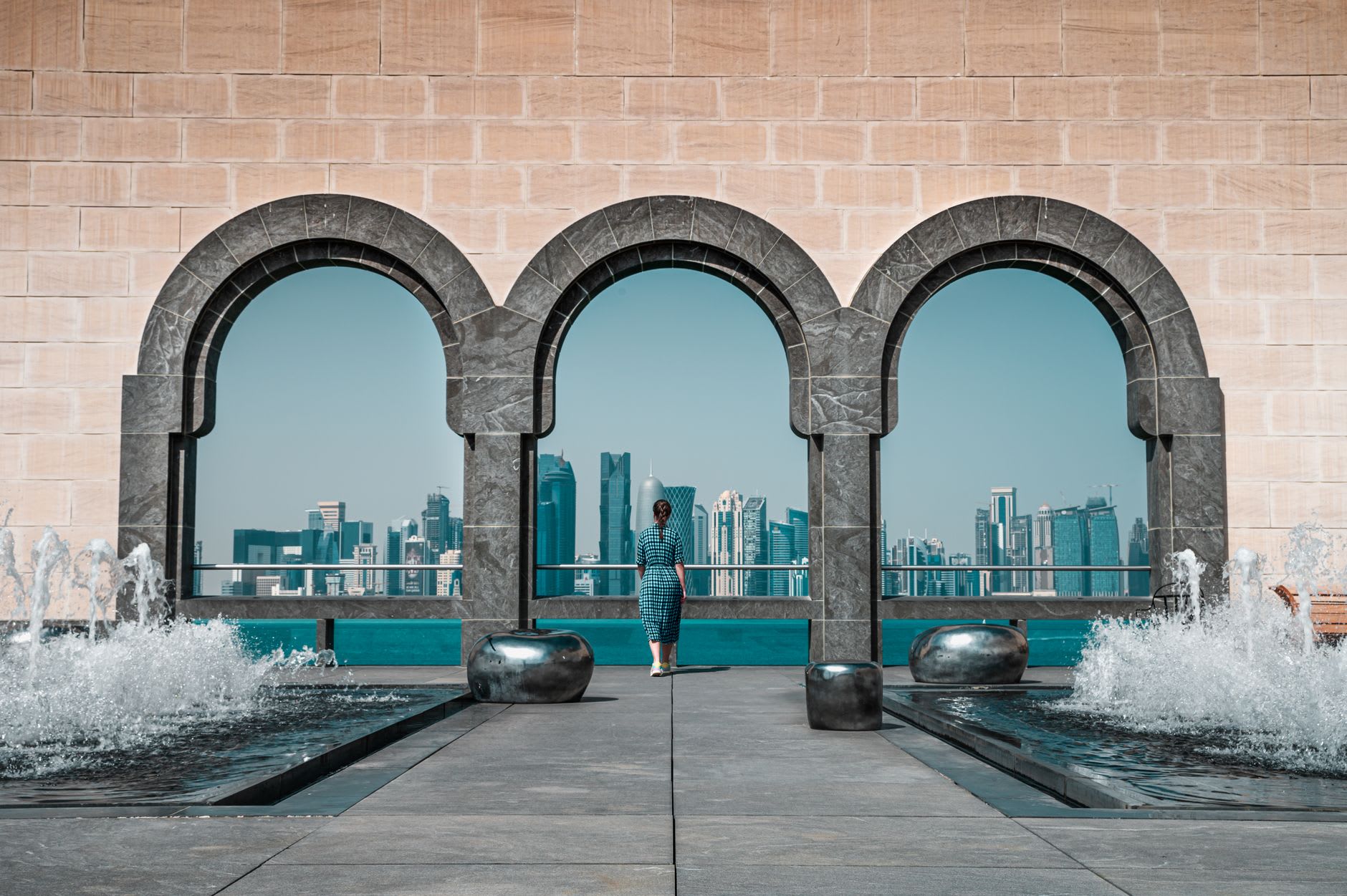
The Pearl is not Qatar as it has been, but it may be one version of what it is becoming — a place where the categories of national and international, traditional and invented, have stopped being oppositions and started being layers. I’m not sure if that is interesting or merely comfortable. Probably both, depending on the evening.
When to go: October through April for outdoor waterfront walking. The Pearl’s café scene is busiest on Friday and Saturday evenings. Qanat Quartier has better light in the late afternoon. The island is accessible by taxi from downtown Doha in fifteen to twenty minutes; parking is available if driving.