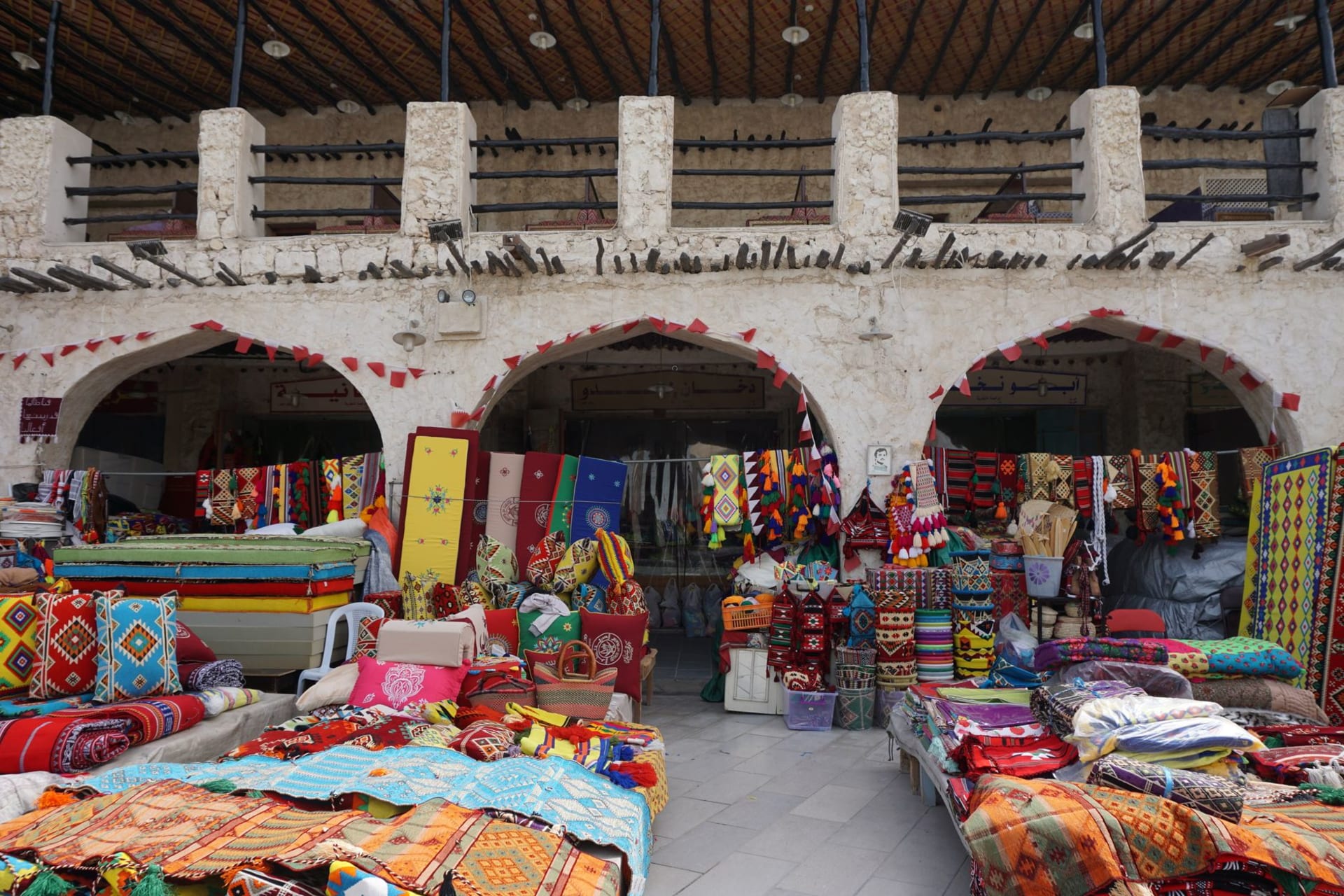
Souq Waqif
"Somewhere between the oud stall and the harees vendor I stopped thinking about what Qatar was supposed to be."
I arrived at Souq Waqif just after sunset, when the muezzin call from the nearby mosque had settled back into the ambient noise of the city and the lanes were beginning to fill. The light in the covered passages comes from iron lanterns hung at head height, casting everything in a warm amber that makes the stalls of saffron, dried limes, and rose petals glow like they belong in a still-life painting. I stood at the entrance for a moment before going in, trying to locate the smell — it was oud first, that thick resinous sweetness, and then underneath it cumin and something charred on a grill somewhere deeper in the market.
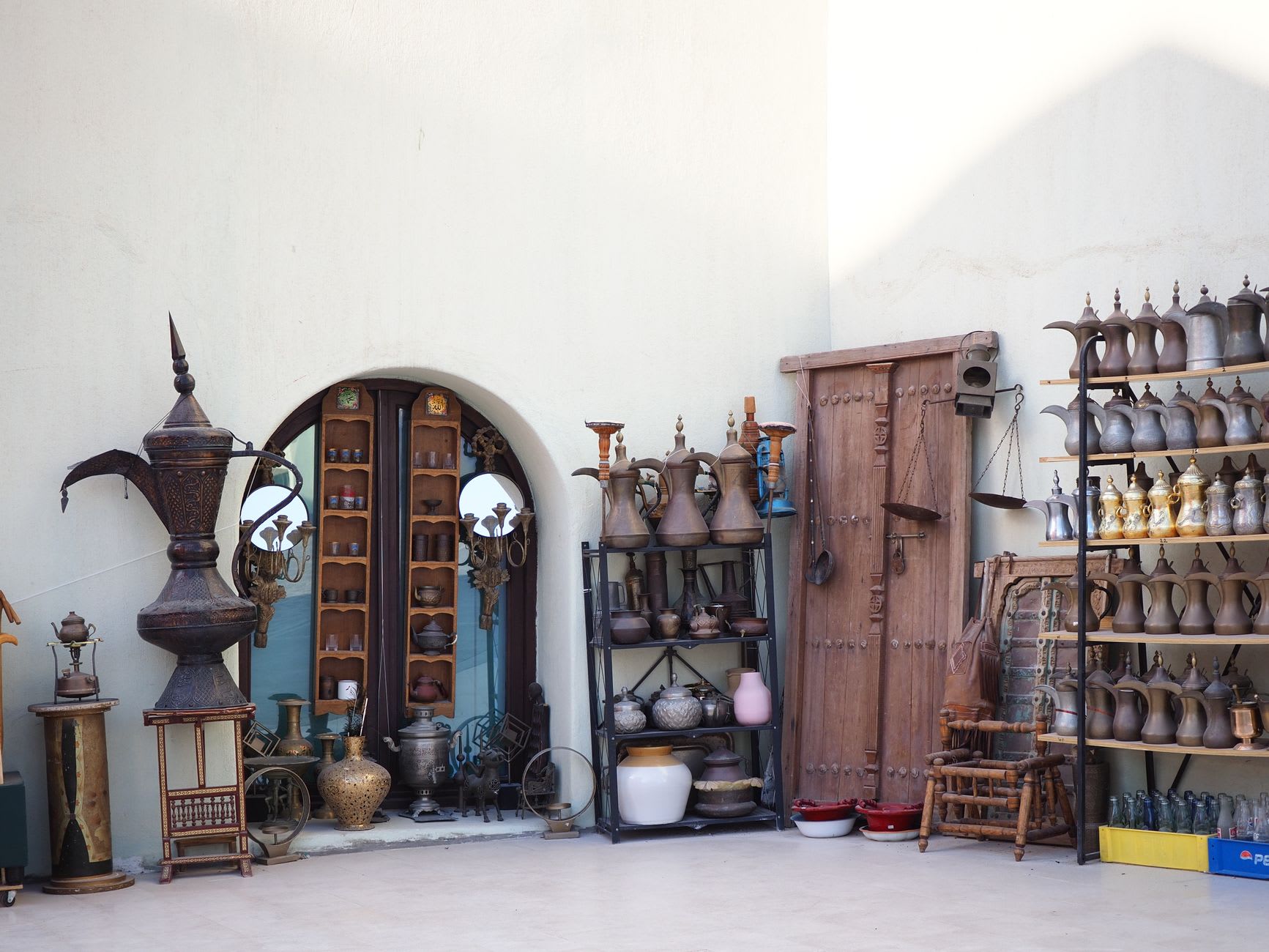
The souq was rebuilt in the early 2000s after the original structure had deteriorated almost to the point of disappearance. The restoration could have been a disaster — a theme-park facsimile of what the market once was. Instead, what they produced is one of the few places in Doha where the architecture steps back and lets life happen at a genuinely human pace. The lanes are narrow enough that two groups walking in opposite directions have to negotiate. The stalls overflow into the passages. Cats patrol the edges with a confidence that suggests they were here first and will be here last. A falconer sat cross-legged outside his shop with a hooded bird on his wrist, utterly indifferent to the tourists photographing him. It felt like a place that had outlasted several attempts to make it interesting by simply being itself.
I found a table outside a restaurant on the main square and ordered harees — that slow-cooked porridge of wheat and shredded lamb that is one of Qatar’s most ancient dishes. It arrived in a terracotta bowl, dense and pale and smelling of clarified butter. The texture is nothing like anything in European cooking: somewhere between congee and mashed potatoes but heavier, more complete, the kind of food that makes sense in a desert climate where a body needs sustained fuel. The tea that came with it was cardamom-heavy and too sweet, exactly right.
What I didn’t expect was the social texture of the place. A table of Qatari men in white thobes occupied the far end of the terrace, a group of young women in colorful abayas shared a shisha pipe near the entrance, and at the table beside me a South Asian construction crew was eating quietly and watching the street. Qatar concentrates so many nationalities onto such a small peninsula — and most of the time they exist in separate orbits, different neighborhoods and restaurants and hours of the day. The souq is one of the places where those orbits briefly intersect. Nobody was performing cosmopolitanism. Everyone was just having dinner.
When to go: October through April are the comfortable months. The souq runs all day but comes alive properly after dark, especially Thursday and Friday nights when Qatari families are out and the crowd thickens to a pleasant press. Ramadan evenings are extraordinary — the market fills after Iftar with an energy that is unlike any other time of year.