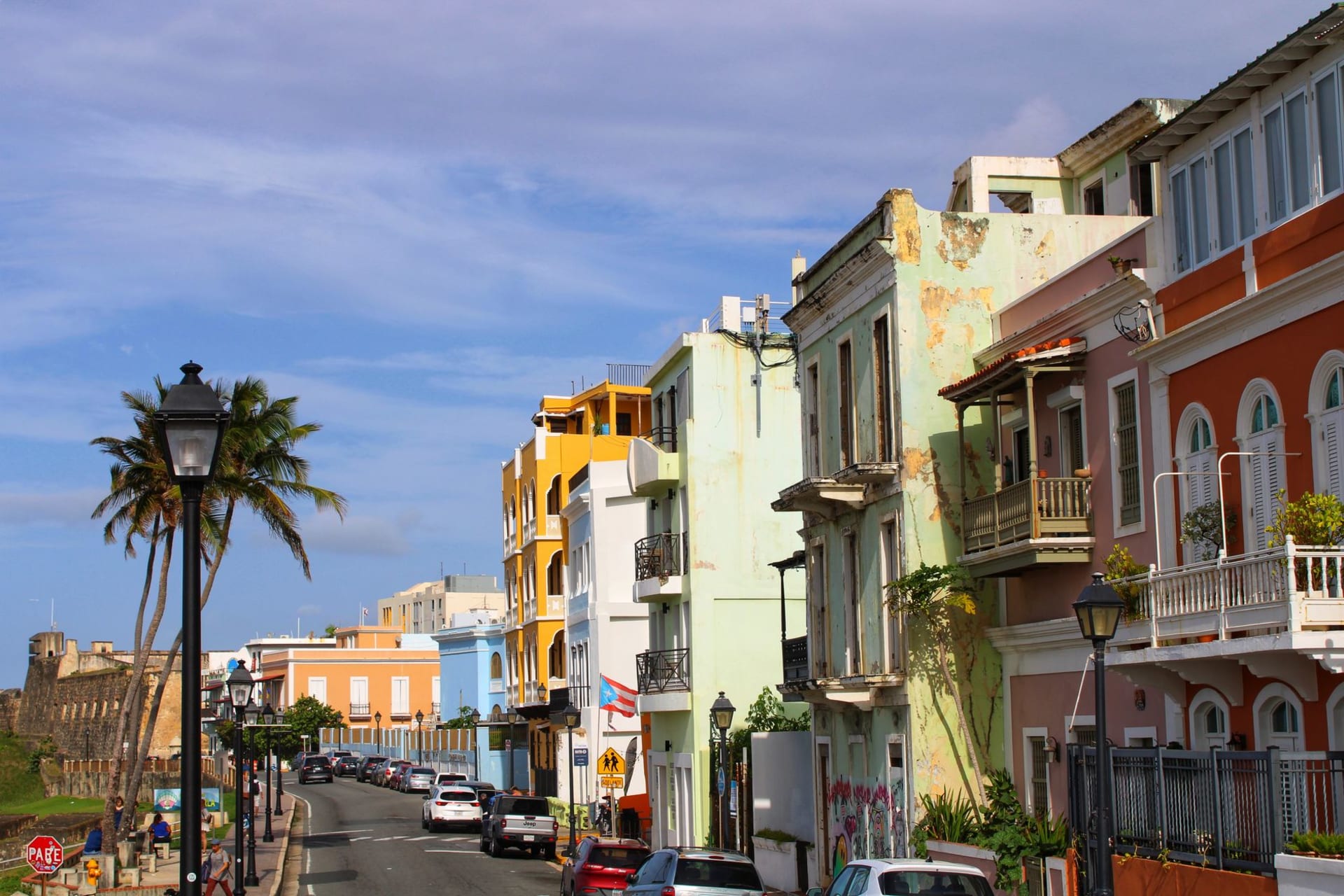
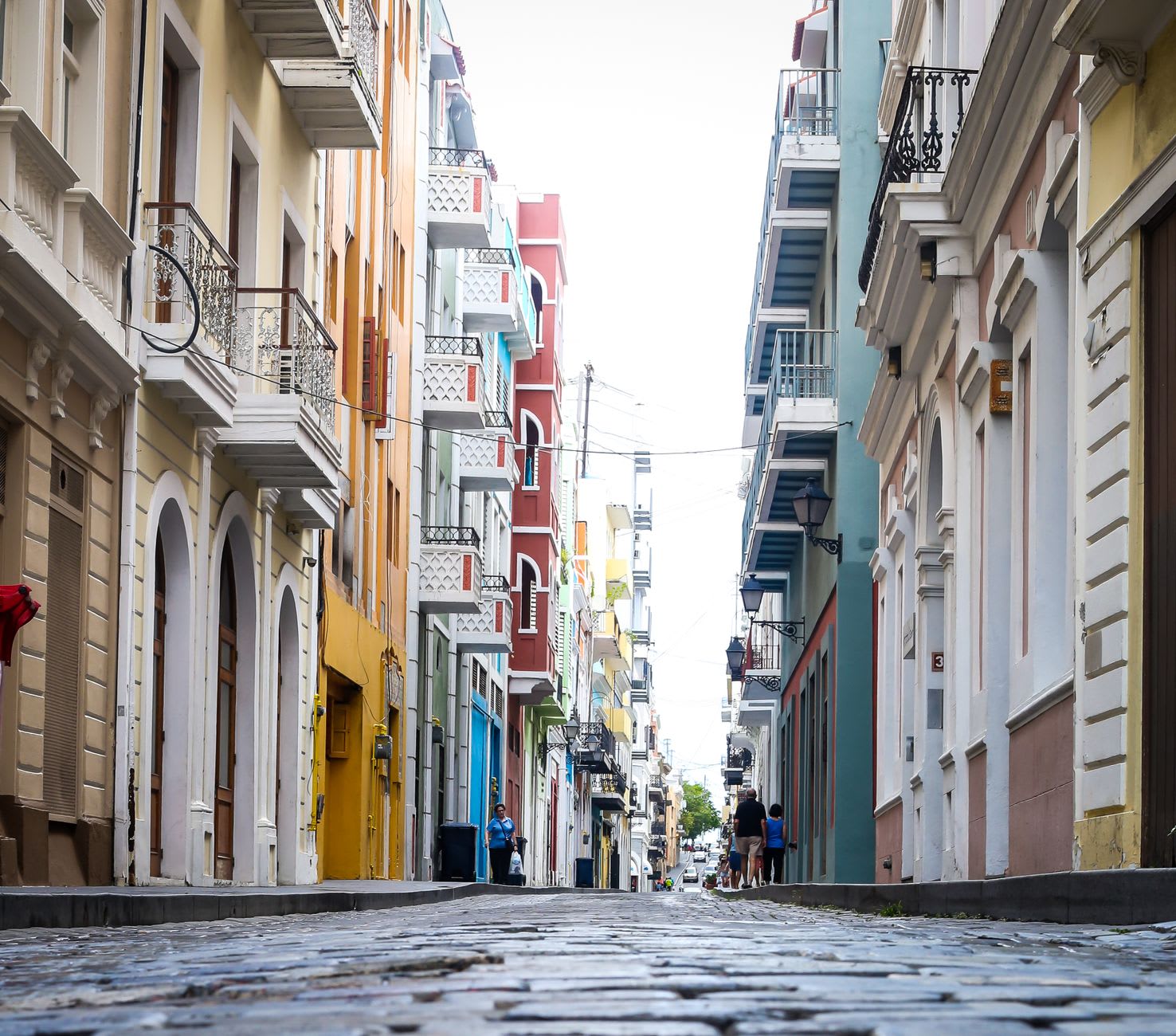
I arrived on a Tuesday afternoon when the cruise ships had just left, and Old San Juan was exhaling. That is the best time to find it — in the hour after the crowds thin and before the evening diners appear, when the adoquines catch the late sun at a low angle and the whole city seems to glow from underneath. These cobblestones are volcanic basalt, brought from Spain as ship ballast in the 1500s. Five centuries of feet have worn them to something like polished obsidian. They are slippery when wet and beautiful always. I walked slowly, which is the only honest pace for Old San Juan.
El Morro sits at the northwest tip of the peninsula, a fortification that took three centuries to complete and still feels like an unfinished argument with the sea. The grass esplanade that slopes toward it on weekends fills with families flying kites — a tradition I found oddly moving, all those bright diamonds trailing in the trade wind above a 16th-century military installation. Inside the fortress, the views are vertiginous: the Atlantic on three sides, the harbor entrance below, the lighthouse on top still functioning. It is one of those places where the weight of history is physical. You feel it in your feet on the stone. The cats who patrol the ramparts have apparently decided that this is the finest real estate on the island, and they are probably right.
The painted buildings of Calle del Cristo and Calle San Sebastián — cobalt, saffron, mint, terracotta — are not accidental. This is a city that understood color as civic identity long before it became an Instagram category. The Casa Blanca, built in 1521 as the residence of Ponce de León’s family, is now a museum with a courtyard garden so quiet you can hear the fountain. La Fortaleza, the governor’s mansion, is the oldest executive mansion still in use in the Western Hemisphere. Old San Juan is so dense with this kind of casual historical significance that you start to stop noticing it, which is its own kind of problem.
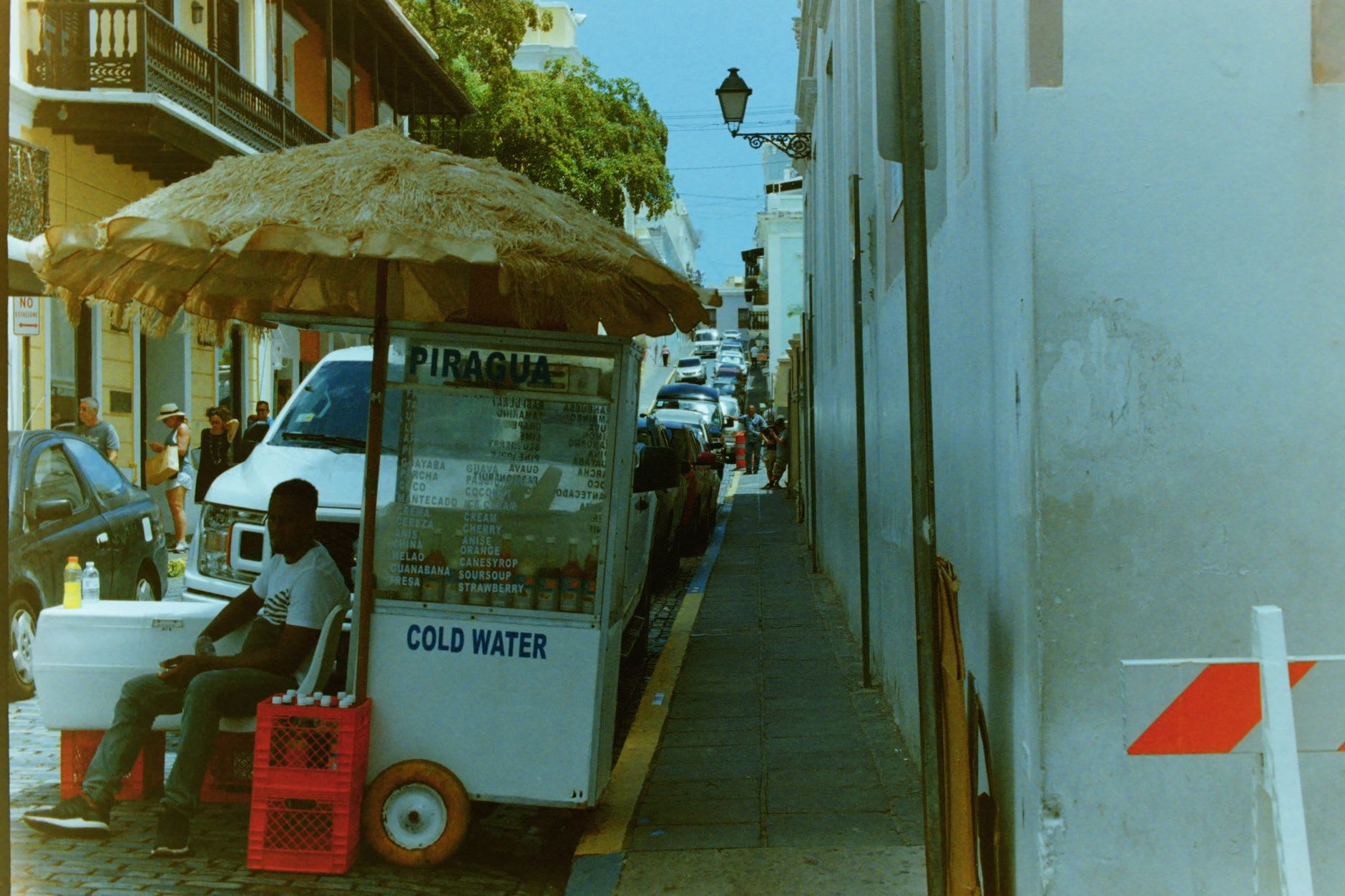
The food here ranges from tourist-facing to genuinely essential. La Mallorca has been making its signature pastry — a sweet roll dusted in powdered sugar — since 1933, and the breakfast crowd there on a Saturday feels like a genuine cross-section of the city rather than a curated experience. Barrachina claims the invention of the piña colada, and while this claim is disputed (Caribe Hilton across town makes the same argument), the courtyard is shaded and the drink is cold and the argument itself is very Puerto Rican. More important than any single restaurant is the ritual of walking the streets after dark, when the buildings are lit from within, the music leaks from doorways, and the city’s inherent beauty operates without any effort at all. I came back four evenings in a row and the light was different each time.
When to go: The cruise ship schedule drives everything. Ships dock Tuesday through Saturday, mostly in the morning, and the city empties by mid-afternoon. Monday mornings are the quietest. December through April is the driest and most comfortable; the streets are busiest in January and February. Arrive early or late in the day — Old San Juan in the golden hour, with the light doing its thing on those painted facades, is the version of this place that stays with you.