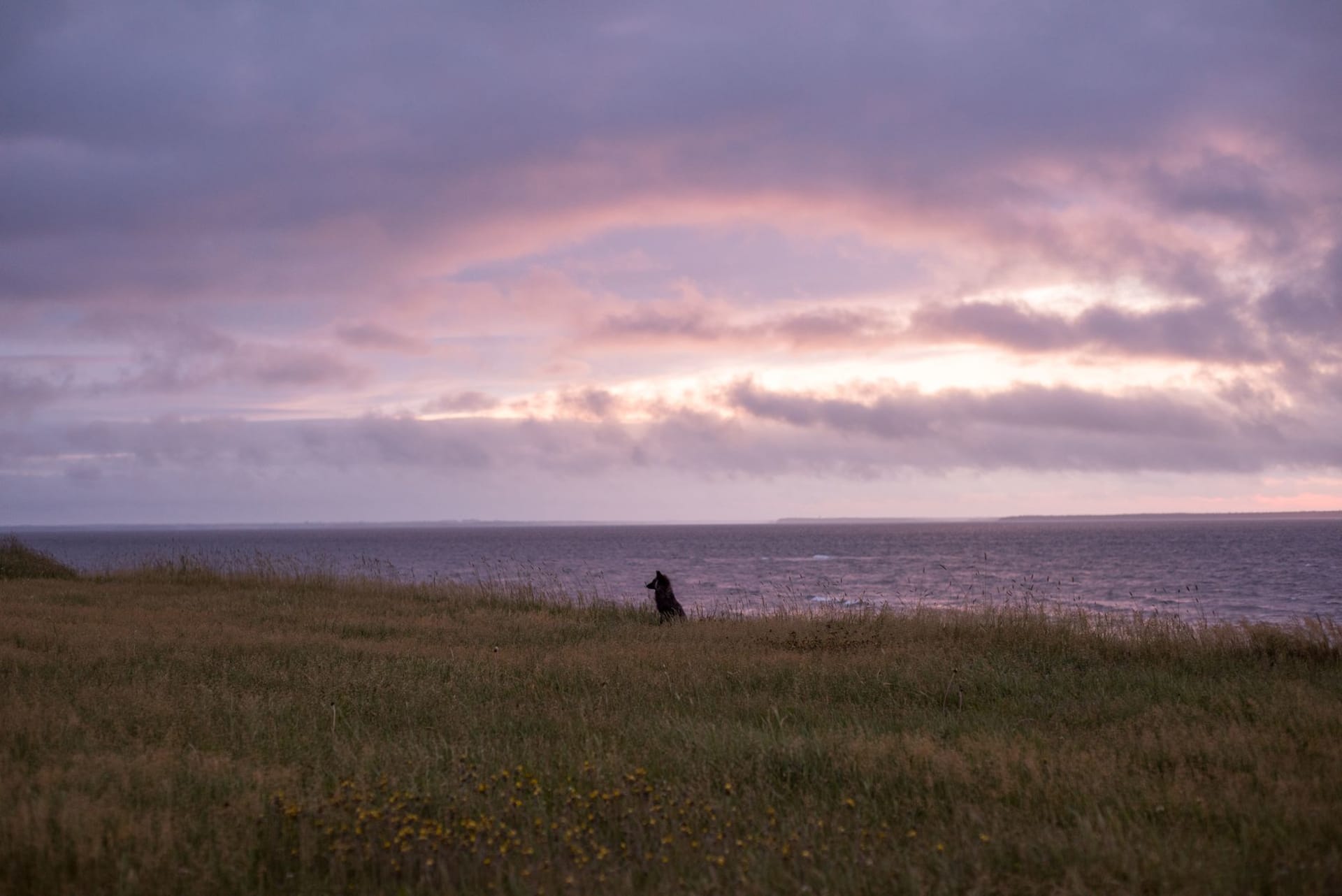
Tignish
"The organ arrived from England in 1860. On Sunday mornings you can hear it two streets away."
Tignish is as far west as you can go on Prince Edward Island before the island simply ends. The road north from the town terminates at North Cape, where the Gulf of St. Lawrence and the Northumberland Strait meet in a collision of currents, and there is a wind turbine research facility out there on the headland that generates enough electricity for most of the surrounding communities and looks, on its flat promontory against a grey sky, like a science-fiction interpretation of the traditional PEI landscape of farmhouses and flat fields.
I drove up from Summerside on a morning when the wind was coming from the northwest with bad intentions, and Tignish received me with the particular matter-of-factness of communities that sit at the end of roads. The main street has a credit union, a hardware store, a church that is conspicuously beautiful, and a Tim Hortons that appeared to be doing the town’s actual social business at nine in the morning — four different conversations going simultaneously, three of them in French, the room carrying the compressed energy of a community that runs its important exchanges in person rather than online.
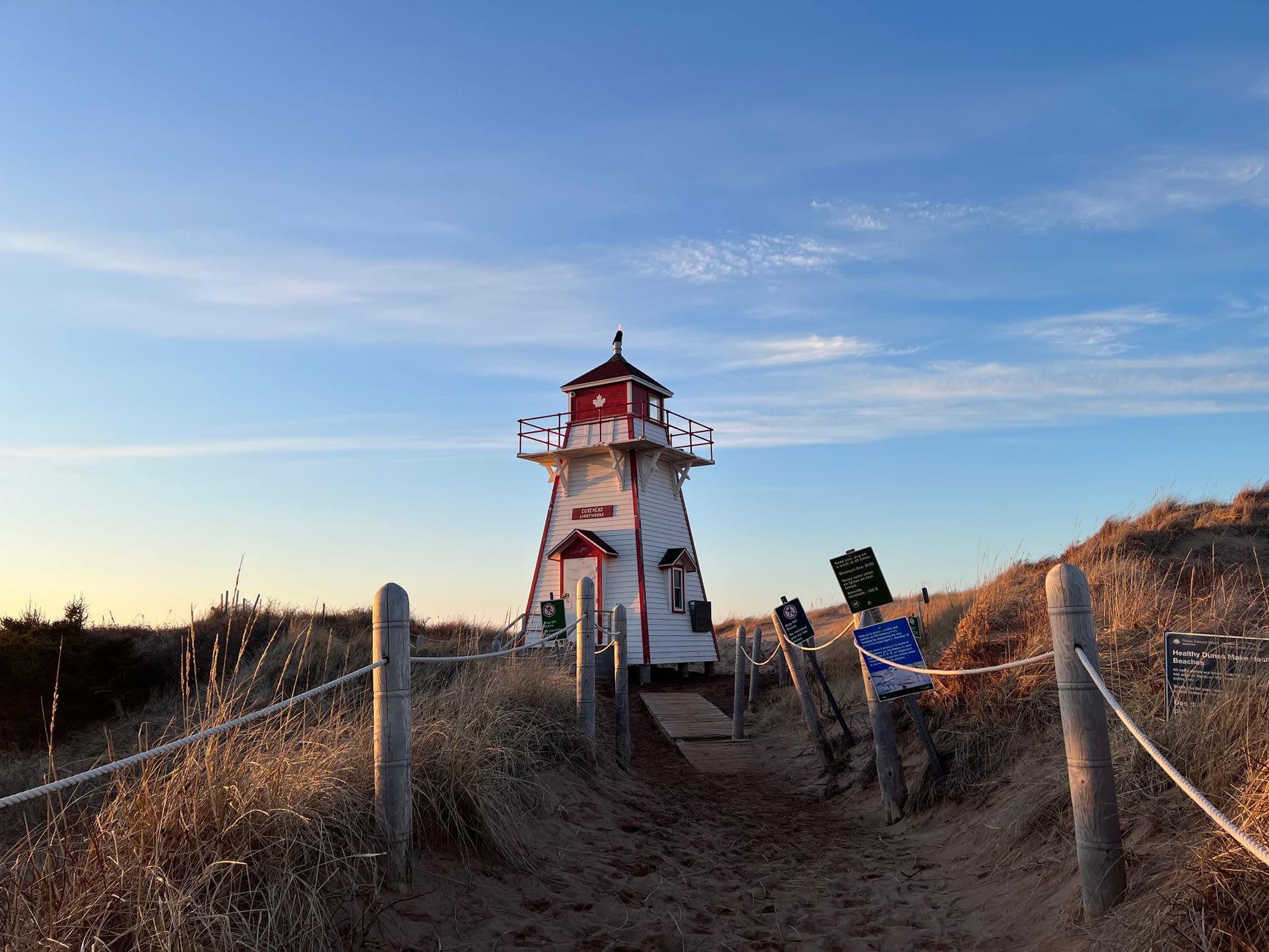
The church is the reason to come, if you need one reason. Saint Simon and Saint Jude is one of the finest rural Gothic churches in Canada — a claim that sounds modest until you see it, this enormous stone structure with its pipe organ and its stained glass rising above a community of two thousand people with the quiet confidence of architecture built for eternity and largely achieving it. The pipe organ was imported from England in the 1860s. On Sunday mornings you can hear it two streets away. I arrived on a Tuesday and the church was unlocked and empty and I sat in a pew for twenty minutes doing nothing at all, which turned out to be precisely the correct thing to do in this particular place.
The drive to North Cape along Route 12 passes through the farming heartland of western PEI — the flattest and most agricultural part of the island, the potato fields in their long rows, the occasional stand of spruce marking where a farmstead decided to break the wind. The aquifer in this part of the island is the largest in PEI, which the soil scientists will tell you explains the colour and quality of the fields. The cape itself has the wind turbines and a tidal pool where the two water bodies meet — the color shift between the colder Gulf water and the warmer Strait is visible on a clear day as a line running across the sea, the kind of natural boundary that you read about and don’t entirely believe until you’re standing above it.

What I found at Tignish and North Cape was the end-of-road quality that I hadn’t known I was looking for — the specific satisfaction of a place that exists entirely on its own terms because it has never needed to market itself to anyone passing through. Most people don’t pass through. You come here because this is where you’re going. The church. The cape. The wind that is always present and always slightly stronger than you prepared for. I drove back east with the sun behind me and the island laid out ahead like something newly clarified.
When to go: July and August for the full open-road experience and the cape at its most accessible. September is better for the church on a weekday morning — yours alone, the harvest light hitting the stained glass at a low angle — and the northwest wind has that particular autumn sharpness that makes the cape feel like the edge of something.