Americas
Prince Edward Island
"I came for a weekend and stayed until the red roads ran out."
I arrived on the ferry from Nova Scotia just as the evening light turned the sandstone cliffs the color of cooling embers. Nobody warned me that PEI has a particular talent for making you feel like you’ve arrived somewhere that decided long ago not to rush. The crossing takes about 75 minutes and then the island simply appears — flatter than you’d expect, greener than you’d believe, and surrounded on all sides by water the color of cold steel turning warm.
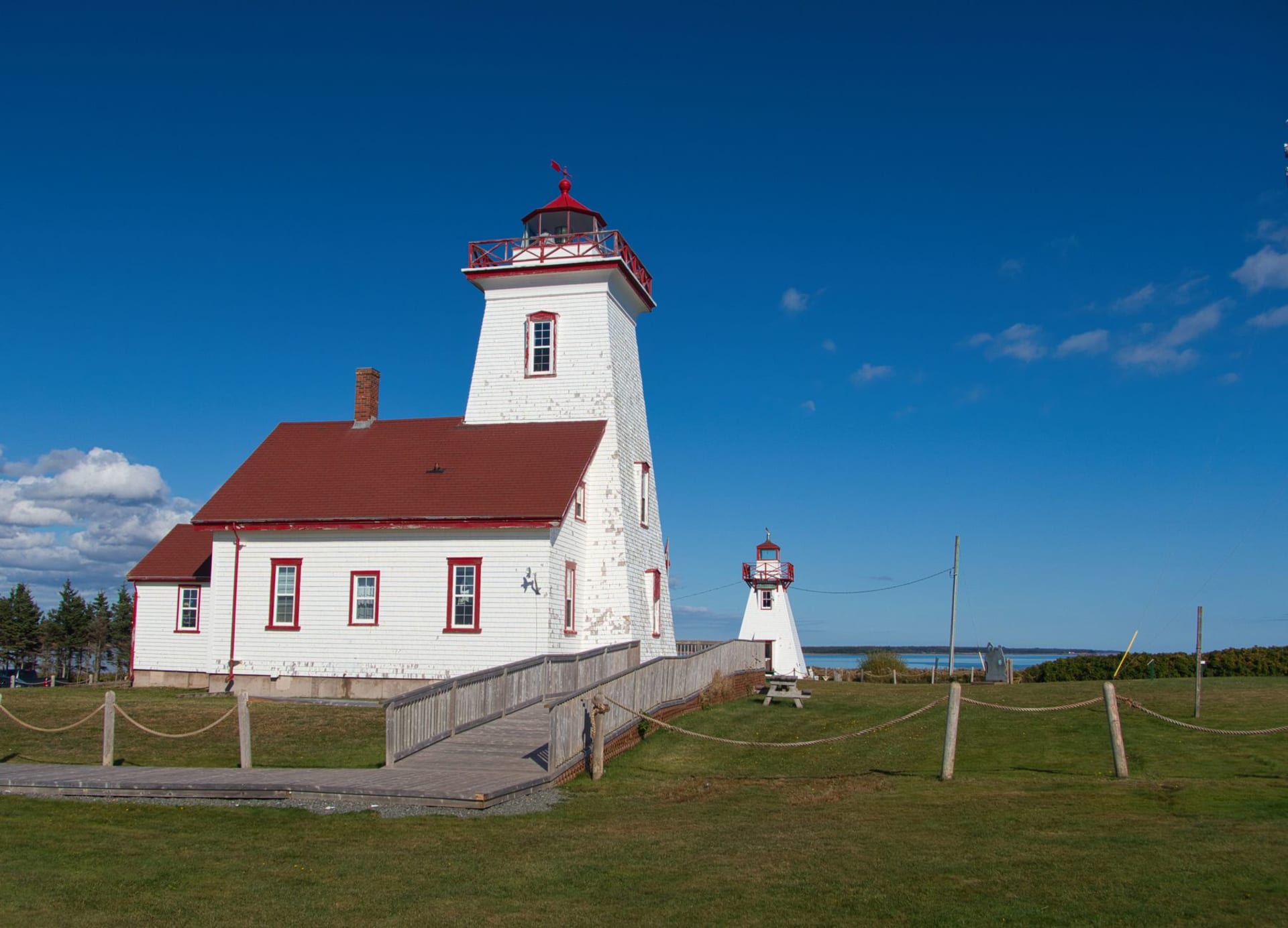
My first stop was Wood Islands, barely five minutes from the ferry dock. The lighthouse there sits at the edge of a red cliff with the Gulf of St. Lawrence hammering the rocks below. I’d read a hundred lighthouse descriptions before this one, and none of them prepared me for the way this one felt genuinely necessary — not decorative, not nostalgic, but still doing its actual job in a place where the weather makes that job matter. I ate a lobster roll from a van in the parking lot. It cost eleven dollars and it was, without question, the best thing I ate on that entire trip through Atlantic Canada.
The island rewards slow movement. Rent a car — you need one — and follow the red roads rather than the highways. The soil here is iron-rich sandstone, and the roads that cut through the potato fields take on this deep rust color that stains your shoes and your memory equally. I spent two days looping through the Kings Byway in the east before making my way to Cavendish in the north, where the dunes at PEI National Park are genuinely wild in the way that only coastal land with no buildings behind it can be. The beaches are cold even in August. That’s important to know. You swim anyway, because the water is clear and the beach is empty and you’ve come all this way.
Charlottetown, the capital, is small enough to walk entirely in a half-day and charming enough to make you want to. The Confederation Landing waterfront has good craft beer and bad tourist shops in roughly equal measure — skip the shops, find the beer. Province House is the real draw: it’s where the Canadian Confederation was negotiated in 1864, and the building has the quiet gravity of rooms where consequential things actually happened.
When to go: Late June through September, with August being the sweet spot for beach weather and lobster season both running at full throttle. September is quieter, the light gets golden earlier in the day, and the tourist pressure drops enough that locals have time to talk to you.
What most guides get wrong: They sell PEI as an Anne of Green Gables pilgrimage or a lobster festival and leave it at that. Both are real, but neither is the point. The point is the landscape — that impossible combination of red cliffs, dark green potato fields, white farmhouses, and sea light — and the fact that the island is small enough to actually understand in a week. Most places you visit; PEI you briefly inhabit.