
Trancoso
"Trancoso still locks its gates at night in spirit, even if nobody's actually turned the key in five hundred years."
A completely walled medieval town where a Portuguese king got married in 1282 and a hidden Jewish community left its mark on doorframes for anyone patient enough to look.
Trancoso is the rare Portuguese historic village where you can walk the entire circuit of medieval walls without a single gap, in and out through the same narrow gates that pilgrims and merchants used centuries ago. I entered through the Portas d’El Rei, the King’s Gate, and the change was immediate and physical — traffic noise cut off, the street narrowed, and I was suddenly inside a town that has kept its shape since the thirteenth century almost out of sheer stubbornness.
A Royal Wedding and a Hidden Faith
The reason Trancoso appears in Portuguese history books at all is a wedding: in 1282, King Dinis married Isabel of Aragon here, a match that would later see her canonized as Saint Isabel, Queen of Portugal, famous for the legend in which bread she was smuggling to the poor turned to roses when her husband demanded she show him what she carried. That marriage cemented Trancoso’s status, and the town grew rich enough afterward to draw a significant Jewish community, one of the largest in this part of Beira, until the forced conversions and expulsions of the late 1490s. What’s remarkable is how much of that community’s presence is still legible if you know where to look — doorframes in the old Jewish quarter carved with a small cross-shaped mark, likely added by Jewish families forced to convert who kept a discreet symbol of their identity, or possibly a mason’s mark reused for protection. Nobody I spoke to would give me a definitive answer, and I liked that better than a clean one.
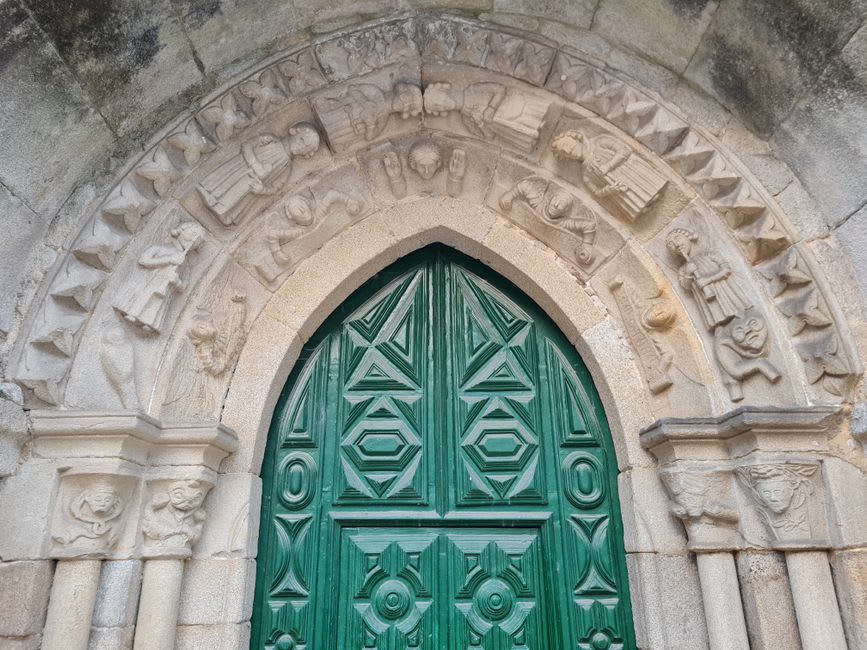
I spent a good hour just walking the walls themselves, climbing up near the castle keep where you can trace the full polygon of fortifications against the surrounding wheat fields — nine towers, largely intact, unusual for how completely the circuit survives. A caretaker at the small municipal museum told me Trancoso’s walls owe their good state partly to bad luck turned lucky: the town was too poor for centuries to bother tearing them down and modernizing, so they just stayed.
Market Day Rhythms
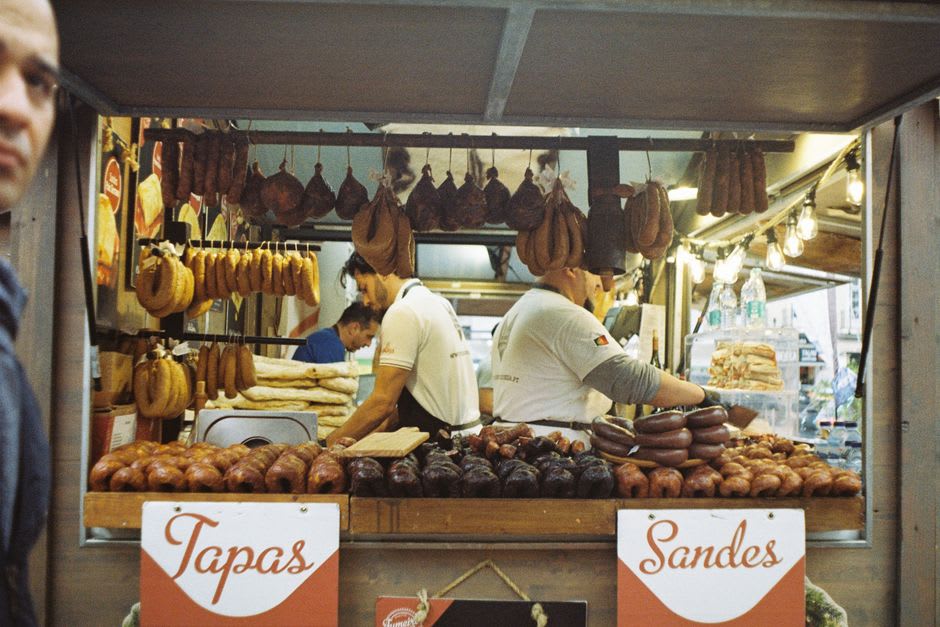
I happened through on a Friday, market day, and the Praça de São Bartolomeu filled with folding tables of cheese, chouriço, and dense yellow cornbread, broa, that a woman insisted I try still warm, refusing payment for the sliver she cut me.
When to go: Friday market day if your schedule allows it, and any time in warm weather for walking the full circuit of the walls without rushing.