
Sintra Royal Palaces
"Sintra is what happens when Romantic poets get building permits and an unlimited budget."
A UNESCO hillside fantasyland of Romantic palaces — the technicolor Pena Palace alone justifies the trip from Lisbon on the first morning train.
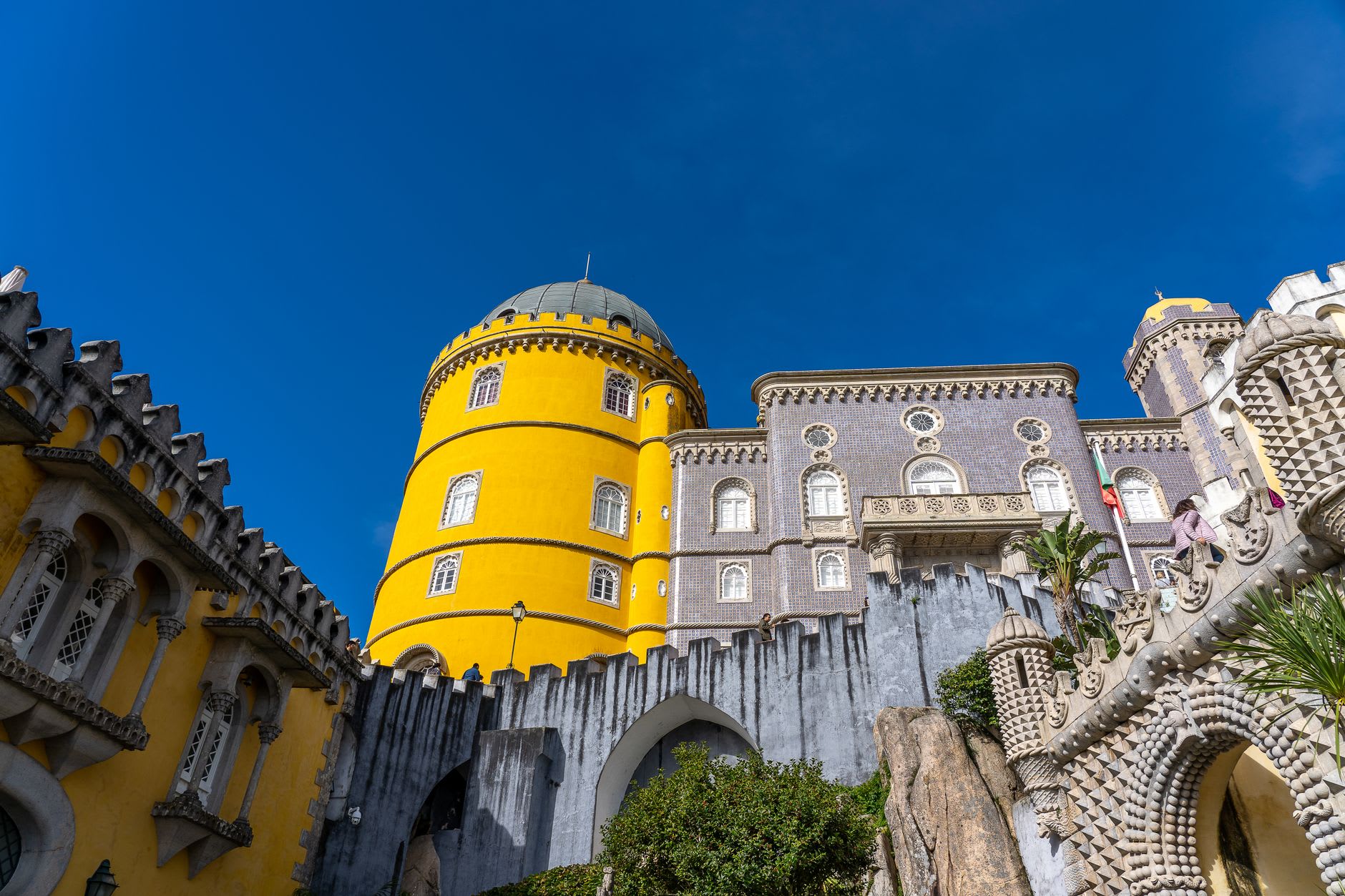
The 7:19 from Rossio Station takes forty minutes. I had coffee in a paper cup and the compartment smelled of damp jackets, and then the train curved into the Serra de Sintra and the hillside appeared — a ridge thick with dark pine and eucalyptus, and above it, dissolving in and out of cloud, the impossible silhouette of Pena Palace: mustard towers, burgundy arches, a Moorish battlement grafted onto a Gothic chapel. Lia grabbed my arm without saying anything. That was answer enough.
The Palace That Shouldn’t Exist
Pena Palace was commissioned in 1842 by King Ferdinand II, a German prince who married into the Portuguese throne and channeled his romantic sensibilities into stone. The result is an architectural fever dream — Manueline ornamentation next to neo-Moorish horseshoe arches next to Renaissance loggias, all painted in colors that belong on a spice rack: saffron, terracotta, slate blue. No coherent style, no apologies. It works precisely because it refuses to try.
The interior is equally unhinged: a kitchen with 7,000 azulejo tiles floor-to-ceiling, the Queen’s bedroom with a carved oak ceiling that took twelve years to complete, and a dining table set for guests who last ate there in 1910. The palace was abandoned after the Republic was declared that year, and every room is exactly as the royal family left it — a time capsule of the last Portuguese monarchy, preserved in amber and mothballs.
The surprise came on the walk between Pena and the Moorish Castle further down the ridge. There is a path through the park, dense and cool even in August, where peacocks simply wander across the trail as if waiting for someone to notice them. One blocked the path for a full minute, fanning its tail with absolute indifference. No sign warned us. No one had mentioned it. I stood there with my phone out feeling absurdly delighted.
The Town Below
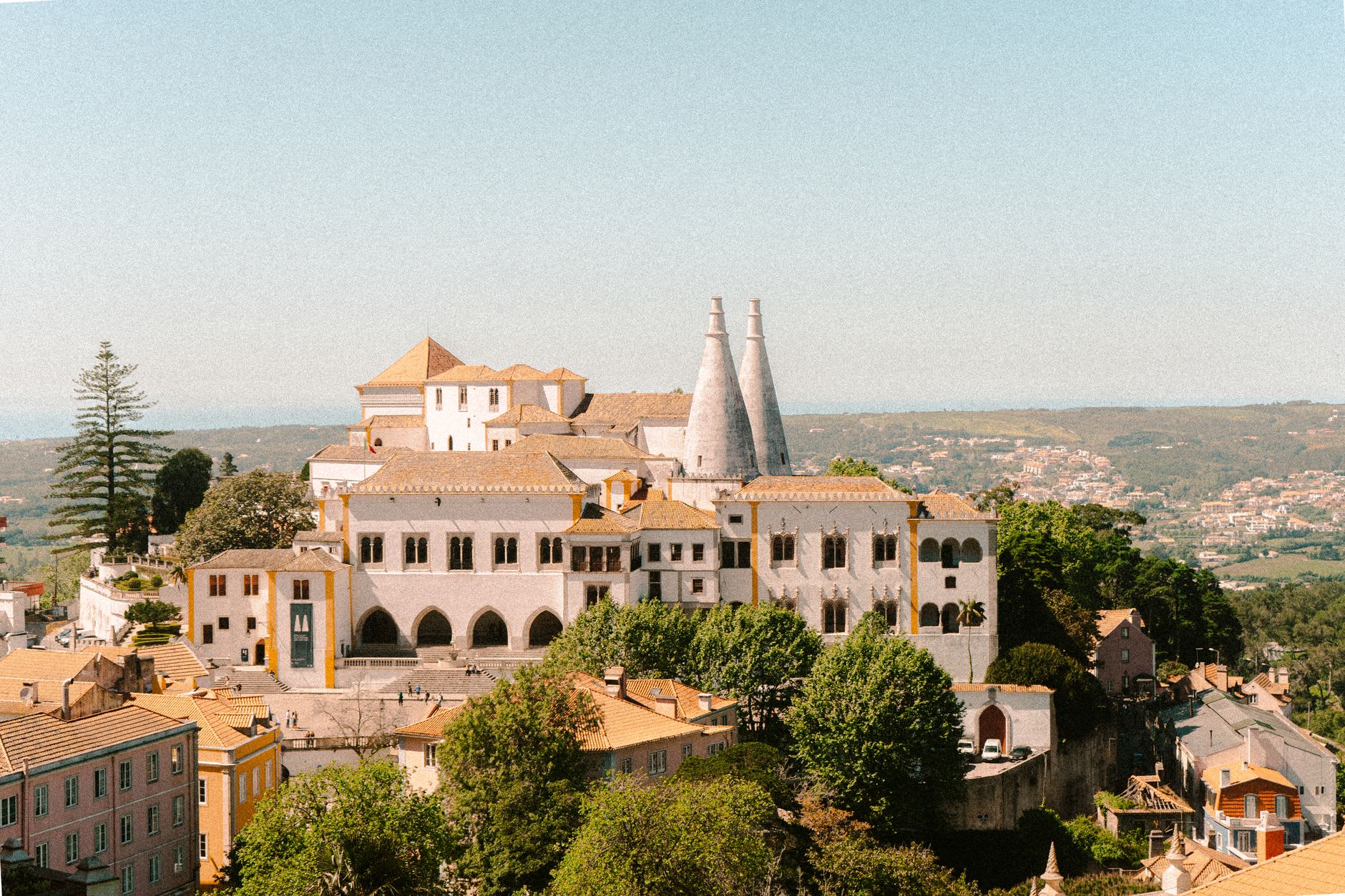
Sintra village sits at the foot of the hill: one main square, the Praça da República, flanked by the National Palace with its twin conical chimneys — the most distinctive silhouette in Portugal. The town itself is small enough to walk in twenty minutes, its streets lined with old manor houses converted into guesthouses and pastelarias selling travesseiros, the local pastry: puff dough filled with almond cream, dusted with powdered sugar, still warm from the oven. We ate two each at the Piriquita bakery on Rua das Padarias, standing at the counter. No seats, no menus. Just the pastries and strong espresso.
The Quinta da Regaleira, fifteen minutes on foot from the main square, is less famous than Pena but stranger: a neo-Manueline estate whose gardens contain a nine-level initiation well — a spiral staircase that descends underground through mossy stone, used in Masonic ceremonies by its eccentric 19th-century owner. We went down and stood at the bottom in the dark looking up at the circle of sky. It felt like standing inside a thought.
Timing the Hill
The key to Sintra is arriving before 9am. The palace opens at 9:30 and by 10 the coaches from Lisbon have arrived and the queues for Pena snake back through the car park. On the first Rossio train, the hillside is quiet enough to hear birds.
When to go: April through early June, or September and October — the light is softer, the tourists thinner, and the mist that settles on the Serra in cool mornings gives the palaces an operatic quality that the flat glare of July completely erases.