
Sagres
"Stand on that fortress wall and you understand why sailors once thought the world simply stopped here."
A windswept fortress town perched at what sailors once believed was the edge of the known world, where the Atlantic swell arrives with nothing left to slow it down.
The wind hits you first in Sagres, before you’ve even parked the car — a steady, briny gale that never really lets up, blowing straight off open Atlantic with nothing to break it since the Americas. I walked out onto the fortress promontory at Ponta de Sagres leaning into it at a slight angle the whole way, past a giant stone wind compass laid into the ground, to the edge where the cliffs simply end and the ocean takes over. This is, depending on which map you trust, the southwesternmost point of continental Europe, and standing there it’s easy to believe medieval sailors thought they’d reach the edge of the world if they went much further.
Henry’s School, Real or Not
Local legend holds that Prince Henry the Navigator founded a school of navigation here in the 15th century, gathering the cartographers, astronomers, and shipbuilders who kicked off Portugal’s Age of Discovery from this exact windblown headland. Historians argue that the “school” was probably more myth than institution — Henry did have a residence nearby, but the tidy story of scholars mapping the unknown world from a clifftop academy is likely a romantic exaggeration written centuries later. I found I liked the place more once I stopped needing the legend to be literally true; whatever happened here, ships absolutely did leave this coast to map half the known world, and the fortress walls, rebuilt many times since, still carry that outward-facing intent.
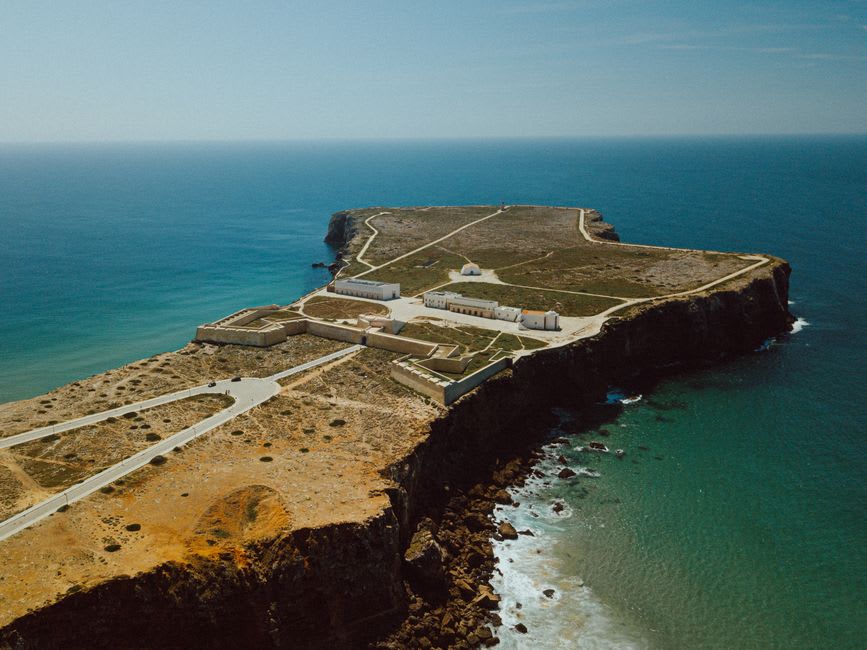
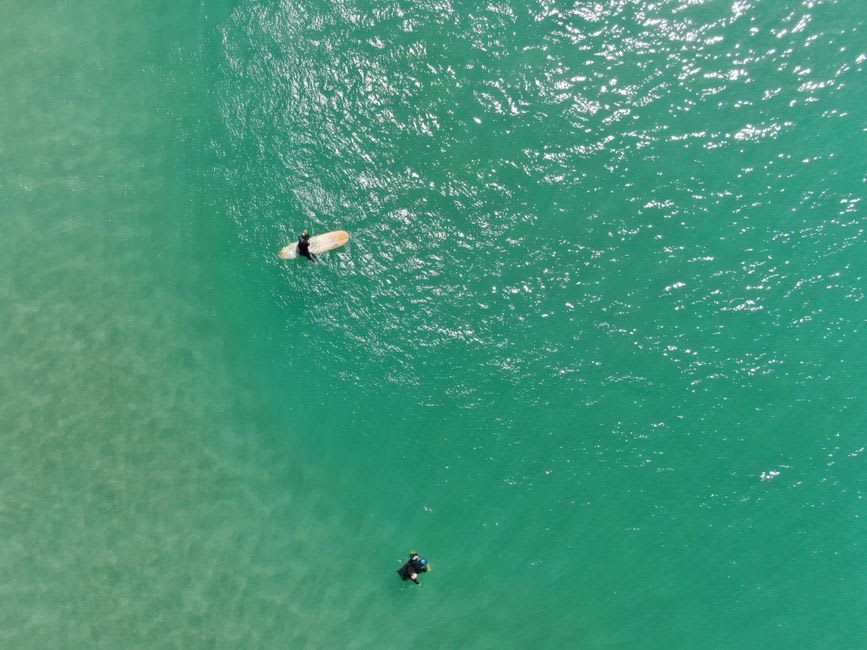
Below the fortress, Praia do Tonel and Praia do Beliche are where Sagres reveals its other identity: a serious surf town. The swell here is bigger and colder than anywhere else on the Algarve, funneled straight in from the open Atlantic, and I watched surfers paddle out in full wetsuits in what was, by Mediterranean-coast Algarve standards a few kilometers east, a genuinely different climate. The town itself is small and unpretentious — a strip of surf shops, fish restaurants, and guesthouses that shut down noticeably earlier than Lagos, because everyone here is up before dawn checking the swell forecast.
When to go: Autumn (September–October) brings the biggest, most consistent swell for surfing and clearer skies for the fortress views; come in a windbreaker no matter the season, this coast doesn’t do calm.