
Peso da Régua
"Régua isn't pretty in the postcard sense — it's better, because it's where the postcard actually gets made."
The working heart of the Douro wine trade, where terraced vineyards drop straight into the river and flat-bottomed rabelo boats once carried every barrel of port toward Porto's cellars.
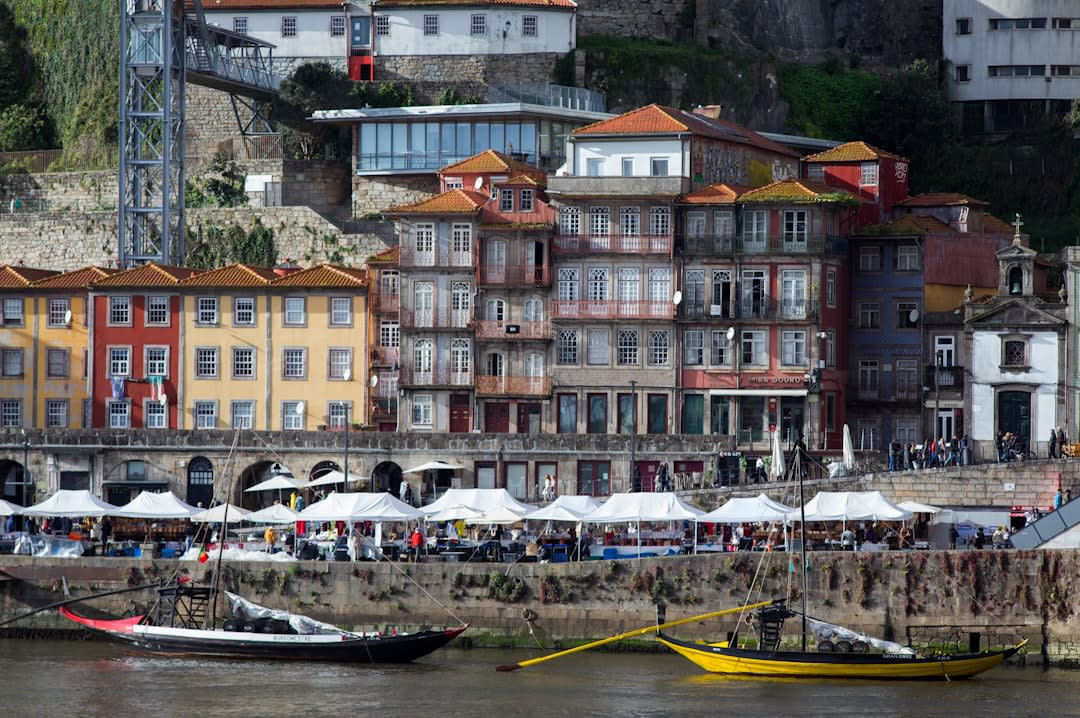
Peso da Régua doesn’t try to charm you the way Lamego or Amarante do — it’s a working town, the historic shipping point where, for two and a half centuries, every barrel of port wine grown on the terraced hills upriver was loaded onto flat-bottomed rabelo boats and floated down the Douro’s once-treacherous rapids to the aging cellars of Vila Nova de Gaia. Standing on the riverfront with a coffee, watching a few of those old rabelos — now mostly retired to tourist cruises and quinta advertising, engines quietly hidden below deck — bob gently at the dock where they once carried genuine cargo, I felt like I was looking at the industry’s actual origin point rather than a re-creation of it.
Where the Terraces Start Making Sense
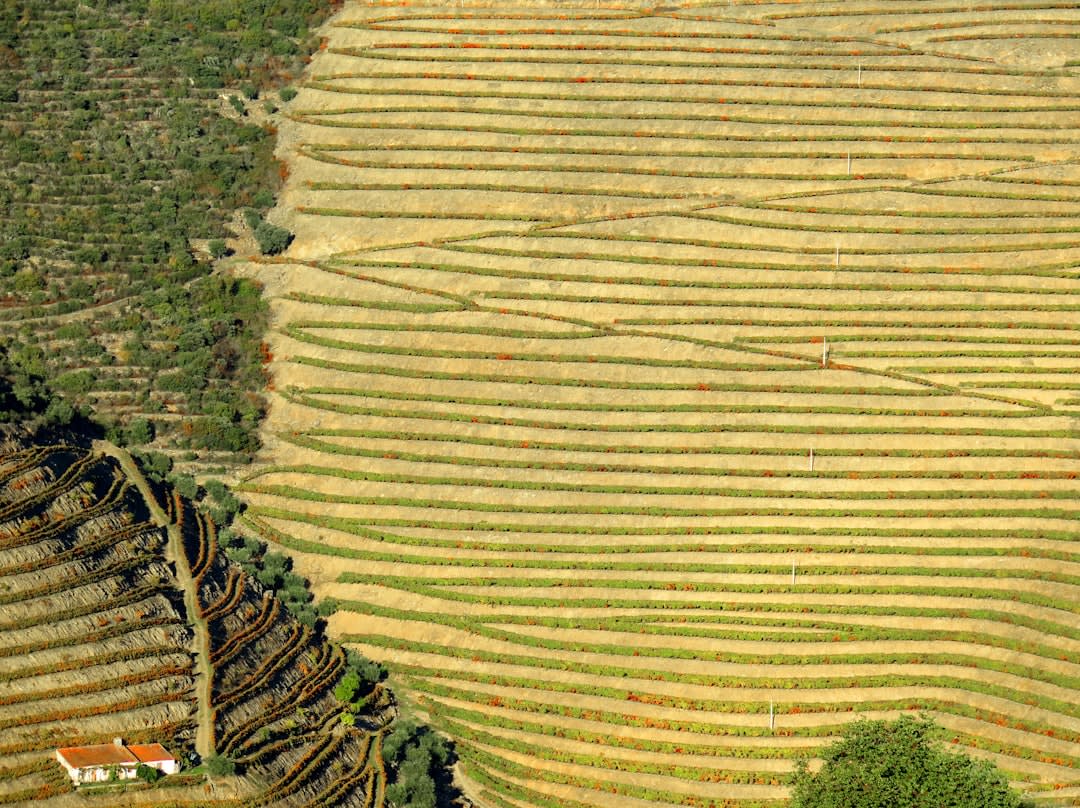
The real reason to come to Régua is the view you get simply by driving out of it in almost any direction: the Douro valley’s terraced vineyards, cut into schist hillsides so steep that generations of workers built dry-stone retaining walls by hand, tier after tier, climbing hundreds of meters above the river in a pattern so dramatic that UNESCO listed the whole valley as a World Heritage cultural landscape. I stopped at a miradouro just above town and just stood there a while — no photo really captures the scale of it, the terraces stacking on and on toward the horizon in every direction, the river a thin silver ribbon far below.
Back in town, the Museu do Douro, housed in a handsome old riverside warehouse that used to belong to a port shipping company, does a genuinely good job explaining how this landscape came to exist — models of the old rabelo boats, black-and-white photos of barefoot workers treading grapes in stone lagares, ledgers tracking barrels shipped downriver a century ago. I spent an hour there and came out understanding the valley in a way the view alone hadn’t quite given me.
I ended the day at a quinta just outside town, tasting a tawny port that had been aging in barrel since before I was born, the owner telling me — matter-of-factly, like it was obvious — that his family had been treading grapes in the same stone tanks for five generations.
When to go: Mid-September into October, during the vindima grape harvest, when you can watch (or even join) the traditional grape treading at some of the smaller quintas around town.