Sopot
"Sopot is the Polish Riviera — which surprises everyone who assumed Poland had no coast worth claiming."
Poland's glamorous Baltic resort has the longest wooden pier in Europe, a pedestrian promenade, and an irrepressible seaside energy that peaks each August.
Nobody warned me that Sopot would be beautiful. Poland, for most people outside Europe, conjures castles and forests and the heavy gravity of history. Not this: a fin-de-siècle resort town strung with fairy lights, a boardwalk smelling of amber and fried fish, teenagers in white linen stumbling out of beach clubs at noon. I arrived by SKM commuter train from Gdańsk and walked out of the station onto Monte Cassino — the main pedestrian promenade — and stopped dead on the cobblestones.
The Pier and What Happens at the End of It
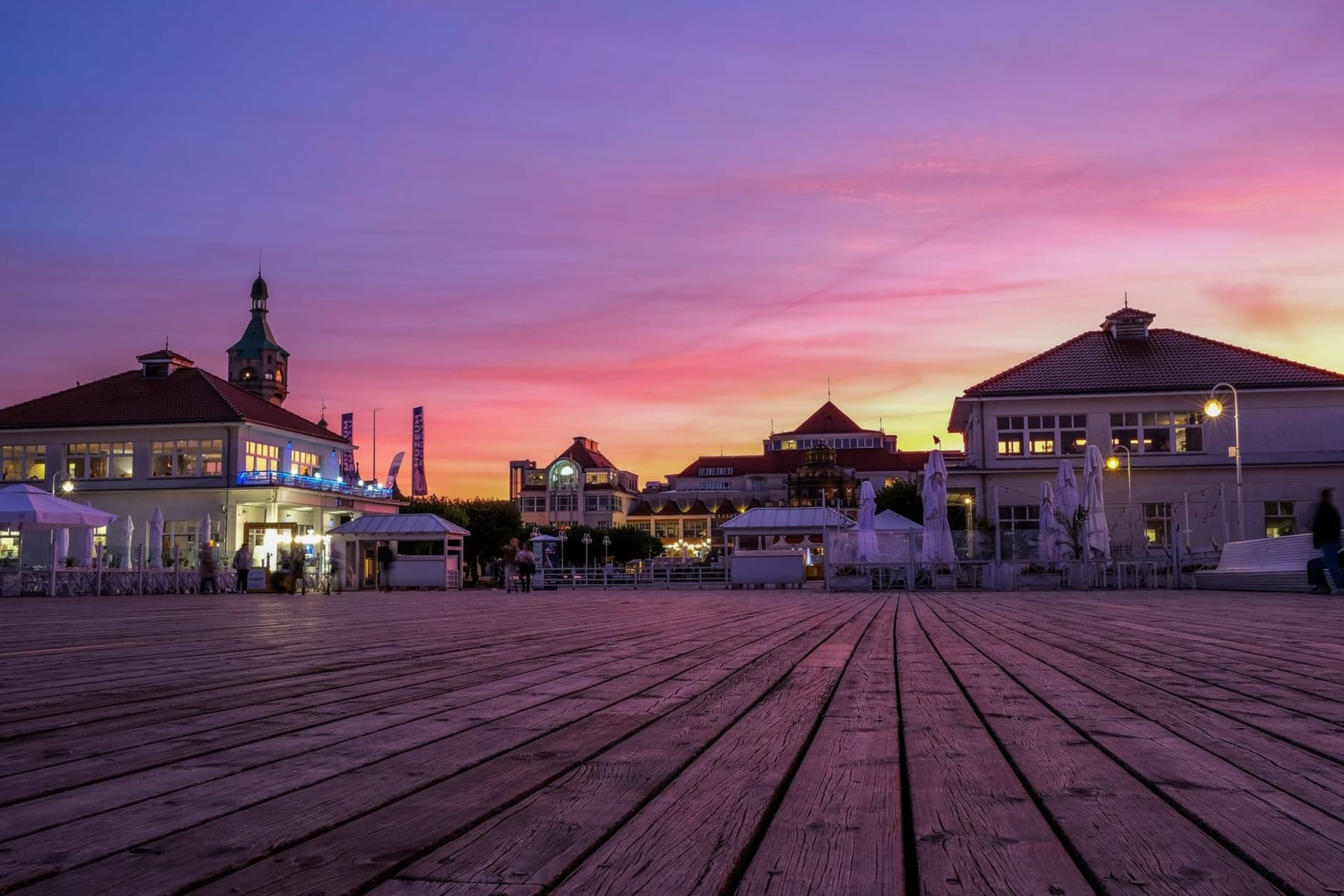
The Molo, Sopot’s famous wooden pier, is 511 metres long. That number doesn’t prepare you for the experience of walking it. The Baltic opens in every direction, grey-green and surprisingly cold even in July, and the shore behind you recedes until the pastel hotels look like a toy town you could fit in your pocket. Lia walked ahead while I stood at the railing watching a kite surfer drag himself sideways across the chop, the kind of image that feels accidental and perfect at the same time.
What I hadn’t expected: the pier costs money to enter. A small fee, paid at a wooden booth, which somehow makes the whole thing feel more serious — a promenade worth protecting.
Monte Cassino After Dark
The real Sopot unfolds on Monte Cassino once the sun goes down behind the tree line. The street fills with the particular electricity of a resort in season: perfume cutting through sea air, the bass from Krzywy Domek — the crooked house, all warped facades and impossible angles — spilling onto the pavement, groups of Poles on weekend escapes from Warsaw who dress with more intention than any city crowd I know.
I ate pierogi ruskie at a sidewalk table near the Haffner fountain, stuffed with potato and white cheese, and ordered a second plate before finishing the first. The unexpected discovery came later, past midnight, when we followed a narrow lane off the main strip toward the beach and found an outdoor jazz bar with no sign, just candles on wooden tables and a quartet working through Coltrane in the dark. Nobody mentioned it in any guide. A regular at the next table said it had been there thirty years.
The Grand Hotel and the Weight of the Past
The Grand Hotel on Powstańców Warszawy anchors Sopot’s skyline in white and copper-green, the kind of building that has housed diplomats and film stars and, in another era, Nazi officers. That weight sits quietly beneath the glamour. Knowing it makes the lightness of the present feel earned — a city that chose beauty again after being given reasons not to.
When to go: August is peak season — the International Song Festival fills the open-air opera with crowds, the beach is at capacity, and Monte Cassino doesn’t sleep. Late June or early September brings fewer people, cooler light, and the same architecture with room to breathe.