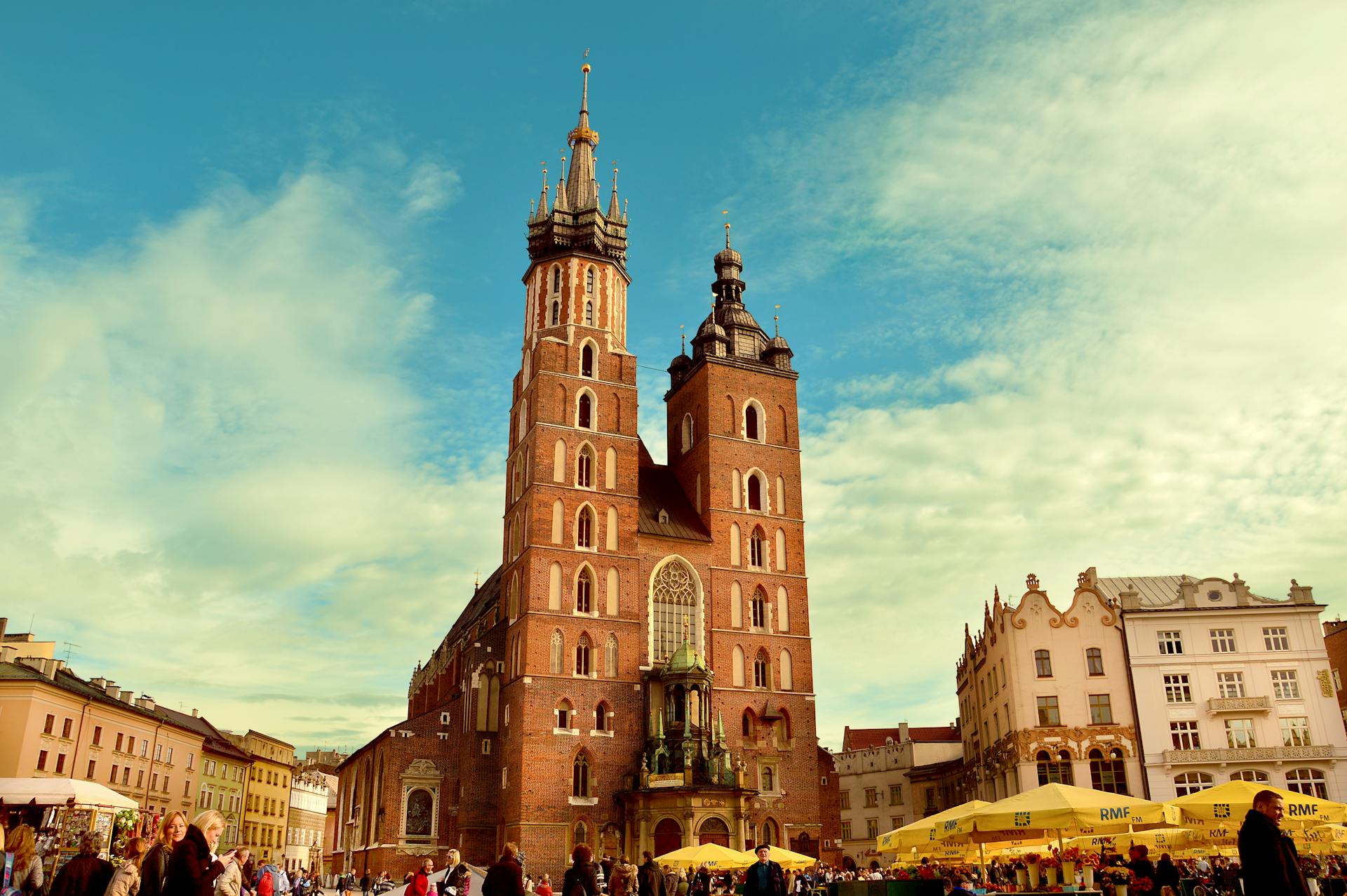
Poznań’s Old Market Square offers one of Poland’s most delightful daily rituals: at noon, two mechanical goats emerge from the Renaissance Town Hall clock tower and butt heads twelve times. The crowd watches, applauds, and disperses into a square lined with pastel merchant houses, outdoor cafés, and a quality of light that makes even the ordinary feel photogenic. The city is one of Poland’s oldest — the cathedral on Ostrów Tumski island is where Poland’s first rulers were baptized.
The energy comes from the universities. Poznań has a young population that fills the bars of Śródka and Jeżyce with conversation and ambition. The St. Martin’s Croissant Museum celebrates the rogal świętomarciński — a crescent-shaped pastry of such local importance that it has EU protected status. The Imperial Castle, built by Kaiser Wilhelm II, now hosts cultural events in an ironic repurposing of colonial architecture. Lake Malta on the city’s eastern edge provides rowing, cycling, and summer swimming, giving the city an unexpected resort dimension.
When to go: May through September for outdoor café season. The Malta Festival in late June brings international theatre and music.