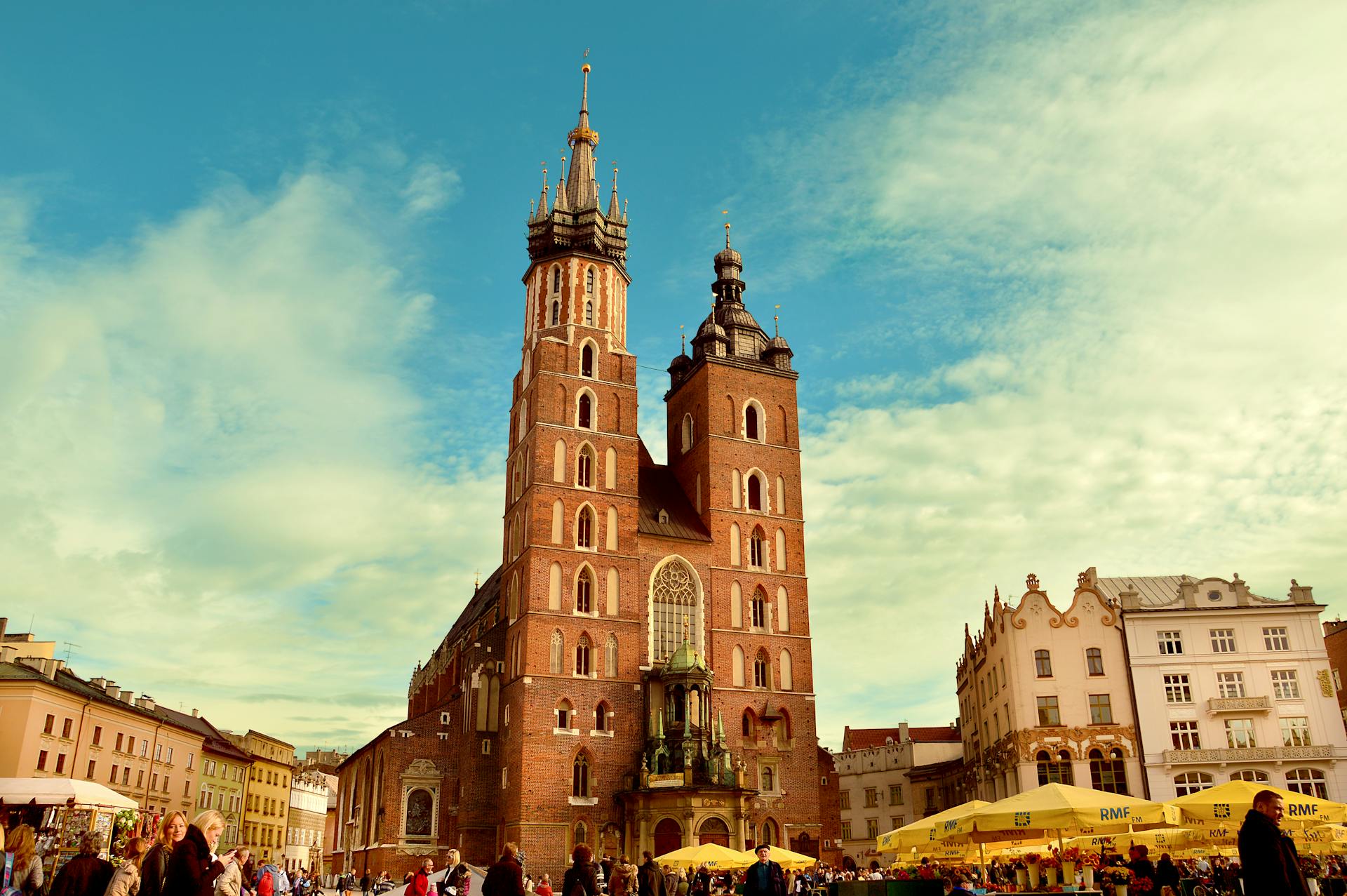
Kraków’s Rynek Główny is the largest medieval square in Europe, and it earns its superlative every evening when the light turns the Cloth Hall golden and the trumpet call sounds from St. Mary’s tower — cut short mid-note, as it has been for centuries, in memory of a watchman killed by a Mongol arrow. The city survived World War II largely intact, which means the Gothic, Renaissance, and Baroque layers are real, not reconstructed. You feel the difference.
The Kazimierz district, once the Jewish quarter, has become the city’s creative nucleus — synagogues and memorial sites stand alongside cocktail bars, bookshops, and restaurants serving modern Polish cuisine. Wawel Castle and its cathedral crown the limestone hill above the Vistula, housing royal tombs and a Leonardi da Vinci. The Wieliczka Salt Mine, just outside the city, descends into chambers carved from salt over seven centuries, including an entire chapel with salt chandeliers. Kraków feeds you well, too — the zapiekanka from Plac Nowy and pierogi from any milk bar are essential eating.
When to go: May and June or September and October. Summers are warm but crowded. Winter brings Christmas markets and atmospheric mist.