Rach Vem
"This is what the island looked like before someone decided it needed a resort."
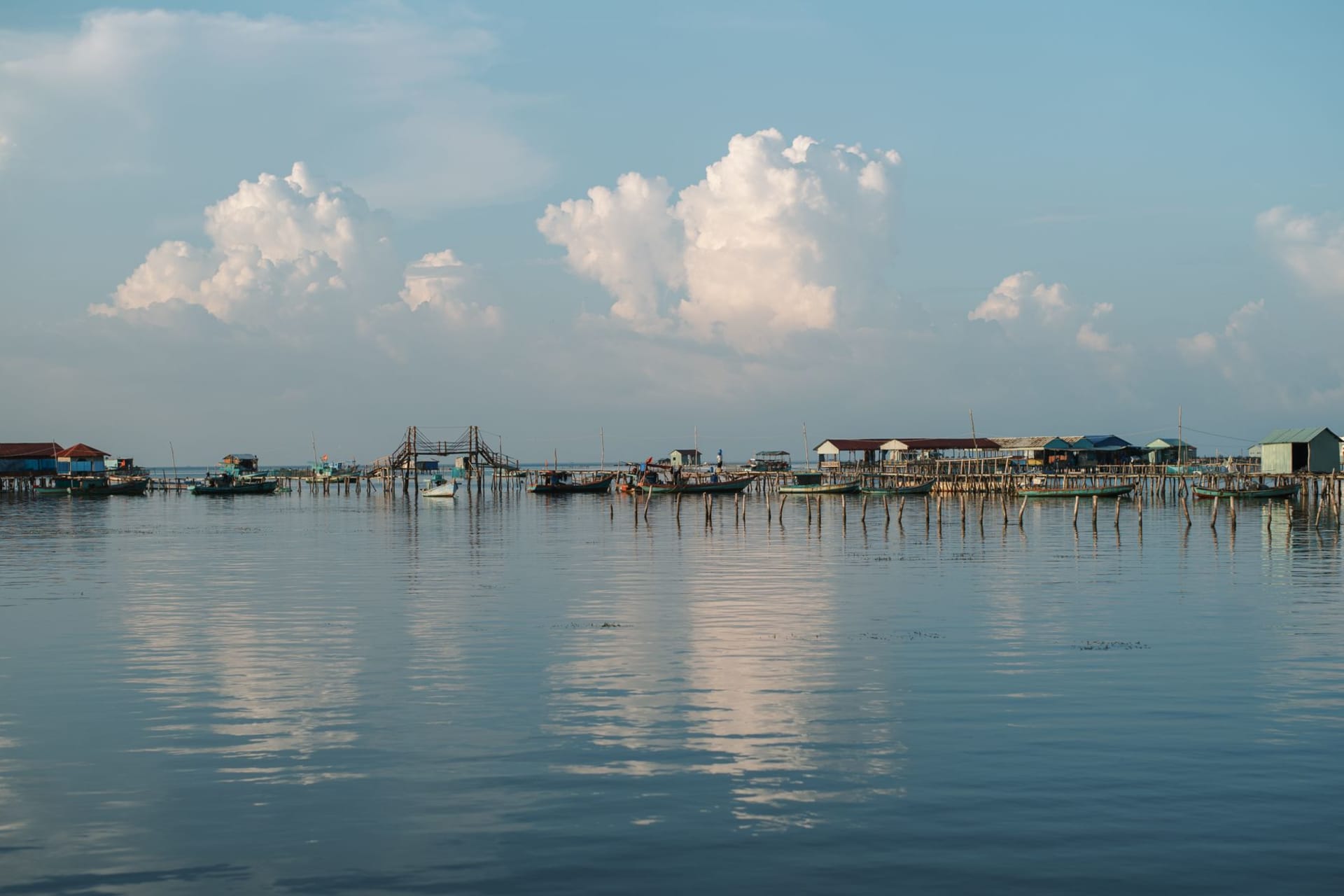
I found Rach Vem by accident, which is the best way. I’d been riding north on the coastal road, following it past the point where the pavement ended and became a red dirt track, and I kept going because the track kept going and I wanted to see where it ended. It ended at a clearing above a small bay where a floating fishing village sat fifty meters offshore on a network of wooden pontoons and bamboo poles, lashed together with the kind of improvised engineering that looks precarious and has probably lasted thirty years.
The village floats. That is the thing about Rach Vem that takes a moment to absorb. The houses sit on platforms kept above water by empty barrels and bamboo, connected by narrow wooden walkways that shift slightly underfoot. The community has lived this way because the water gives them everything — fish, crustaceans, the shellfish they farm in cages visible just below the surface — and moving onto land would mean moving away from their livelihood. About forty families live here year-round.

A local fisherman with a long-tail boat will take you out to the sandbar that sits in the middle of the bay — an unpromising name, the Starfish Beach, that turns out to be accurate in a way that surprises you. The shallow water over the bar is carpeted in orange starfish, dozens of them clustered in water that barely reaches your knees. They are large, vivid, completely alive, moving in their slow-motion way across the sand. The temptation to pick one up is human and understandable and should be resisted entirely; they are fragile and don’t survive handling. What you can do is wade through the colony, watch them, and feel briefly grateful that this small, strange thing still exists.
Returning to shore, the fisherman pointed me toward a platform at the edge of the village where a woman was cooking on a gas burner — an unofficial restaurant that served whatever the boats had brought in that day. I ate grilled tiger prawns and a soup made from local clams that tasted intensely of the sea, sitting on a low stool that put my knees at chin height, watching a child teach a puppy to walk across the slightly moving platform. Nobody spoke English. The bill was the equivalent of three dollars.

The road back south through the national park’s edge is one of the better motorbike rides on the island — red dirt through secondary forest, occasional views through the trees to the sea on the western side, no traffic to speak of. Plan for the return to take longer than the GPS suggests; the track after rain becomes soft and the riding is cautious.
When to go: The dry season is essential for getting up the dirt road from the north — wet season can make the track impassable by motorbike. Go in the morning for the best starfish viewing at low tide. Check a tide table before you go; the sandbar is at its most accessible at low water, and at high tide it shrinks considerably.