Bohol
"A Dr. Seuss landscape made real, with a primate the size of your fist watching from a branch."
Bohol is the island I recommend to people who want the Visayas experience without the noise of Cebu or the logistics of Palawan. It is compact enough to explore in three or four days, varied enough to keep you busy for a week, and possessed of a geological feature so improbable that even seeing it in person does not entirely convince you it is real.
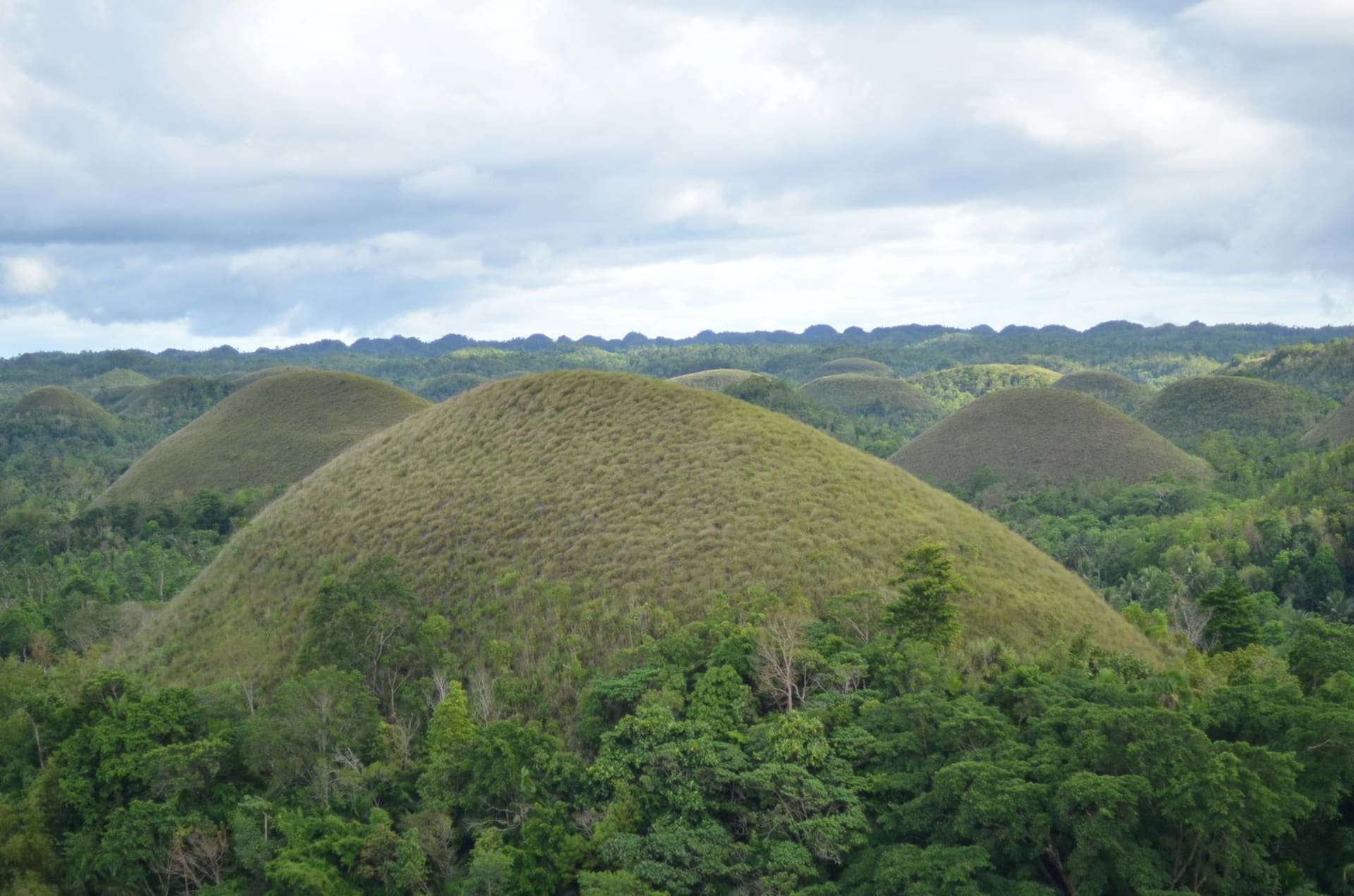
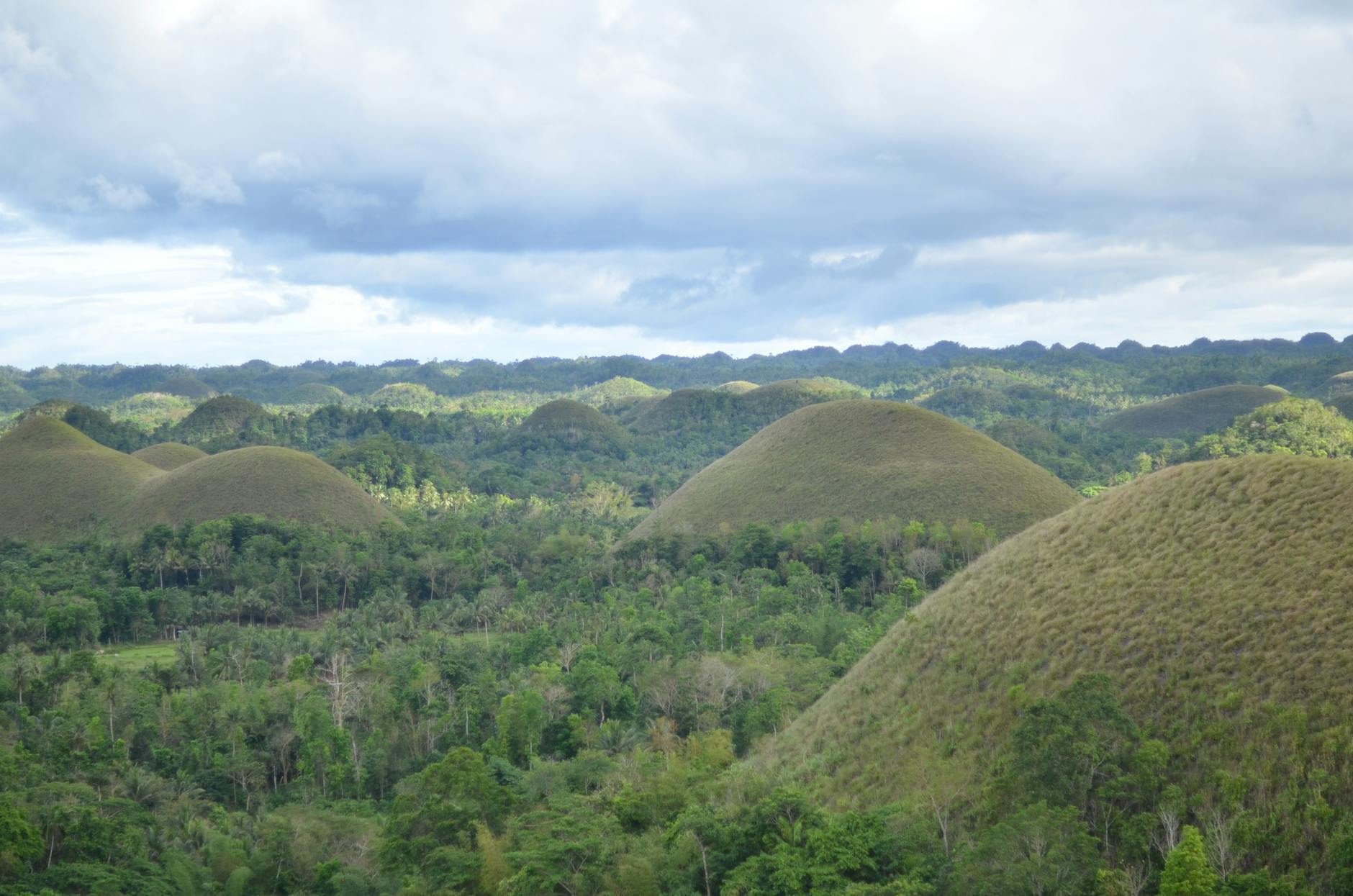
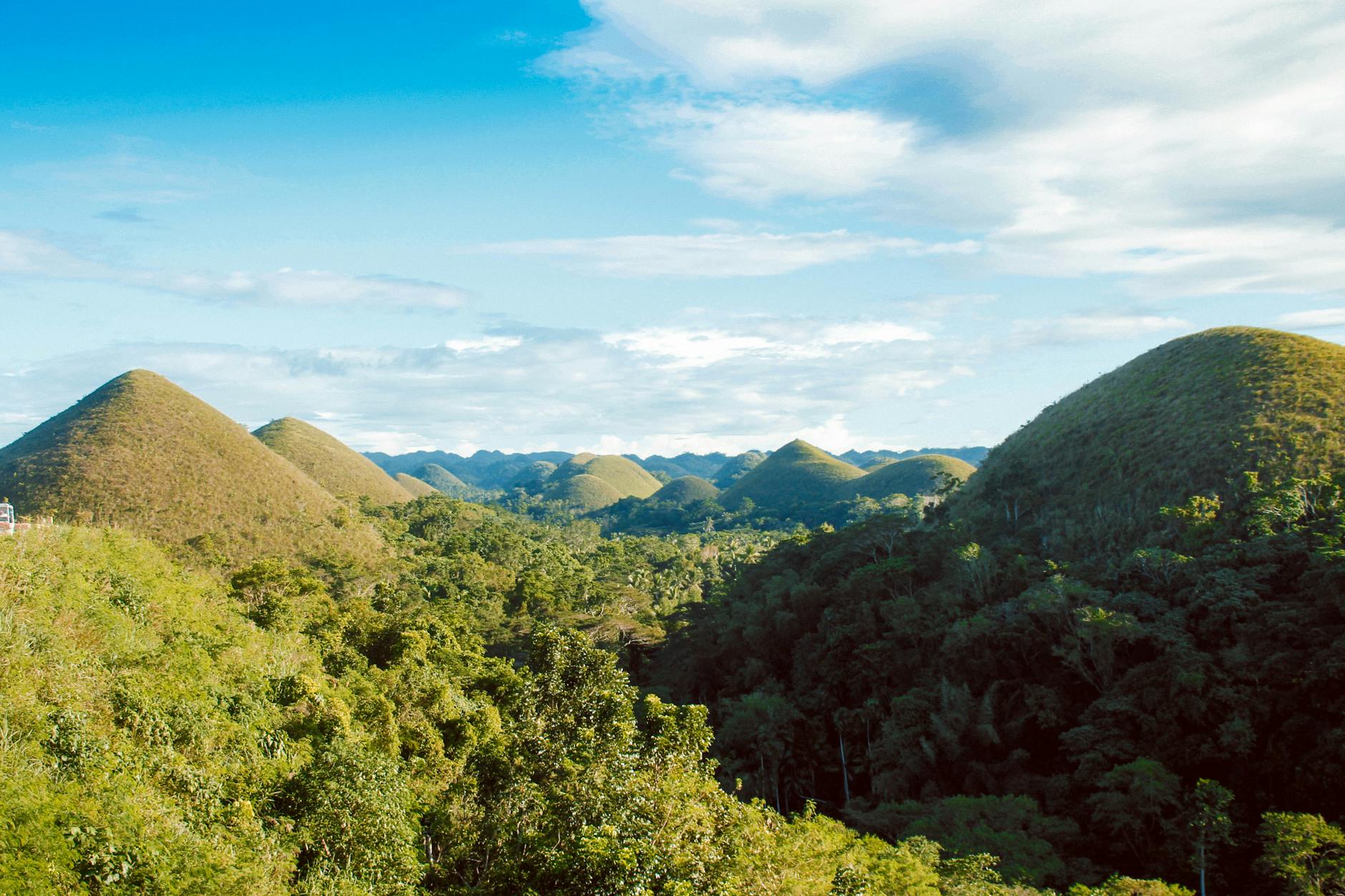
The Chocolate Hills are the headline — more than 1,200 near-identical conical hills spread across the interior, covered in grass that turns brown in the dry season (hence the name) and vivid green after the rains. The viewing platform at Carmen gives you the postcard shot, but hire a motorbike and ride through the valleys between them for the real experience. The scale is only apparent when you are among them, when the hills loom on every side and the road winds between their flanks like a path through a landscape dreamed by someone with a very specific geometric obsession.
The Philippine tarsier lives here — a primate no larger than a human fist, with enormous eyes adapted for nocturnal hunting and fingers so thin they look like they belong on a different animal entirely. The Philippine Tarsier Sanctuary in Corella is the ethical option for seeing them (avoid the roadside attractions where tarsiers are kept in cages for photo opportunities). The sanctuary places you on a quiet path through the forest, and the guides point out sleeping tarsiers clinging to branches overhead. They are impossibly small, impossibly delicate, and they watch you with those enormous amber eyes as if deciding whether you are a threat or merely uninteresting.
The Loboc River cruise is a tourist staple — a floating restaurant that drifts upstream through jungle while a band plays and lunch is served. It sounds tacky. It is, a little. But the river itself is genuinely beautiful, the food is decent, and there is something disarming about eating grilled fish on a bamboo raft while monkeys leap between trees on the riverbank.
Panglao Island, connected to Bohol by bridge, is where the beaches are. Alona Beach is the main strip — good for diving, adequate for swimming, lined with restaurants that range from excellent to indifferent. The diving here is underrated — Balicasag Island, a thirty-minute boat ride from Alona, has a wall dive where you descend along a coral cliff face into blue so deep it becomes black, and sea turtles drift past at arm’s length with an indifference to your presence that borders on philosophical.
For something quieter, ride east to Anda — a stretch of white-sand beach on Bohol’s southeastern coast that sees a fraction of Panglao’s visitors and offers the same water quality with a fraction of the infrastructure. Bring a book. Expect nothing. Receive everything.
When to go: December to May for dry weather. February to April is ideal — warm, dry, and between the major holiday crowds. The Chocolate Hills are most photogenic in the dry season when they turn brown, but the green-season version (June to November) has its own strange beauty.